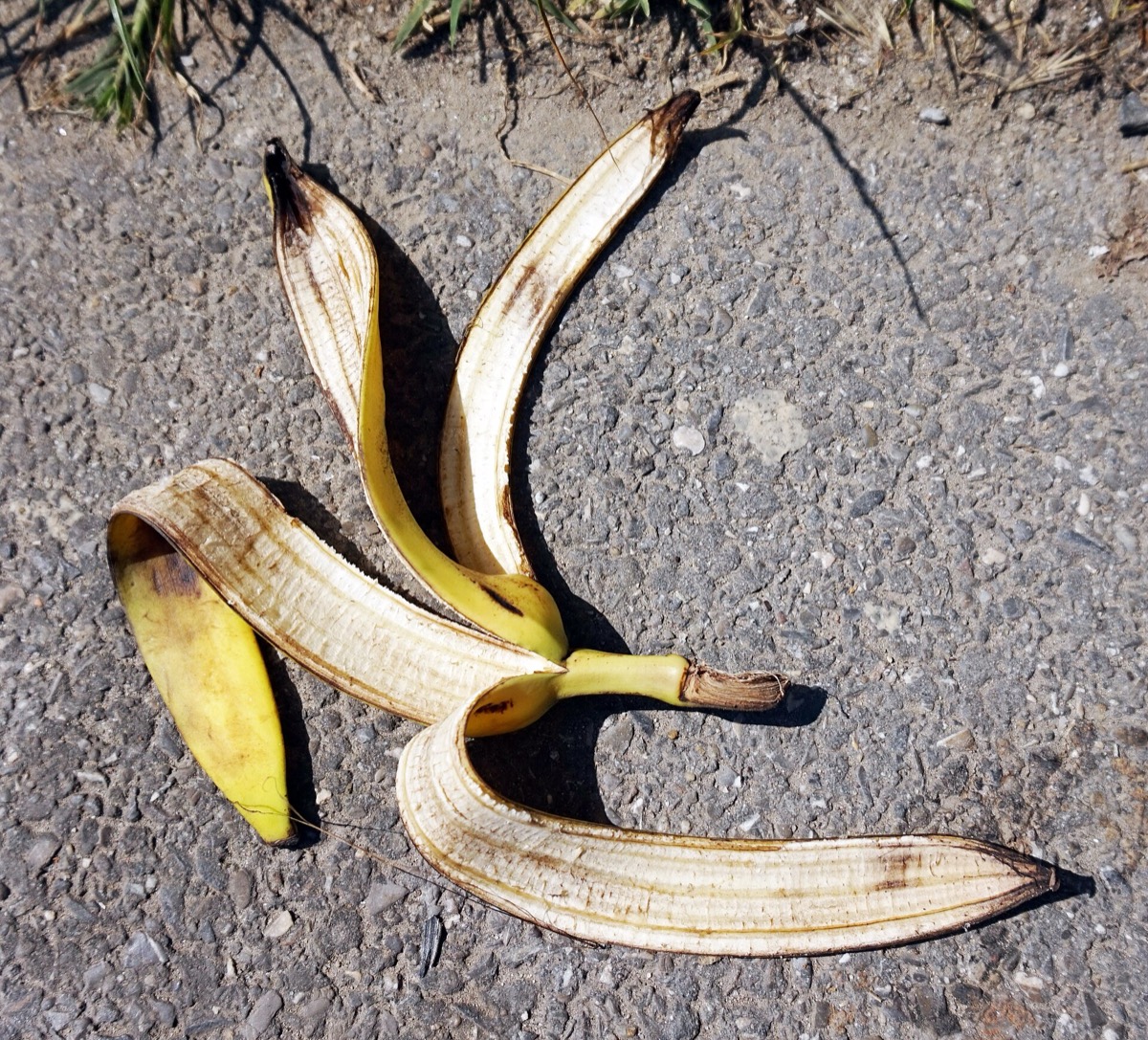
Mabuchi and colleagues put a number on it. They set a six-axis under a flat panel and laid a banana skin on it. A foot then pushed and rubbed a shoe sole across it, while both frictional and vertical force were recorded. The coefficient came out at about 0.07, which is the range of a well lubricated surface.
For comparison, friction on common materials is far higher, which is why the slip is sudden rather than gradual. Microscopic observation pointed to the mechanism: a polysaccharide , crushed under the shoe and turned into a homogeneous sol, does the lubricating. The skin is not slippery as it sits. It becomes slippery at the moment you stand on it.
The experiment is more careful than the subject suggests. The authors set a force transducer with six degrees of freedom under a flat panel of linoleum, and laid a banana skin on the panel. It read frictional force and vertical force at the same time while a shoe sole was pushed and rubbed across the skin by a foot motion. That keeps the test close to the thing being explained.
The measured was about 0.07. That is much lower than the value on common materials, and similar to values on well lubricated surfaces. In other words, standing on a banana skin is roughly like standing on an oiled floor, which is enough to explain why the slip happens faster than a person can correct for it.
Microscopic observation afterward pointed at the lubricant. The authors estimate that a polysaccharide follicular gel plays the dominant role, after the crush turns it into a homogeneous sol. The skin does not arrive slippery. The load that your own weight applies is what releases the gel, so the surface creates its lubricant at the moment it is needed to fail.
The work won the 2014 Ig Nobel Prize in Physics. The citation was for measuring the friction between a shoe and a banana skin, and between a banana skin and the floor, when a person steps on one. The prize is for research that makes people laugh and then think, and the thinking part here is the gel. Two cautions: this is a short communication on one material pairing, and the mechanism is an estimate from microscopy rather than a direct measurement.
wat. A banana skin gives you about the friction of an oiled surface, but only once you step on it.
wat wat
The joke has a real mechanism in it. A gel released only under load is a genuinely interesting lubricant, and the paper belongs to biotribology rather than to comedy.
How do we know?
A force transducer with six degrees of freedom under a linoleum panel measured frictional and vertical force at the same time, during a real foot motion on a banana skin. Microscope work on the skin followed.
What is still unknown
A short communication measuring one skin type on one floor material, with the lubrication mechanism described as an estimate from microscopic observation rather than something measured directly. The work received an Ig Nobel Prize, which is not a judgement on its rigor either way.
Learn something?
Where to next
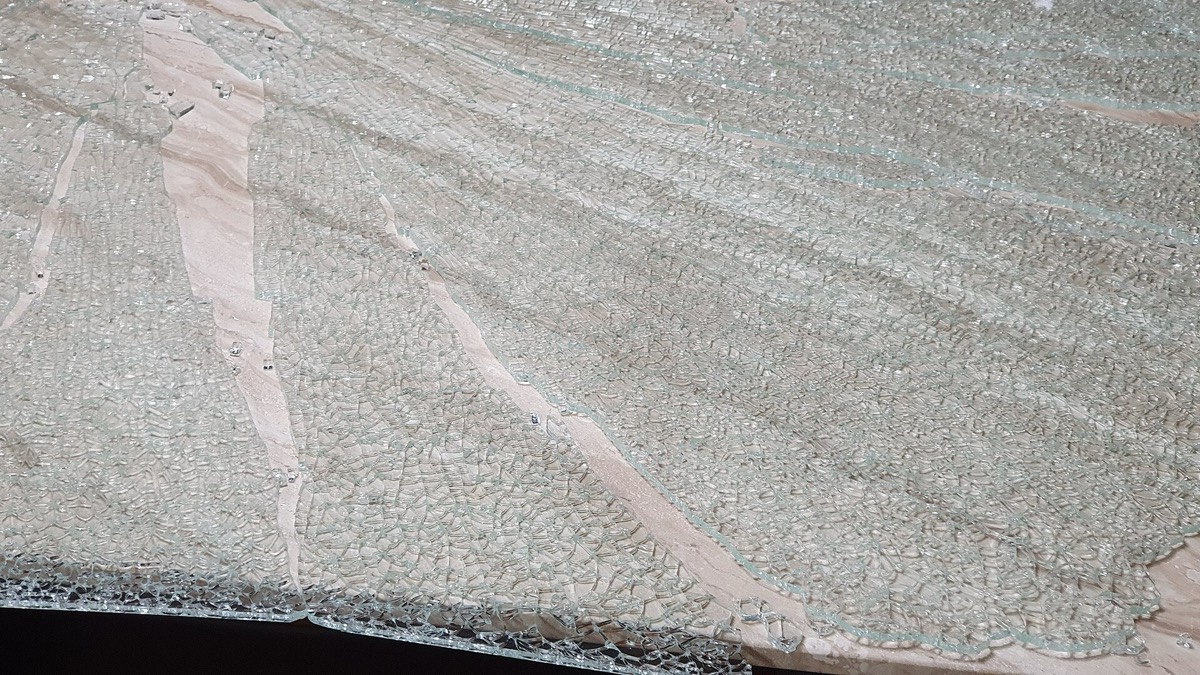 Why does a toughened window crumble into thousands of small pieces instead of long blades?materials
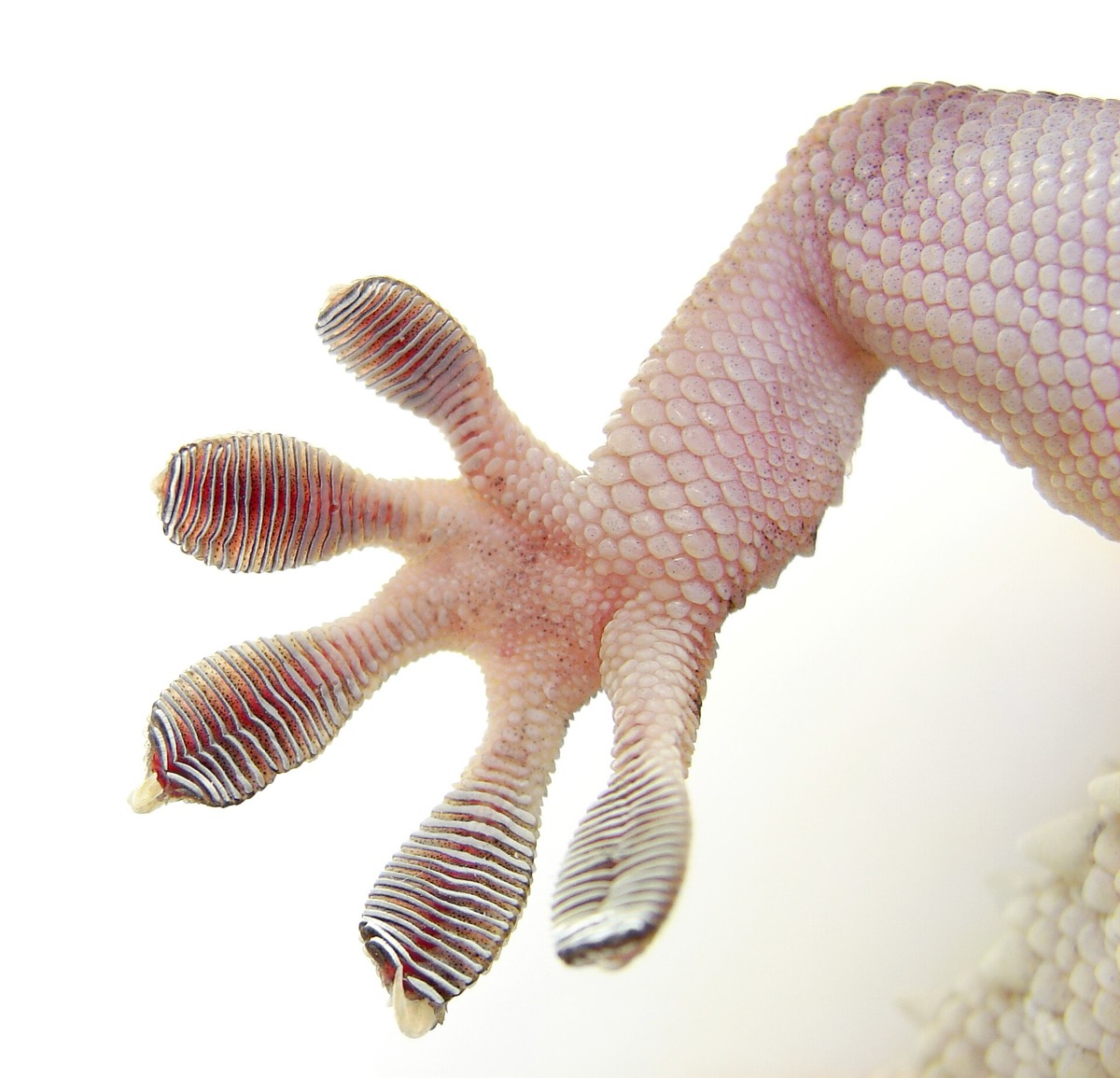 A gecko runs across a smooth ceiling with no glue. What holds each step?materials
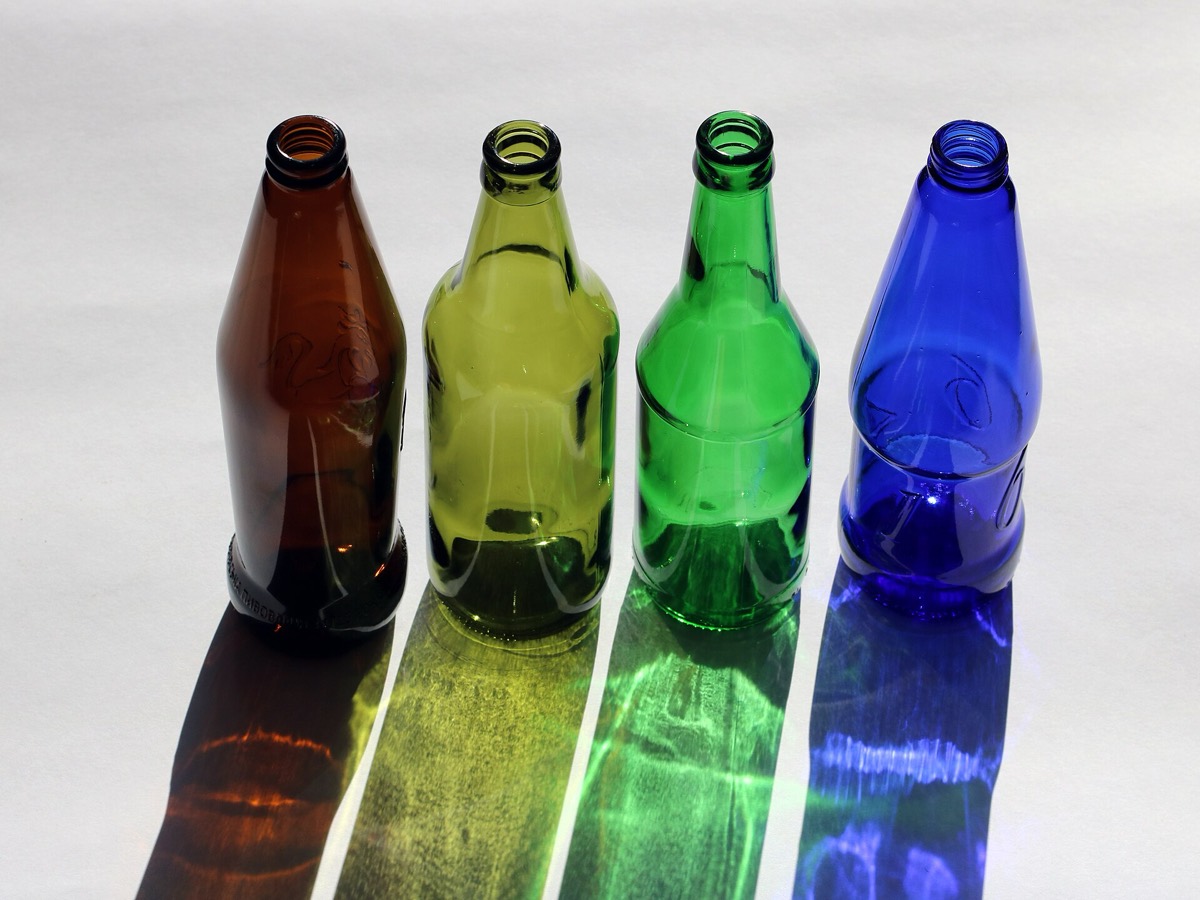 Full or empty, which beer bottle survives the impact?materials