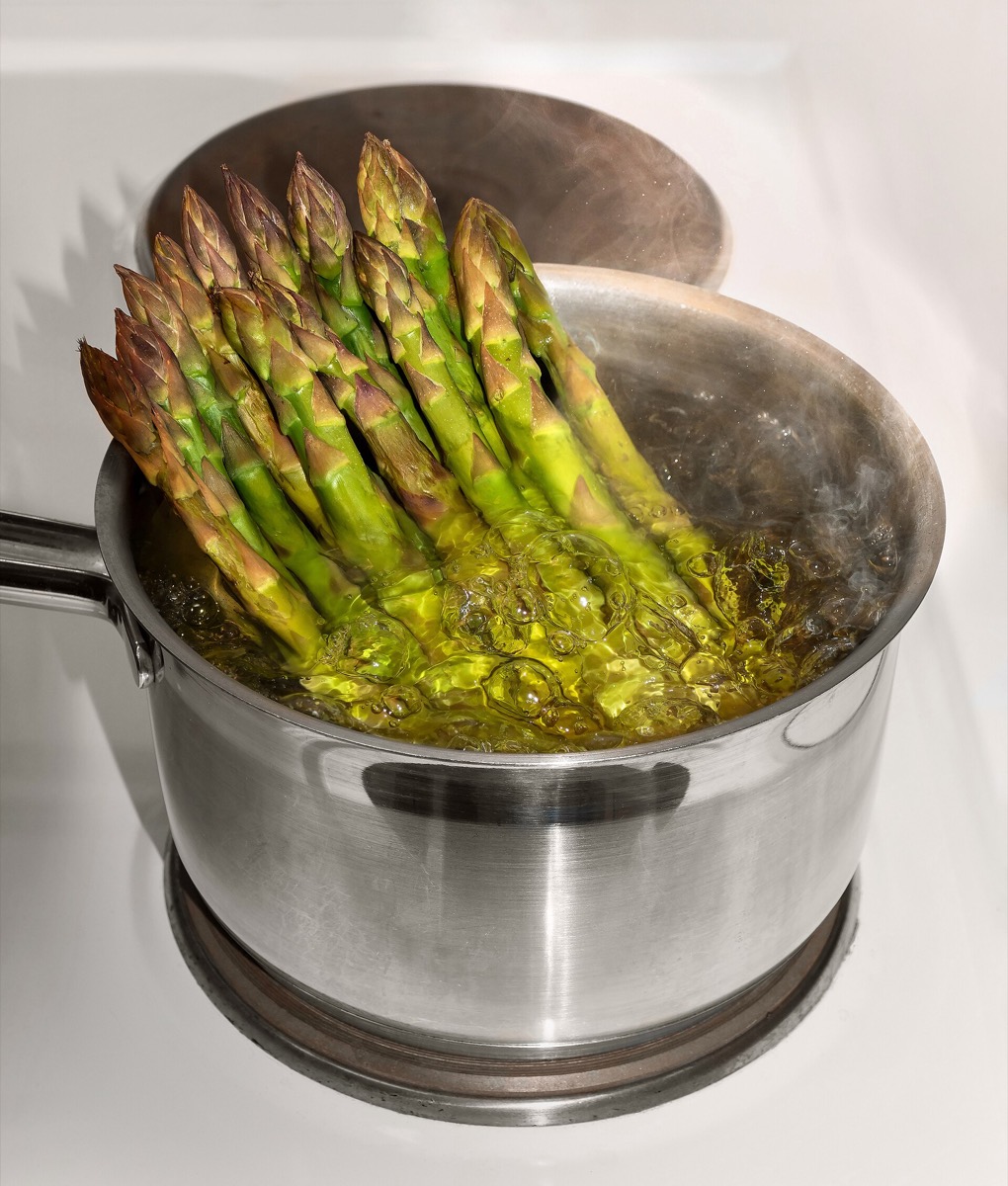
Urine after asparagus has a sulfurous smell, close to cooked cabbage, and a reliable share of people report noticing nothing at all. Two entirely different things could explain that: either they do not make the smell, or they cannot smell it. Those are separate biological questions and they had been tangled together. So researchers tested production and perception separately, using a two-alternative forced choice.
Both vary, independently of each other. Individual differences turned up in the production of the and also in the perception of the odor, so a person reporting nothing might be in either camp. The inability to smell it is associated with a , rs4481887, sitting within a cluster of 50 . The reason some people do not produce detectable amounts remains unknown.
The urine of people who have recently eaten asparagus has a distinct sulfurous odor, similar to cooked cabbage. Plenty of people report that this has never happened to them, and the usual conversation treats that as one claim. It is really two, because producing the smell and detecting it are separate biological capacities.
A procedure was used to examine individual differences in both. Forcing a choice matters for the perception half. Given the option, somebody detecting a faint odor will often report nothing, so the task demands a decision between two samples and counts how often it is right.
The conclusion is that individual differences exist in both odorant production and odor perception. Someone who notices nothing may be a non-producer, a non-perceiver, or in principle both, and no amount of asking them will tell you which.
Only one half comes with a mechanism. The inability to smell the odor is associated with a single nucleotide polymorphism, rs4481887, within a cluster of 50 olfactory receptor genes, which is a plausible home for a specific anosmia. The biological basis for being unable to produce the metabolite in detectable quantities is unknown. So the tidy story about a gene for asparagus urine covers the nose and not the kidney.
wat. Some people never make the smell and some people cannot detect it, and only the second has a gene variant attached to it.
wat wat
It separates a question people argue about at dinner tables into the two it actually is. And only one half has an identified genetic marker, which is worth knowing before anyone claims the whole thing is solved.
How do we know?
Pelchat and colleagues used a two-alternative forced-choice procedure to examine individual differences in both the production of the odorants in urine and the perception of the asparagus odor, alongside genetic analysis.
What is still unknown
The production side has no identified biological basis here, so half the phenomenon is described rather than explained. A forced-choice smelling task also measures detection under test conditions rather than what anybody notices at home.
Learn something?
Where to next
 Why does a cat walk past a bowl of sugar?taste
 Can a dog smell that you are stressed?smell
 Where did the tool for rewriting genes come from?genetics