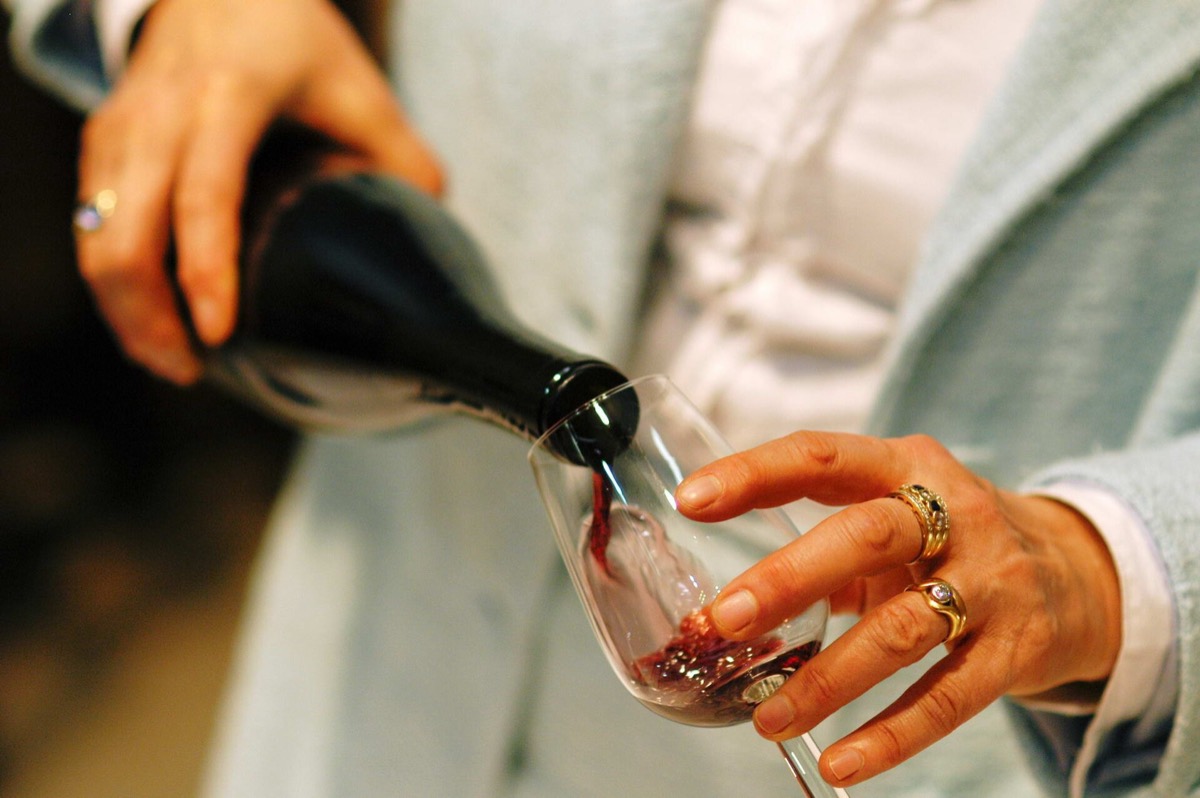
Dutch courage is one of the few folk beliefs about alcohol that sounds testable, and nobody had tested it on actual language learners. The complication is that a drinker’s own judgment is the least reliable instrument available. So fifty native German speakers who had recently learned Dutch were randomized to a of alcohol or a control drink, then held a conversation in Dutch. Who was the judge?
Blinded listeners heard a real improvement, and the drinkers did not notice it. Two native Dutch speakers, blind to who had drunk what, rated the alcohol group’s Dutch significantly better, and specifically. The participants’ own ratings of their Dutch showed no effect of alcohol at all. The folk belief turns out to be right about the pronunciation and wrong about the confidence that supposedly explains it.
A popular belief holds that alcohol improves the ability to speak a foreign language. It is the kind of claim that is easy to assert and awkward to test, since the obvious measure, asking the speaker, is compromised by the very substance under investigation. The effect on foreign language learners had not been investigated at all.
Fifty native German speakers who had recently learned Dutch were randomized to receive either a low dose of alcohol or a control beverage containing none. Afterwards each took part in a standardized discussion in Dutch with an experimenter who was blind to the condition. The discussion was audio-recorded.
Two native Dutch speakers, also blind to the condition, then rated the recordings. Participants who had consumed alcohol received significantly better for their Dutch, and the advantage was specifically in pronunciation rather than spread across everything.
Alcohol had no effect on of Dutch language skills, which is the finding that reshapes the folk theory rather than confirming it. The usual account runs through confidence, and confidence is what a self-rating captures. Something improved the speech without the speaker noticing. The authors keep the conclusion narrow, and so should a reader: one low dose, one language pair, fifty people, a single conversation, and nothing about grammar, vocabulary or heavier drinking.
wat. A low dose of alcohol made recent learners’ Dutch pronunciation measurably better to blinded ears, and no better to their own.
wat wat
The two measures coming apart is the whole point. If the effect were simply loosened inhibition, self-ratings should have risen too, and they did not, which leaves something happening to the speech itself.
How do we know?
Renner and colleagues randomized fifty native German speakers who had recently learned Dutch to a low dose of alcohol or a non-alcoholic control. A standardized Dutch discussion with a blinded experimenter was recorded, and two blinded native speakers rated it.
What is still unknown
One low dose, one language pair, fifty participants, and a single conversation. Nothing here extends to higher doses, to grammar or vocabulary, or to anyone who has not just learned the language.
Learn something?
Where to next
 What does your brain already know about a word that escaped you?language
 What happens to the talk in a home when a toddler’s screen time goes up?language
 Does speaking two languages sharpen the rest of your thinking?language