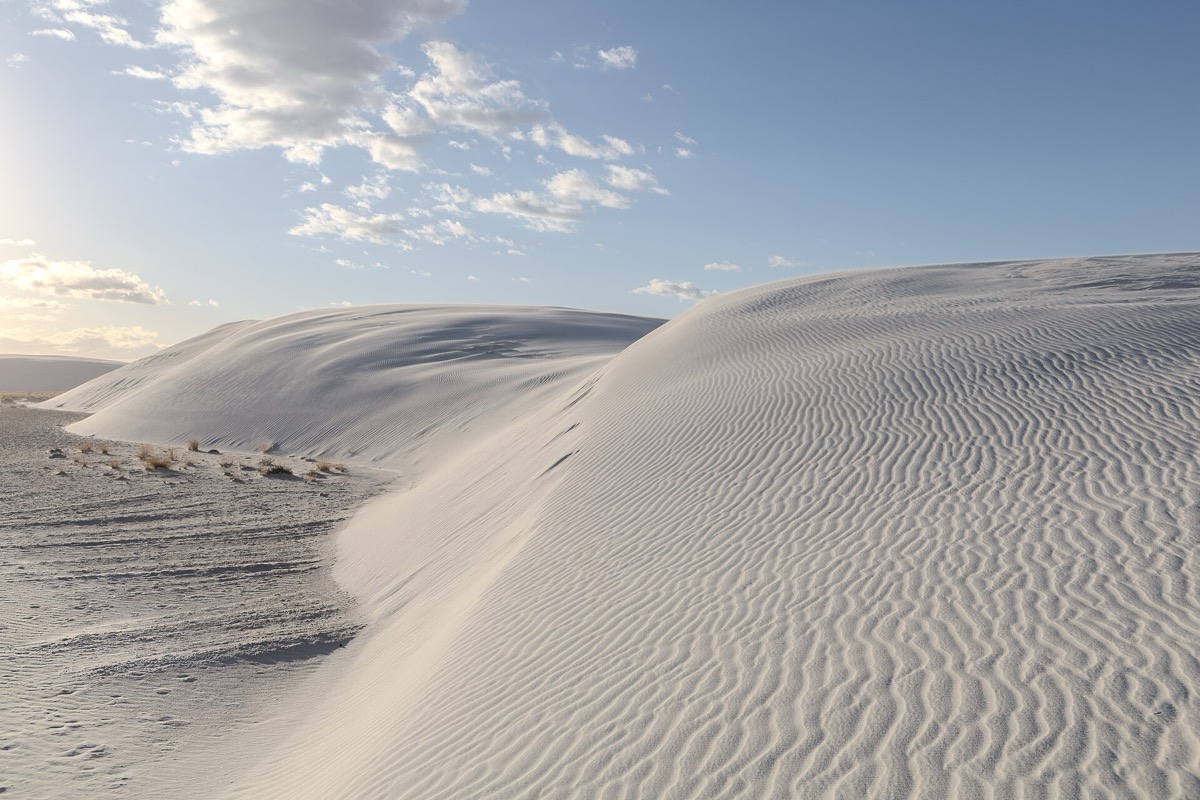
The settled view in archaeology held that people reached North America some 13 to 16 thousand years ago, on the evidence of finds. Then preserved at the edge of an ancient lake at White Sands were dated. What did they show?
A human presence 21 to 23 thousand years ago, which is inside the peak of the ice age, when the routes south were blocked. The finding was fiercely contested, so it was tested again by other methods: pollen from land plants and ancient lake mud, in three separate laboratories. Two independent research groups between them produced 55 consistent radiocarbon dates.
Until recently the answer looked agreed: people reached North America some thirteen to sixteen thousand years ago, after the peak of the ice age, when a corridor opened between the ice sheets. Any earlier find was suspected of a dating error.
The White Sands footprints put a date of twenty-one to twenty-three thousand years ago, which is inside the peak of the ice age, when the routes were blocked. If that is right, it is not only the date that changes but the question of which way people came.
So the criticism focused on the method and not the find. The original dating rested on the seeds of a water plant, and means those can take up ancient carbon from the water and look thousands of years older than they are.
The answer was : entirely different materials, subject to different biases. Pollen from land plants and ancient mud from the lake, in three separate laboratories, and fifty-five dates in all settling on the same range. That strengthens it considerably without ending the argument, and some researchers still dispute it. The careful assessment is that the burden has now moved to the other side.
wat. Two separate research groups together produced 55 consistent carbon dates.
wat wat
If the date holds, people reached America before the peak of the ice age, which changes the whole question of how and by what route they did it.
How do we know?
Cross-dating was done on three different kinds of material, seeds, pollen and mud, in three separate laboratories. Two independent research groups together gathered 55 consistent carbon-14 dates.
What is still unknown
Some researchers still dispute the dating, chiefly over the reservoir effect: plant material from ancient water takes up old carbon and biases the result upward.
Learn something?
Where to next
 Why is a radiocarbon date not a date?radiocarbon