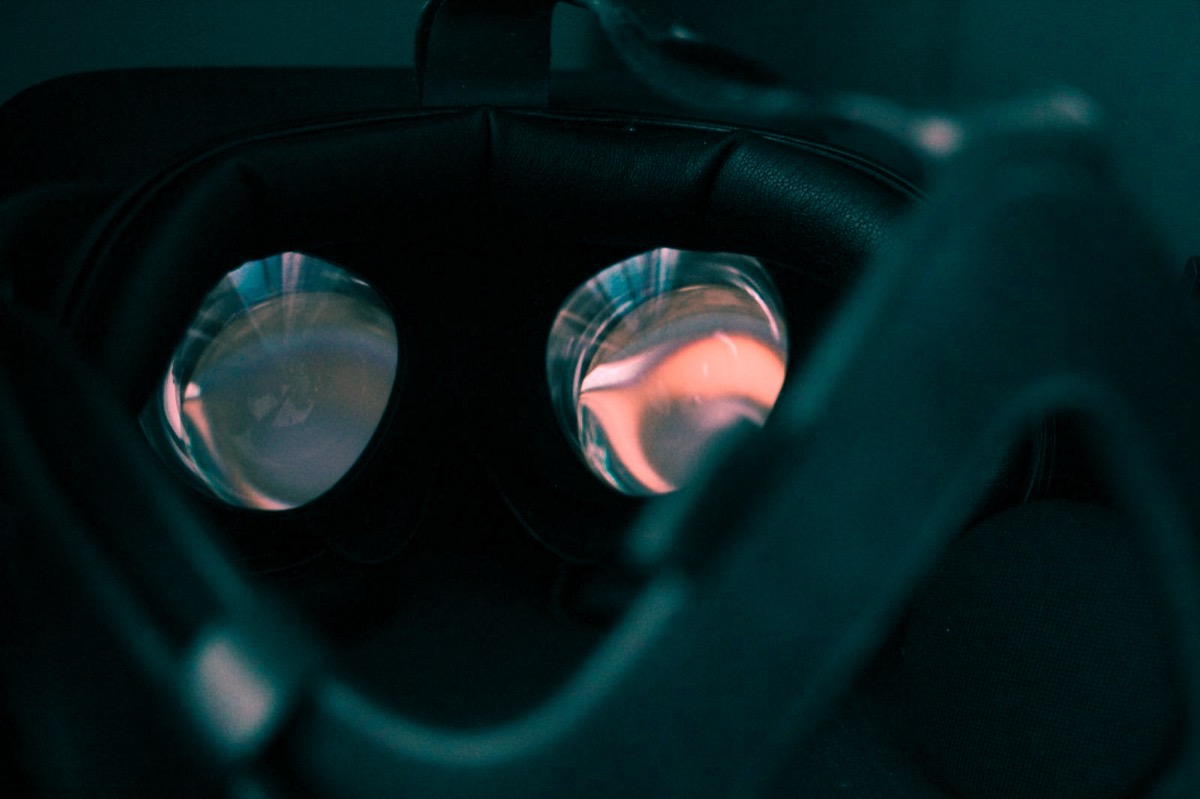
A virtual reality headset is sometimes called an empathy machine, because it places you inside the experience. But empathy includes at least two things: feeling with a person, and understanding their point of view. Which of them moves?
The feeling, not the understanding. Pooling 5,644 participants showed a rise in and none in . More than that, against simple such as reading about a person or a guided imagination exercise, virtual reality was no more effective. An expensive interactive experience did not always help more than a plain one.
To test the slogan you first have to take it apart. Empathy is not one thing: there is emotional empathy, feeling something toward another person, and cognitive empathy, understanding how they see the world. These are two different components, and the authors separated them in advance.
Pooling forty-three studies and more than five thousand participants gave a sharp answer. The effect appeared in the emotional component and not in the cognitive one. A virtual reality experience does move what people feel, and it does not move their grasp of a point of view.
The second finding is more surprising. Against simple comparison conditions, such as reading about a person or going through a guided imagination exercise, virtual reality was no more effective. An expensive interactive experience did not always help more than a plain version, which undercuts the assumption that more immersion means more effect.
The plausible explanation is that understanding takes work. is not it: to grasp a point of view a person has to think, infer and choose, rather than watch suffering from close up. And the studies used different scenarios and empathy measures, many of them taking a short reading right after the experience rather than a change that lasted.
wat. Virtual reality stirred more feeling, and it did not clearly improve the ability to understand what another person thinks.
wat wat
A strong presence is no guarantee of deep understanding; the design of the experience matters more than the technological halo.
How do we know?
A meta-analysis combined 43 studies that tested change in empathy after a virtual reality experience.
What is still unknown
The studies used different scenarios and different empathy measures, and many of them took a short reading immediately after the experience.
Learn something?
Where to next
 Does a long password have to be complicated as well to be strong?technology
 Why does somebody else’s yawn catch you in particular?empathy
 Can a few minutes with a text change how well you read another person?empathy