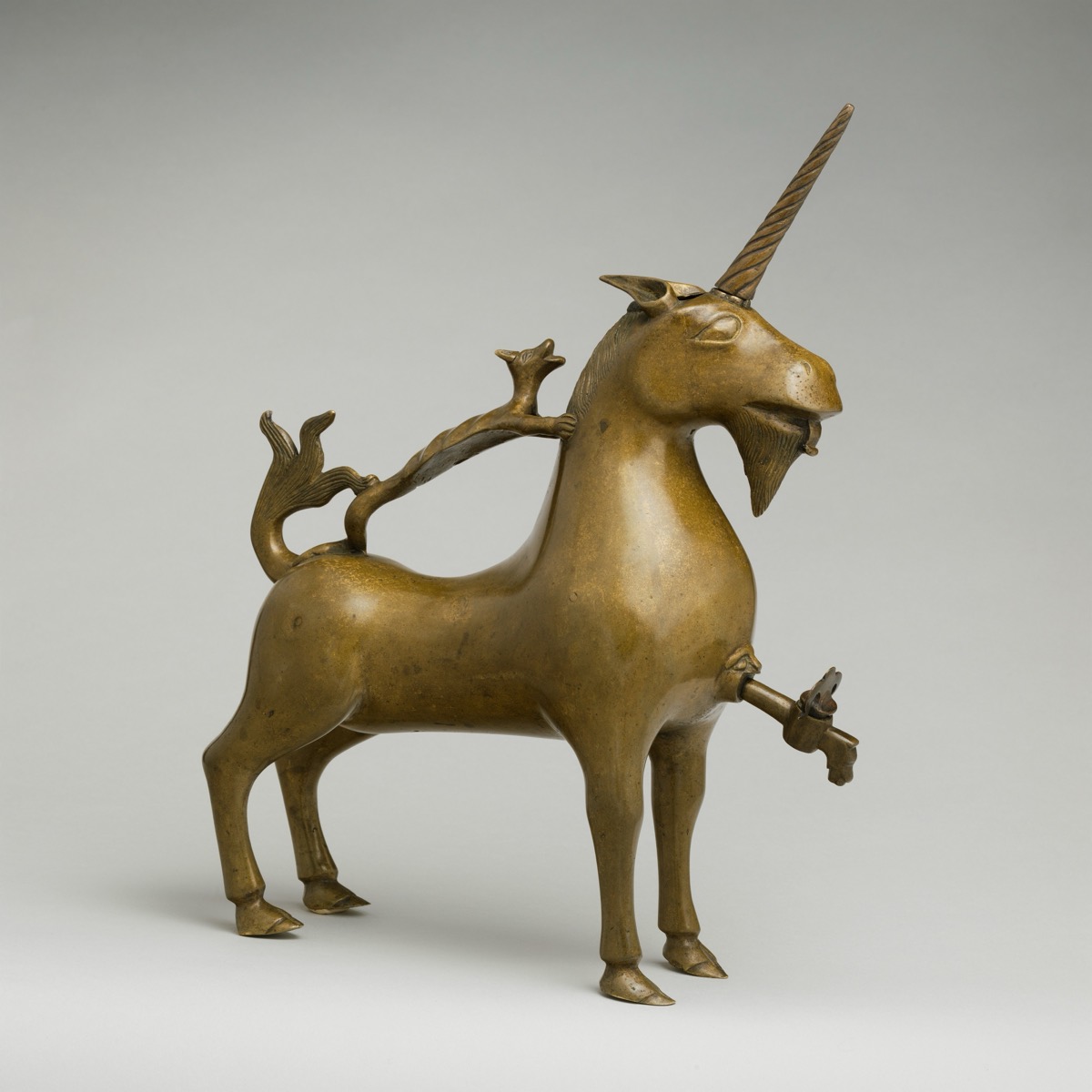
A unicorn, cast in around fourteen twenty-five to fifty, stands about fifteen inches long and weighs nearly seven pounds. It is hollow. There is a flap on top of it and a set into its chest, and its tail curls up in a flame shape. The horn is a replacement. What was it made to do?
Wash hands at the table. The object is an , from the Latin for water and hand. The mechanism is what the shape suggests: water poured in through the flap at the top, and dispensed afterward through the spigot in the chest. The flame-like tail is typical of aquamanilia cast in Nuremberg, a city whose residents were enthralled by unicorns and put them on their coats of arms.
The object is a copper alloy unicorn made in Nuremberg around fourteen twenty-five to fifty, roughly fifteen and a half inches long and weighing not quite seven pounds. Its horn has been replaced. Everything else about it is original, including the two features that explain it.
It is an aquamanile, which takes its name from the Latin words for water and hand, because it was intended for washing hands at table. Water was poured in through a flap at the top, and later dispensed through the spigot in the unicorn’s chest.
The styling places it precisely. The flame-like tail is typical of aquamanilia cast in Nuremberg, and the choice of animal fits the city too: residents there were enthralled by unicorns and put the beast on their coats of arms.
The enthusiasm had limits. In the mid sixteenth century the distinguished humanist scholar and physician Johannes Sambucus offered Nuremberg officials a unicorn, and the officials sensibly decided against the purchase. Casting one in bronze to pour water over a guest’s fingers was evidently a different proposition from buying one.
wat. Pour in at the flap, wash at the spigot in its chest, and the mythical beast turns out to be plumbing.
wat wat
Medieval dining had no cutlery for much of what was served, so washing at the table was a routine with its own equipment, and the equipment was allowed to be absurd.
How do we know?
The Metropolitan Museum of Art’s catalogue entry for the object describes its function, its Nuremberg manufacture, the replaced horn and the city’s appetite for unicorns.
What is still unknown
A museum catalogue entry describing one object. It establishes what this aquamanile is and where it was cast, not how common unicorn-shaped ones were or how often this particular one was used.
Learn something?
Where to next
 Why did medieval locks get so elaborate?medieval