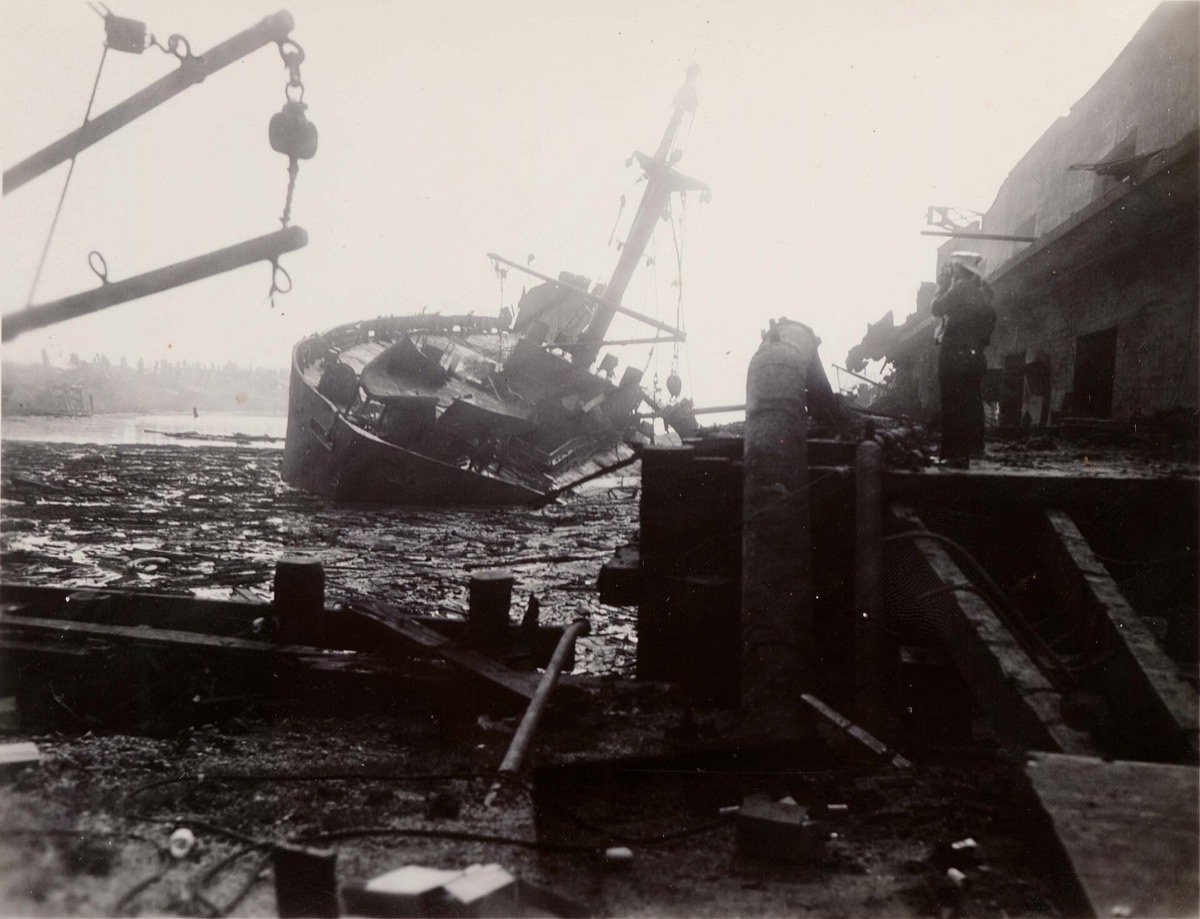
Fires around the docks were fairly common in Texas City, and residents were in the habit of going down to watch them and to watch the firemen work. On the morning of the sixteenth of April, nineteen forty-seven, the was burning, producing a dense and brilliantly colored smoke visible all over town. Her cargo included . What happened at twelve minutes past nine?
The ship detonated. The blast ruptured the Grandcamp and threw her cargo of peanuts, tobacco, twine, and remaining ammonium nitrate two to three thousand feet into the air. A fifteen-foot tidal wave crashed onto the dock. Windows shattered in Houston, forty miles north, and people felt the shock in Louisiana, two hundred and fifty miles away. The Monsanto plant, three hundred feet off, was destroyed.
Dock fires were fairly common in Texas City and residents treated them as something to go and see. That may explain why so many bystanders were present, and why so many of them were among the casualties. The Grandcamp’s fire sent up a dense, brilliantly colored smoke visible across the town.
The ammonium nitrate detonated at twelve minutes past nine. The ship ruptured, throwing cargo and fuel two to three thousand feet up, and fireballs streaked across the sky visible for miles over Galveston Bay as molten ship fragments erupted from the pier. A fifteen-foot tidal wave crashed onto the dock and flooded the area around it. Most buildings closest in were flattened, and the Monsanto plant three hundred feet away was destroyed.
The reach of it was extraordinary. Windows shattered in Houston, forty miles to the north, people in Louisiana felt the shock two hundred and fifty miles away, and the blast registered on a in Denver. A barge called the Longhorn 2, anchored in port, was lifted out of the water and set down a hundred feet away on shore. Shrapnel tore into the surrounding area and flaming debris ignited refinery tanks, starting secondary fires.
The response was slowed by an accident of timing. The fire chief and twenty-seven firefighters died in the initial blast, and telephone service in Texas City was down because the operators were on strike. They returned to work as soon as they heard, though the delay had already cost time. The Army, Navy, Coast Guard, Marine Reserve and Texas National Guard all sent people, and with no working hospital in town, volunteers turned city hall and the chamber of commerce into infirmaries.
wat. They came down to watch a dock fire, because a dock fire was something you watched.
wat wat
The crowd is the point. A routine dock fire drew spectators because dock fires were routine, which is how an industrial accident turned into a civic catastrophe.
How do we know?
The City of Texas City’s local history exhibit on the nineteen forty-seven disaster sets out the sequence of the first explosion, the damage, the eyewitness accounts and the response.
What is still unknown
A city exhibit assembled for local history, built from photographs and recollections. It describes what happened rather than analyzing why the cargo was stored and handled as it was.
Learn something?
Where to next
 How did a tank of molasses kill twenty-one people?disaster