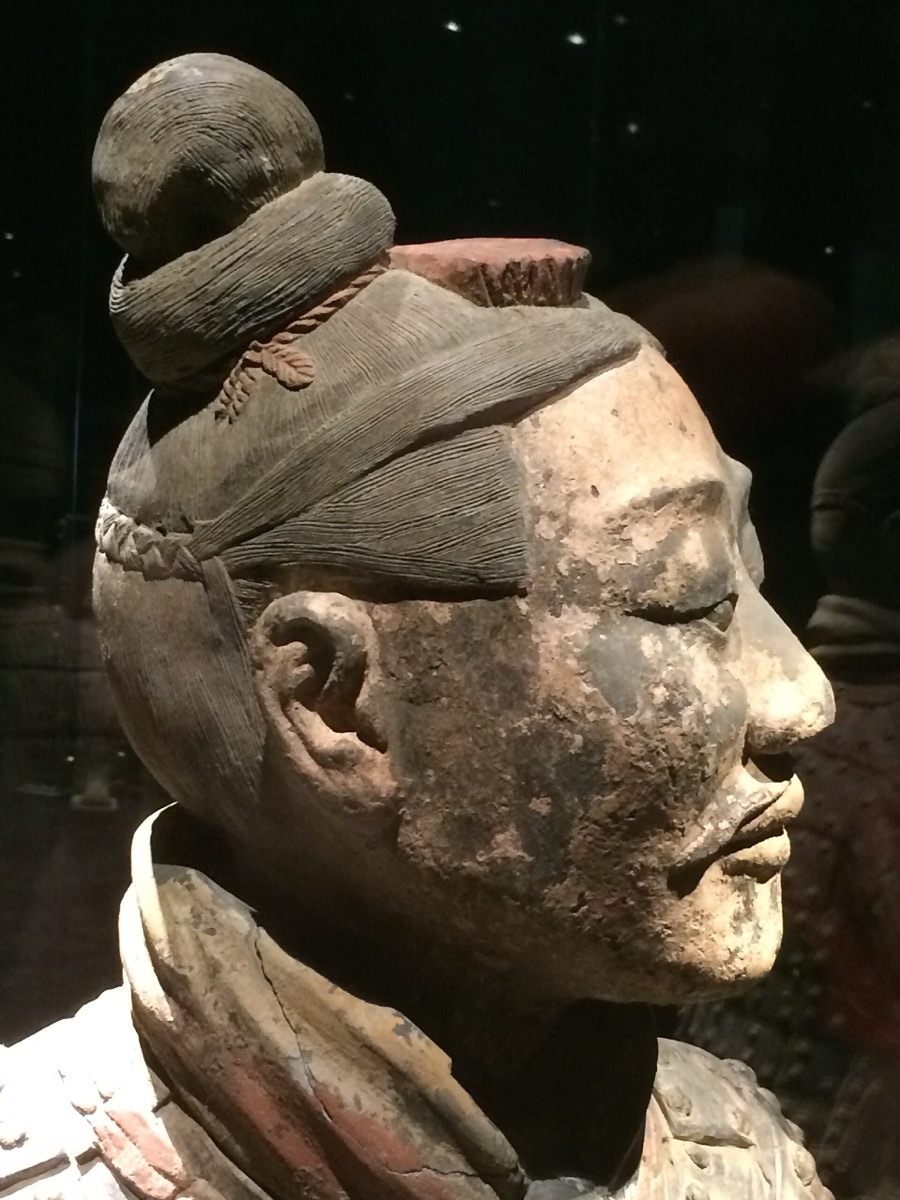
The First Emperor’s runs to more than eight thousand clay soldiers, and the line everyone repeats is that no two faces are alike. Sculpting eight thousand different faces by hand is close to impossible. So how was it done?
The workshops used a small number of base molds for heads and faces, then added moustaches, creases and hair by hand on top of what came out of the mold. That finishing layer is enough for the eye to read each figure as a different man. The famous individuality is real at the level of impression, and it did not come from sculpting each one.
The claim is so widespread it feels like part of the site: eight thousand soldiers, every face its own. It also feels right, because standing in front of them you do see different men.
The study moved from impression to measurement. Researchers measured and sorted facial features across hundreds of figures and examined the in the clay. What turned up was work: a fairly small number of base molds for heads and faces, not free sculpting of each piece.
The variety comes at the next step. On a head out of the mold, added a mustache, creases, a hairstyle and the detail of the ears. That layer does the work. The same principle governs the body, assembled from components made separately.
Which is a more impressive finding than the myth. This is organized production at near-industrial scale, with a division of labor, workshops and foremen’s stamps standing in for a guarantee, on a project that probably employed tens of thousands. Not every figure has been analyzed to the same depth, and other components may have been made by methods still under study.
wat. The terracotta army is not eight thousand different faces. It is a handful of base molds, finished by hand so that no two look the same.
wat wat
It reveals an organized production line at nearly industrial scale, on a project that probably employed tens of thousands of workers and craftsmen.
How do we know?
Researchers measured and sorted facial features across hundreds of figures, and read the manufacturing marks left in the clay itself.
What is still unknown
Not every figure has been analyzed to the same depth, and other parts of the army, the hands or the armour, may have been made by methods still being studied.
Learn something?
Where to next
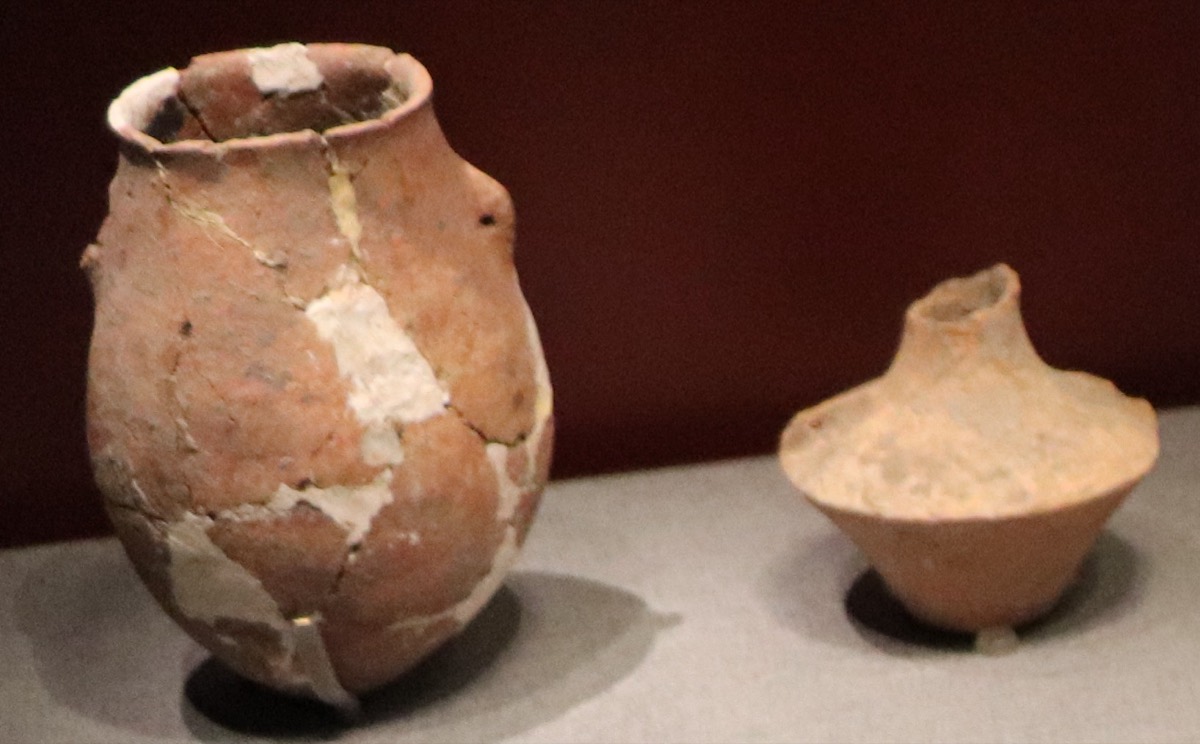 How do we know that early China made fermented drinks in two different ways?ancient China