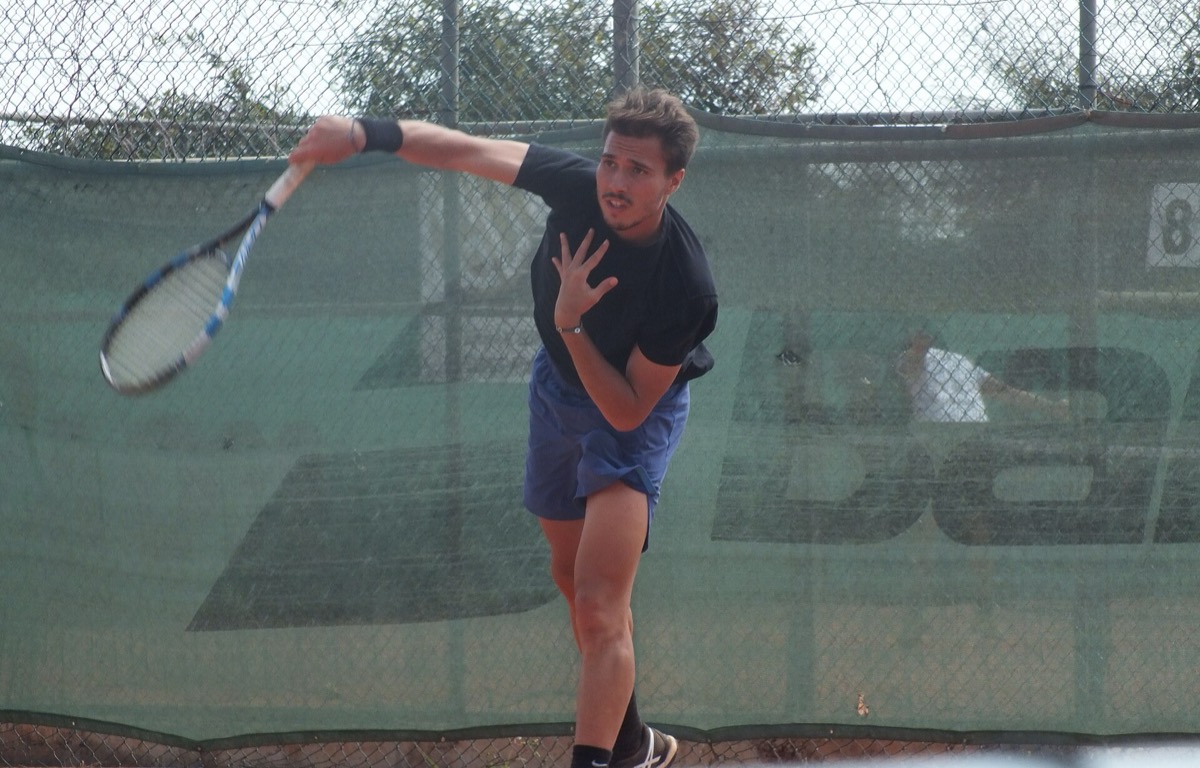
Grunting in tennis is widespread, and whether it affects an opponent’s prediction of the ball has been argued for years. Two accounts compete. Distraction says the grunt steals attention; says the sound is folded into the judgement itself, and they predict different errors.
It misleads. Players watching occluded rallies with amplified, attenuated or muted grunts judged the ball to land further away the louder the grunt was, while stayed flat. Distraction predicts the opposite pattern of errors, which leaves the sound being read as information about how fast the ball is traveling.
Grunting in tennis is a widespread phenomenon, and whether it influences opponents’ predictions of ball trajectory, and if so why, is the subject of ongoing debate. Two alternative hypotheses have been proposed for why grunting might impede those predictions.
They differ in mechanism. The holds that grunts capture attentional resources necessary for anticipation, while the multisensory integration account holds that auditory information from the grunt systematically influences a prediction typically assumed to rely on visual information.
The test puts them against each other. Tennis players were presented with a series of video clips of rallies featuring experimentally amplified, attenuated, or muted grunting sounds, and asked to predict the ball landing position.
Higher grunt intensities yielded judgments of longer ball trajectories, whereas radial prediction errors were not affected. That pattern is clearly at odds with the distraction account, which predicts larger errors after louder grunts, and it provides strong support for multisensory integration instead.
wat. Louder grunt, longer ball: the ear quietly edits what the eye reports.
wat wat
A rule against grunting would be about noise; this says the grunt is a signal, which is a different argument.
How do we know?
Müller and colleagues showed tennis players temporally occluded video clips of rallies with grunt intensity manipulated up, down or to silence, and asked them to predict the landing position.
What is still unknown
Occluded video clips and a pointing judgement, not a returned shot.
Learn something?
Where to next
 Does tightening a pressure cuff before training really improve performance?sport
 Does climbing chalk really help you hold on to rock?sport
 What changed in football when the stands emptied?sport