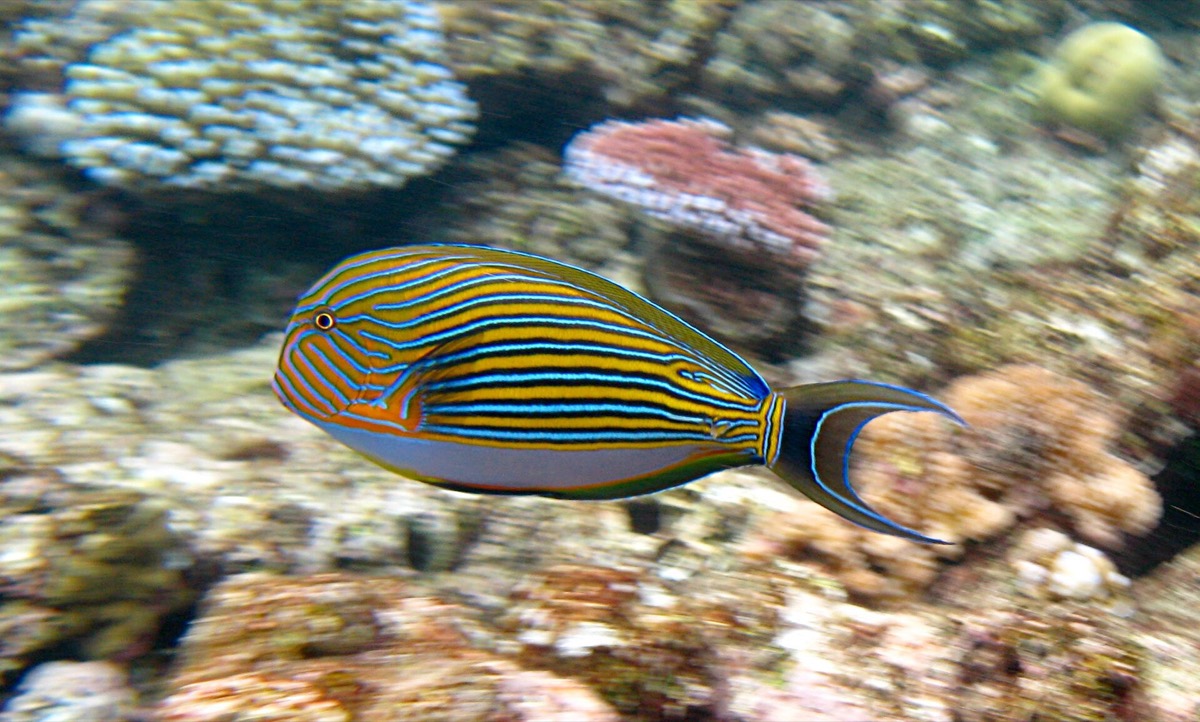
Massage lowers stress in people, and grooming looks like it does something similar in primates, but the two explanations have never been separated. The contact might be doing the work, or the relationship behind the contact might be. On a reef, cleaner wrasse stroke their clients with pectoral and pelvic fins while working, a behavior called . Soares and colleagues replaced the cleaner with a moving model. Does the touch alone help?
It does. stimulated by mechanically moving cleanerfish models had significantly lower than controls given access to stationary models. No cleaner was present, so nothing social was on offer, and the fish still came away less stressed. Physical contact by itself is therefore enough to produce a fitness-enhancing benefit, which until now nobody had shown outside humans.
Massage therapy reduces stress in humans and has measurable health benefits. Grooming in primates may do something similar, and the question that has stayed open is why. Does the benefit come from the physical contact itself, or from what the contact means between two animals that know each other?
Separating those in a primate is close to impossible, since the groomer is always somebody. Soares and colleagues went to a reef instead, to the surgeonfish Ctenochaetus striatus, which regularly visits to have ectoparasites removed.
Cleaners do more than clean. They physically touch the client with their pectoral and pelvic fins, a behavior known as tactile stimulation, and they use it to influence what the client decides to do. That gives a natural form of contact to imitate.
The experiment replaced the cleaner with a mechanically moving model. Surgeonfish stimulated by the moving models had significantly lower cortisol than controls with access to stationary ones. With no live animal involved there is no social value to attribute the effect to, which means physical contact alone is enough to produce a fitness-enhancing benefit, a result until now shown only in humans.
wat. A plastic fish moving its fins against a surgeonfish was enough to drop its cortisol, with no relationship involved.
wat wat
It separates two things that are always tangled in humans and primates, and it does so in an animal with no relationship to the thing touching it.
How do we know?
Soares and colleagues exposed the surgeonfish Ctenochaetus striatus to mechanically moving cleanerfish models or to stationary ones, and measured cortisol levels afterwards.
What is still unknown
One reef fish species and one stress hormone, measured after a short exposure. Lower cortisol is a plausible benefit rather than a proven gain in survival or reproduction.
Learn something?
Where to next
 Does a coral do better with fish living inside it?fish
 Does holding someone’s hand change what fear looks like in the brain?touch
 A fish has no cortex like ours. So how does it tell faces apart?fish