A common story ties skilled craftworkers to farming: only once there are can anyone be spared to make objects. At in Jordan, a site older than pottery, thousands of and beads at every stage of manufacture were found. What does that say?
Skill came first. The similarity between the stages of work points to skilled, repeated production, perhaps for . The site belongs to a period before pottery, in which the researchers found no basis for tying the craft to food surpluses or to social classes. This may have been seasonal expertise rather than full-time work.
On the accepted account, skilled craftworkers appear after a society produces enough food that certain people no longer have to obtain it themselves. Such an account also assumes a division of roles and a complex social organization.
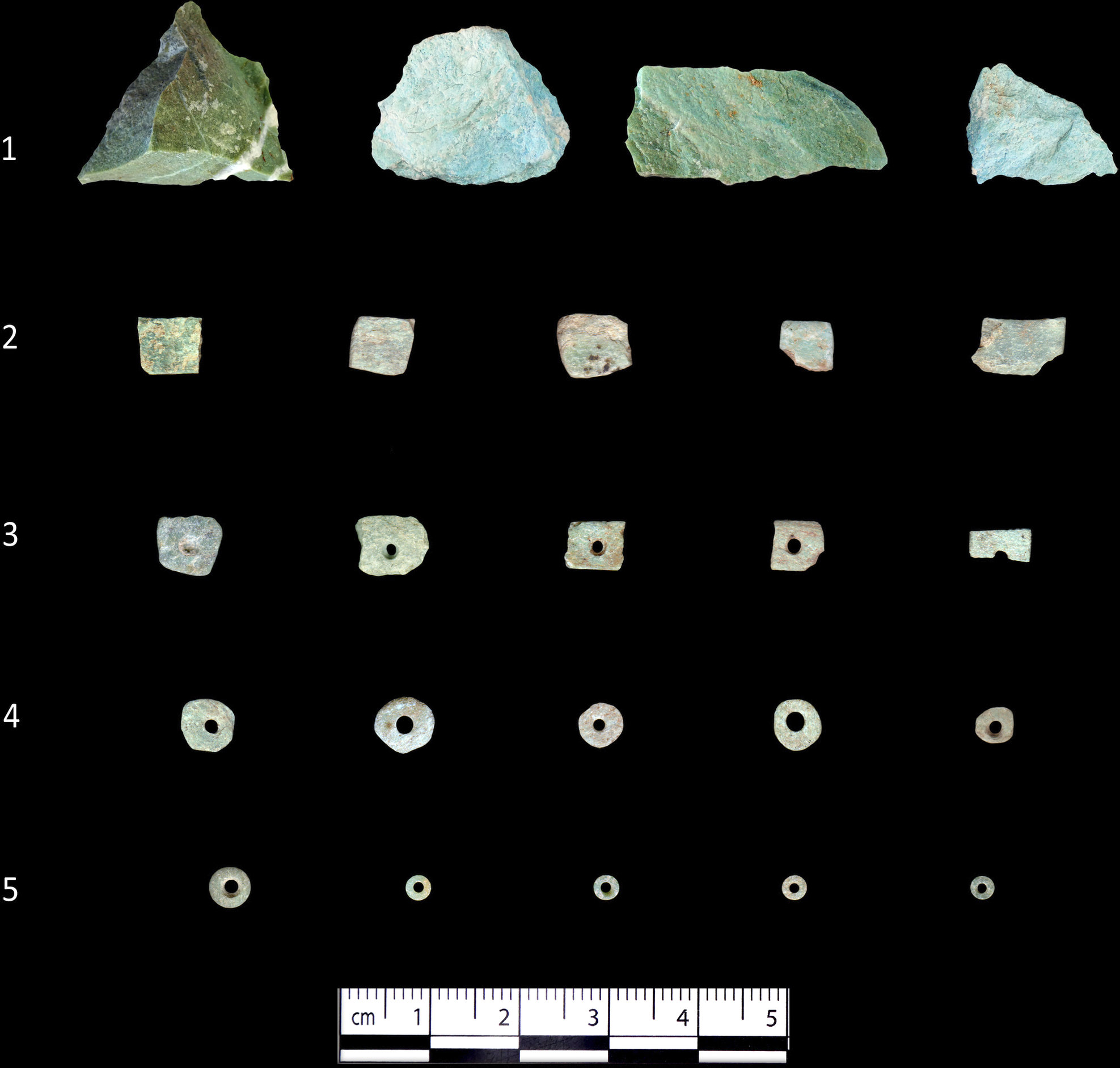
At Shubayqa 6 thousands of working fragments, blocks of stone at the start of the process and finished beads were found. The recurring sequence of stages shows the people there knew how to make the beads systematically, rather than trying once.
The site dates to an early stage of the Neolithic, before the production of pottery. The researchers argue that signs of skilled craft appeared there with no evidence of a system of food surpluses, hierarchical households or a class of patrons.
The researchers suggest this is emerging expertise, perhaps seasonal and partial, rather than a permanent workshop. We have no work diary and no list of traders; so the card does not claim to know who produced the beads or where they went.
wat. Shubayqa 6 in Jordan shows systematic production of stone beads before food surpluses and clear social classes appeared in the region.
wat wat
Expertise can grow out of tradition, practice and ties between communities, with no king and no granary.
How do we know?
The researchers mapped and compared production debris, unfinished beads and finished beads, reconstructing a sequence of work and how uniform it was.
What is still unknown
The finds support skilled production at one site; there is no way to see directly who made each bead, how long they worked, or whether the beads really were exchanged between settlements.
Learn something?
Where to next
 Were the people buried together in an ancient village necessarily family?Neolithic