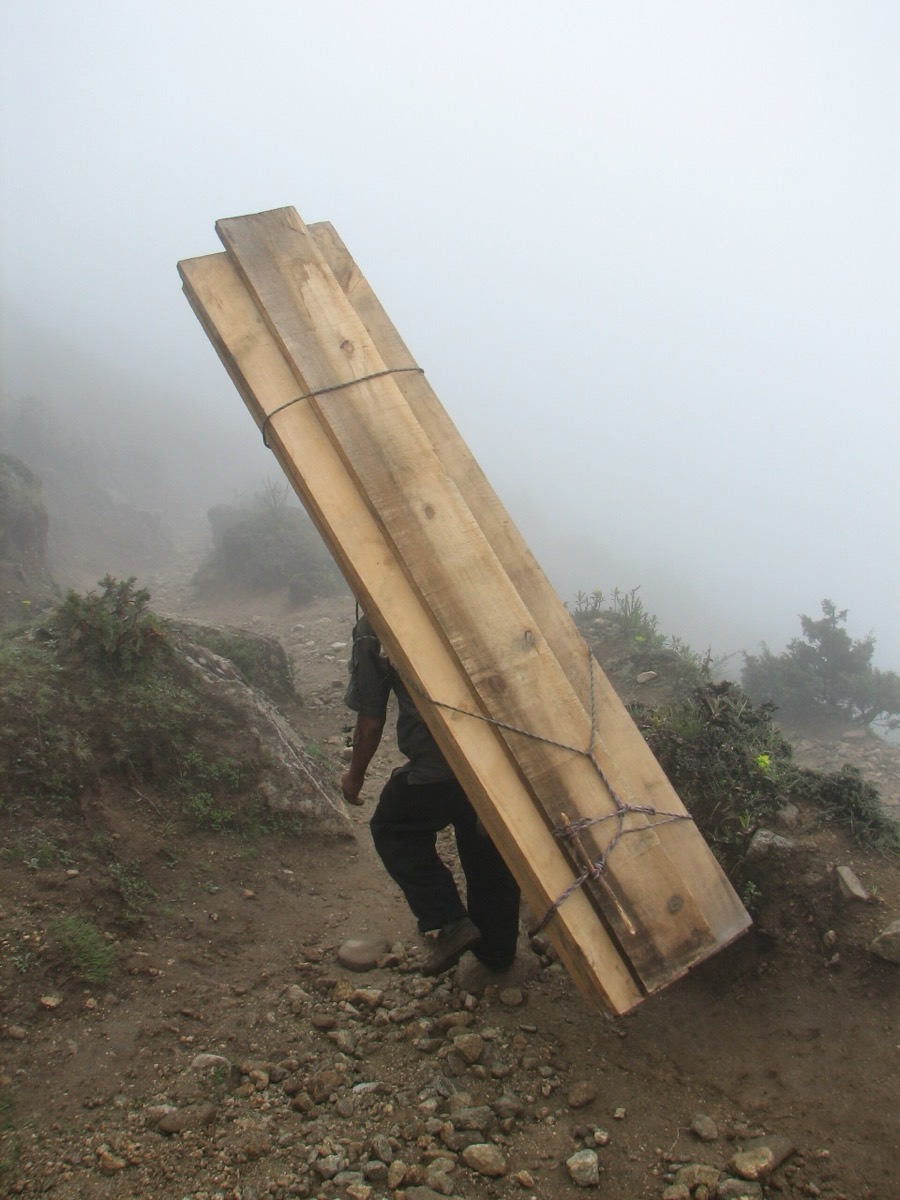
Low tissue oxygen is a feature of heart failure, lung disease, anemia and many cancers, and it also happens to healthy people high on a mountain. Himalayan populations have lived with it for generations, and the usual assumption is that they adapted by delivering more oxygen to the tissues. One study looked at the other end of the chain instead, at what the tissues do with it. Which adaptation did they find?
The adaptation is in the using, not the delivering. Studying Sherpas turned up , underpinned by genetic differences, that let their tissues use oxygen more efficiently. The consequence is conserved at high altitude, where lowland muscle runs down. The authors suggest this possibly contributes to the superior performance of elite climbing Sherpas at extreme altitude, which is a careful way of putting it.
, a relative fall in tissue oxygen levels, is a common feature of many human diseases, including heart failure, lung diseases, anemia and many cancers, and it compromises normal cellular function. The same state arises in healthy people at high altitude, not because the air changes composition but because low reduce the pressure pushing oxygen into the blood.
Human populations resident at high altitude in the Himalayas have evolved mechanisms that let them survive and perform there, including adaptations that preserve oxygen delivery to the tissues. Delivery is where most of the attention has gone, through blood, breathing and circulation.
This work studied the Sherpas and found something on the other side of the equation. Metabolic adaptations, underpinned by genetic differences, allow Sherpa tissues to use oxygen more efficiently. The functional consequence is that muscle energy levels are conserved at high altitude, where a lowlander’s would fall.
The authors connect that to performance cautiously, suggesting it possibly contributes to the superior performance of elite climbing Sherpas at extreme altitudes. Keep the design in view as well. Comparing a resident population against lowlanders is not a randomized comparison, so generations of adaptation, a lifetime of exposure and the way people live all arrive together and are difficult to pull apart.
wat. Sherpa muscle holds on to its energy where lowland muscle runs down, because of how efficiently it spends oxygen rather than how much it gets.
wat wat
Hypoxia is not only a mountaineering problem. A population that has evolved more efficient oxygen use is a working example of what a tissue can do when oxygen is scarce, which is the situation inside a failing heart or a tumor.
How do we know?
Horscroft and colleagues studied Sherpas as a high-altitude resident population, characterizing metabolic differences and the genetic differences underpinning them, alongside measures of muscle energy at altitude.
What is still unknown
Studying a resident population means the comparison is between groups rather than randomized, so adaptation, lifelong exposure and lifestyle are hard to separate. The link to elite climbing performance is offered as a possibility, not a measurement.
Learn something?
Where to next
 Should an endurance athlete train at altitude or only sleep there?altitude
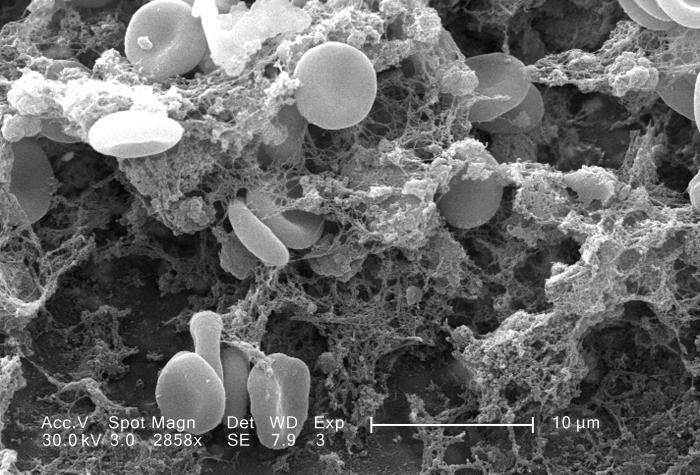 Which cell in your body gives up its own nucleus?oxygen
 Does being cold burn more than being active?metabolism