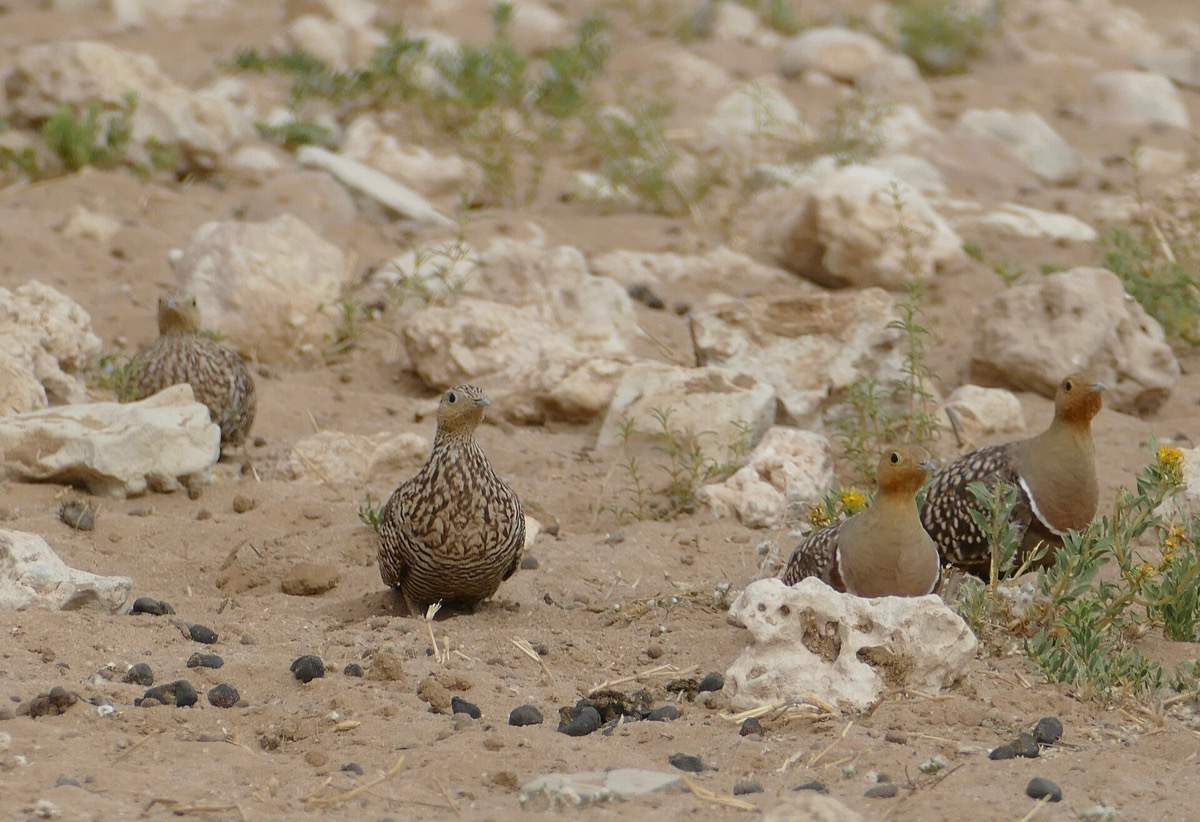
nest as much as thirty kilometers from the nearest water, and the chicks cannot go to it. The adult male flies there instead, wades in, and comes back with water held in the feathers of his belly for the whole return flight. Mueller and Gibson scanned those feathers and measured the stiffness of each part. What is holding the water in?
A difference in stiffness between the parts. and gave the geometry of every component of a belly feather, and videography caught the feather taking up water. The components differ in , and those differences are what let the structure close around water and hold it against the air of a flight. Cade and Maclean first described the mechanism in nineteen sixty-seven, and nobody had measured it since.
A Namaqua sandgrouse nests in open desert, as much as thirty kilometers from a watering hole, and its chicks stay put. Adult males solve the delivery problem with their own plumage, using specially adapted belly feathers that hold water and keep holding it through the flight home.
Cade and Maclean described the structure and part of the mechanism in nineteen sixty-seven, and it has been a standard example ever since. What was missing is the mechanics. A feather holding water against the air of a flight has to grip somewhere and give somewhere else, and that means stiffness rather than shape alone.
Mueller and Gibson measured both. Scanning electron microscopy and micro-computed tomography gave them the geometry of the separate components that make up a belly feather, at a scale no light microscope reaches, and videography showed the feather wetting and holding.
The components turn out to differ in bending stiffness, and those differences are what the water-holding mechanism runs on: parts that stay rigid and parts that fold around the liquid. The authors treat the measurements as input for a computational model of water uptake in a companion paper, which is where a description turns into something you could build.
wat. The feather is a sponge with a skeleton: stiff where it has to grip, soft where it has to fold around the water.
wat wat
It turns a famous piece of natural history into numbers, which is what an engineer needs before copying a structure that carries liquid against moving air.
How do we know?
Mueller and Gibson imaged Namaqua sandgrouse belly feathers with scanning electron microscopy and micro-computed tomography, filmed them taking up water, and measured the bending stiffness of their components.
What is still unknown
One species, and the computational modeling of water uptake appears separately, so this paper characterizes the structure rather than demonstrating the full mechanism.
Learn something?
Where to next
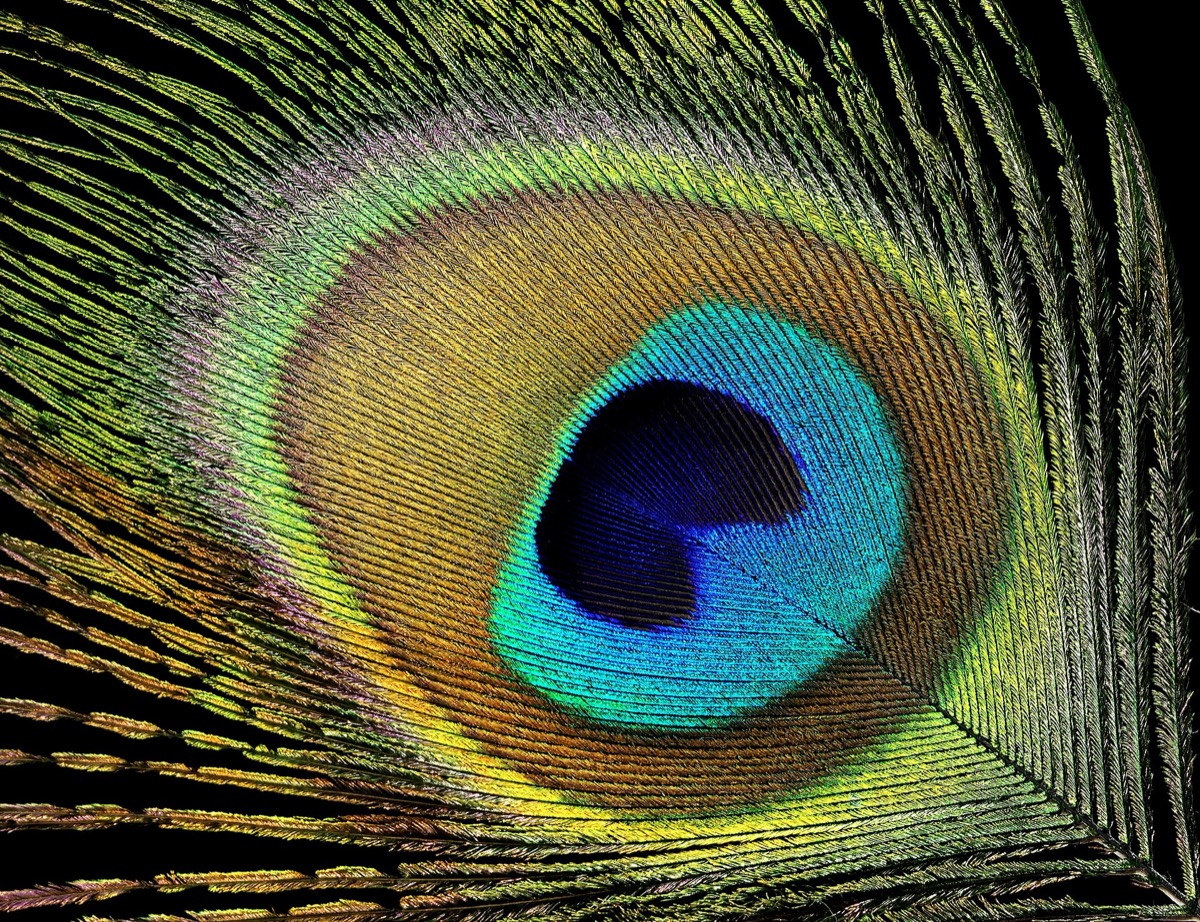 Why does a peacock’s eye change color as you move around it?feathers
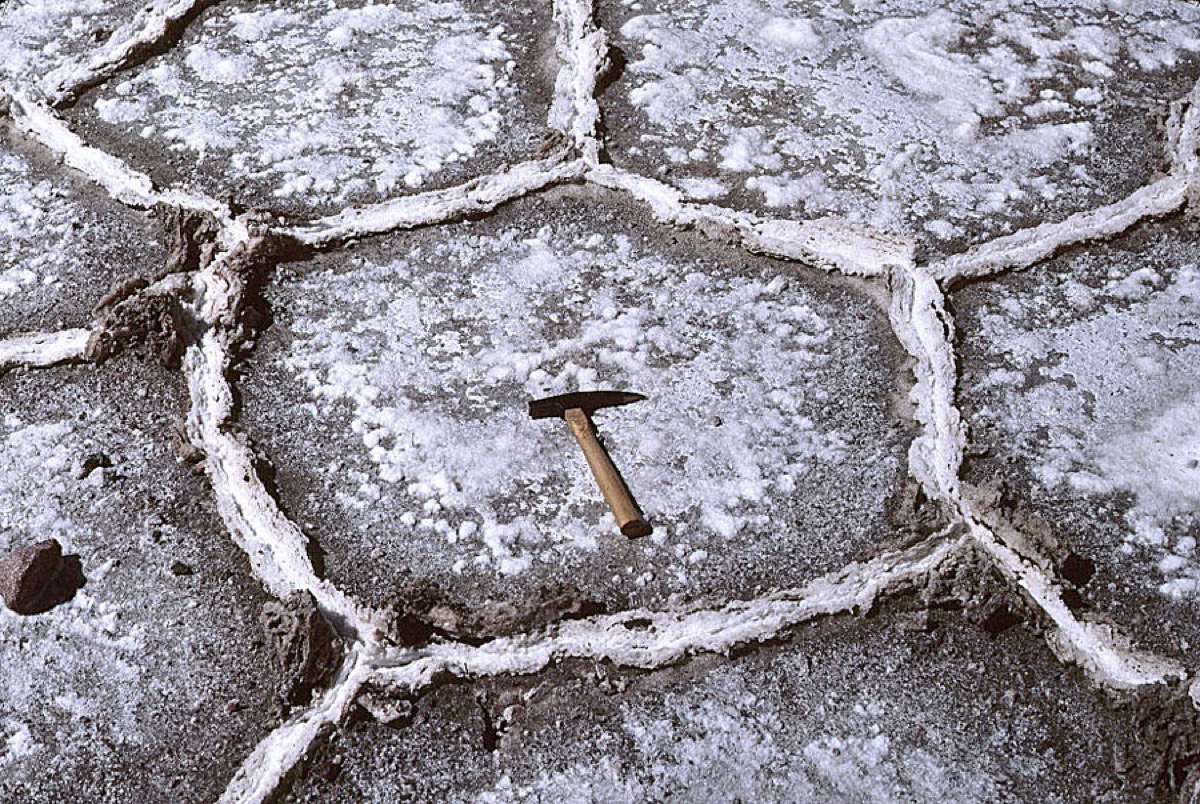 A salt flat cracks into polygons of almost equal size. What marks their borders?desert