
Repeating words in rhythm sounds like a purely mental act, with no bodily side to it. To check whether that is right, participants recited and a yogic mantra while instruments tracked their breathing, blood pressure, heart rate and cerebral blood flow. What happened to the body?
Both settled near . That is not an arbitrary number but the resonant frequency of the system regulating blood pressure, which oscillates around that rate by itself, so breathing there amplifies the oscillation instead of fighting it. The length of the formula and the group response dictate slow, regular breathing, and two distant traditions arrived at the same rate without designing it.
The question tested here is not whether prayer helps but something far narrower: what happens to the body when a rhythmic formula is spoken aloud, over and over.
The setup is simple. The team measured twenty-three participants in several states: normal breathing, free speech, reciting the rosary in Latin, reciting a yogic mantra, and breathing deliberately at a set rate. They logged breathing, pulse, blood pressure and cerebral blood flow.
The result that recurs is that both traditions produced a similar breathing rate, close to six breaths a minute. That is not an arbitrary number but the resonant frequency of the system regulating blood pressure, which oscillates by itself around that rate, so breathing there amplifies the oscillation instead of fighting it. Slow breathing widens the at the same time.
What is interesting in that is not the religion but the structure. The length of the formula and the group response dictate slow, regular breathing, and two distant traditions arrived at the same rate without planning it. And this is in healthy people, showing an immediate physiological effect rather than proving a long-term medical one, or that one tradition beats another.
wat. Sometimes the power of a repeated text lies in the breathing rate it produces.
wat wat
It connects a spiritual practice to a measurable bodily mechanism: a breathing rate can be the bridge between attention, calm and physiology.
How do we know?
The researchers measured participants during normal breathing, free speech, prayer, mantra and controlled breathing, and compared the frequency and regularity of the measures.
What is still unknown
This was a small study, in healthy people only. It does not show a long-term medical effect, or that one tradition is better than another.
Learn something?
Where to next
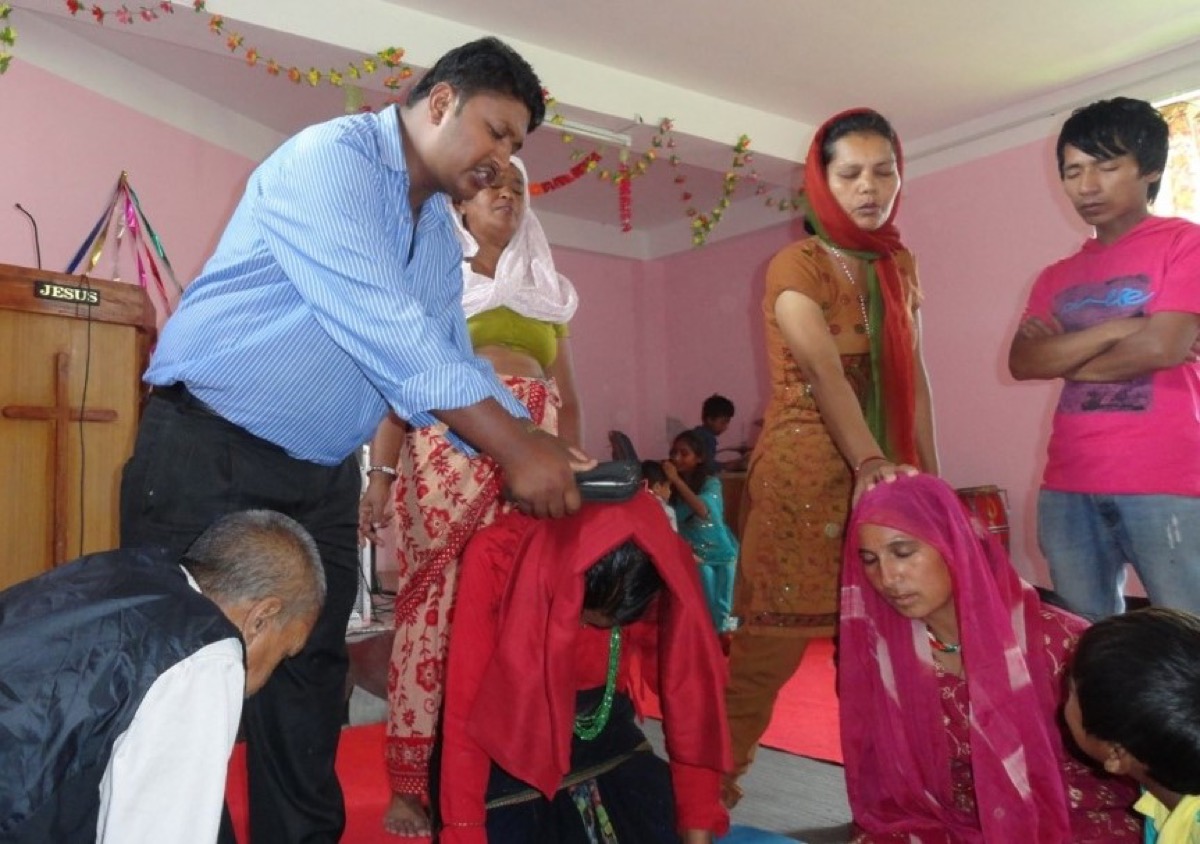 Does prayer at a distance change recovery from heart surgery?prayer
 Could a mammal in respiratory failure take in oxygen through its gut?breathing