Wilhelm Röntgen had little time for publicity. He rarely appeared at conferences, rarely wrote papers, and never promoted his work outside his field. Then one evening in his laboratory a screen glowed when nothing should have reached it, and within weeks his were a press sensation.
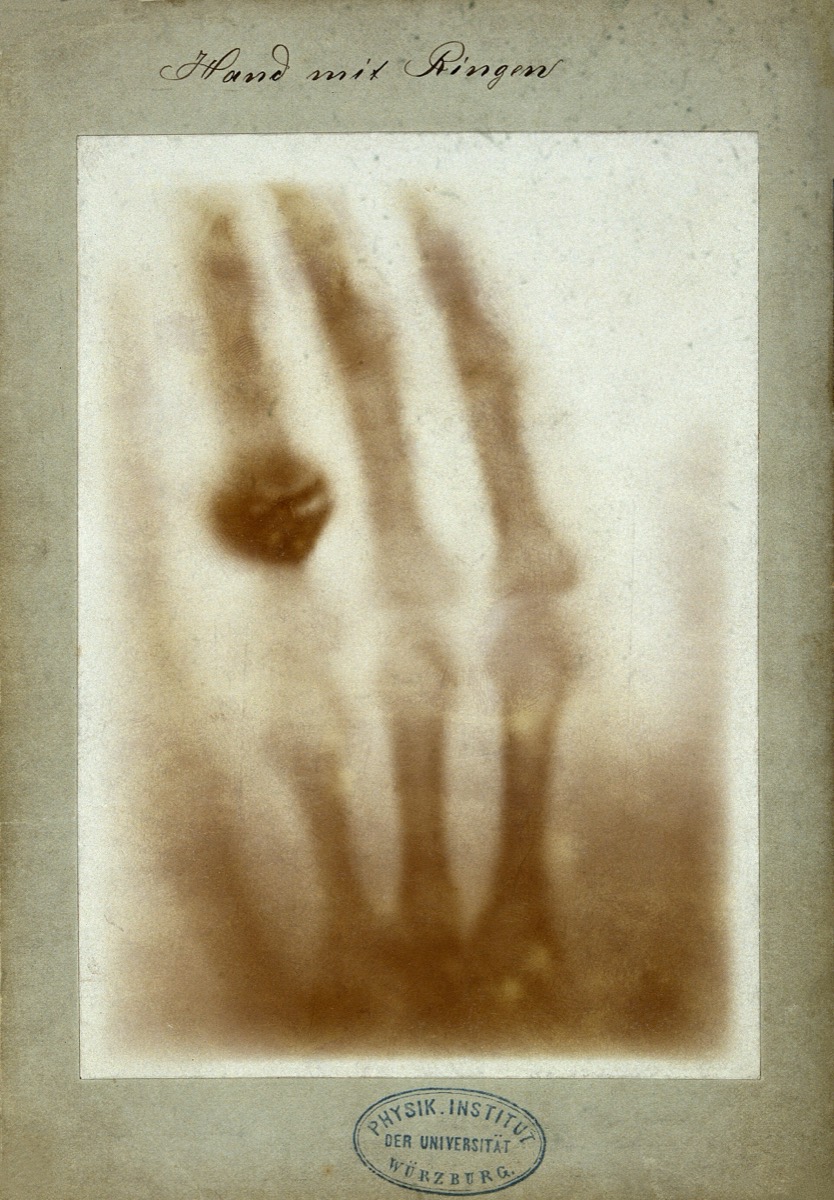
Through a photograph, not a paper. His ten-page article, On a new kind of rays, was precise, reserved and carried no images, and most scientists would likely have ignored it. On New Year’s Day 1896 he posted 90 across Europe, and twelve of them also held photographs, one of them of his wife’s hand.
One evening in November 1895, Röntgen was studying how cathode-ray tubes emit light when his attention was caught by a glowing fluorescent screen too far from the tube for the to reach. He did not leave his laboratory for weeks.
What he found was that cathode rays striking the glass vacuum tube generated a new kind of invisible ray with extraordinary . The rays crossed long distances and still lit the screen through cardboard, wood, copper and aluminum, and they could be recorded on photographic plates.
He set his reticence aside. Over Christmas he wrote a ten-page article, On a new kind of rays, accepted by the Proceedings of the Würzburg Physical-Medical Society on 28 December. He named the discovery after the mathematical X that stands for something unknown.
The article was precise and reserved, with no images, so the chances are most scientists would have passed over it. On New Year’s Day 1896 he carried 90 envelopes to the post office, twelve of them holding photographs. One, of his wife’s hand, showed the bones darkly with only faint outlines of the surrounding tissue. After that, as he later complained, all hell broke loose.
wat. The article was reserved and image-free; the photograph of a hand is what broke the news.
wat wat
A finding reaches the world through whatever channel carries it, and here a single image did what the paper would not have.
How do we know?
The Nobel Prize account of the 1901 physics prize sets out the sequence: the evening in November 1895, the weeks of investigation, the article accepted on 28 December, and the mailing that followed.
What is still unknown
This is a prize account of events rather than a study of the discovery, and it follows Röntgen’s own later description of what happened.
Learn something?
Where to next
 Who actually knew where Machu Picchu was?discovery