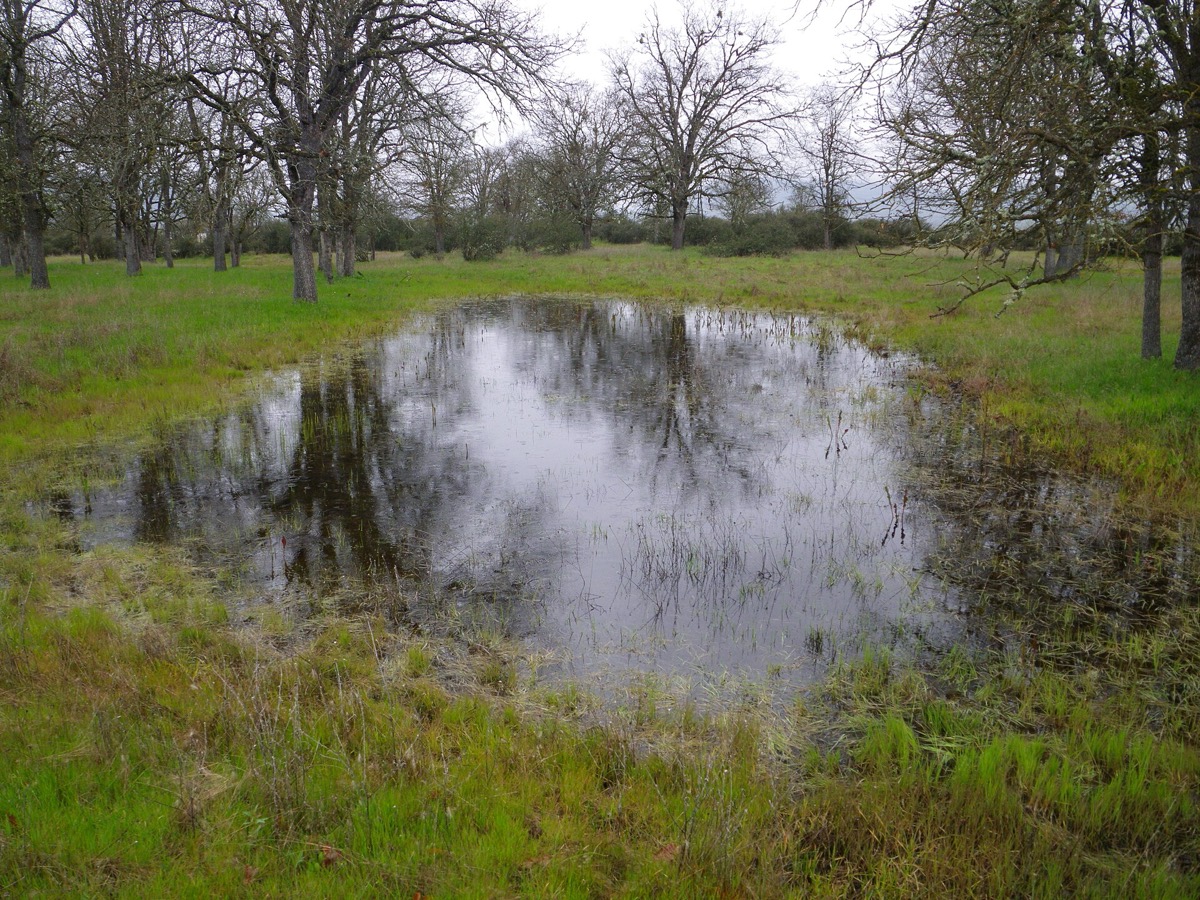
Salt spread on winter roads does not stay on the asphalt. Runoff carries it into low ground, including the seasonal pools where amphibians breed because the water dries up and fish cannot live there. Researchers measured at 541 wetlands in western Massachusetts. How far did the salt go?
Much further than the shoulder. The reached 167 to 251 meters from the road, and for the smallest wetlands 81 to 128 meters. Mean conductivity ran 274 microsiemens per centimeter inside 167 meters against 91 beyond 251, a threefold difference. The models put 14 percent lower for spotted salamanders and 15 percent lower for wood frogs inside that zone.
De-icing salt does not vanish when the ice melts. Runoff carries it downhill into the low spots of a landscape, and some of those low spots are the seasonal pools amphibians rely on for breeding.
The survey covered 541 wetlands identified as potential in western Massachusetts. The team measured conductivity as a proxy for dissolved salt, recorded the distance to the nearest road, and looked for the species that can only breed in such pools.
The estimated reach of the road came out at 167 to 251 meters. The conductivity gradient is clear: a mean of 274 microsiemens per centimeter within 167 meters, 168 between 167 and 251, and 91 beyond that.
The biology follows the chemistry. At the threefold higher conductivities typical inside the zone, models predict 14 percent lower occupancy for spotted salamanders, 15 percent for wood frogs, and 29 percent smaller populations for the salamanders. This is observational, so salt travels alongside noise and drainage changes, and the relevant area is plainly much larger than the shoulder of the road.
wat. In western Massachusetts the salt from a road showed up in seasonal pools more than 150 meters away.
wat wat
Winter road management reaches habitat far beyond the verge, so a narrow protective buffer around a wetland can miss most of the problem.
How do we know?
Charney and colleagues measured conductivity and surveyed for vernal-pool obligate species at 541 potential vernal pools, then fitted occupancy and N-mixture models against distance from the road.
What is still unknown
Conductivity is an indirect measure of salt, and this is observational. A roadside also brings noise, altered drainage and other damage, and those travel with the salinity rather than separately from it.
Learn something?
Where to next
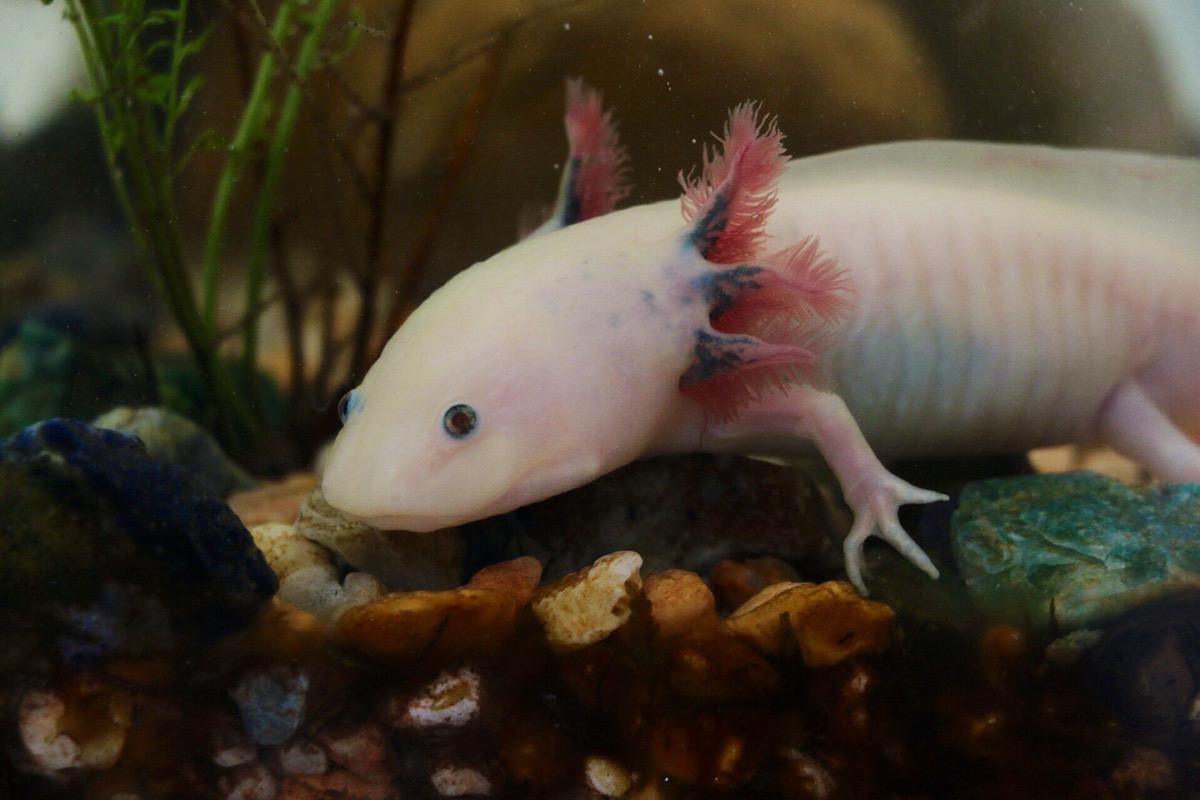 Which animal grows a whole leg back, bone and nerves included?amphibians