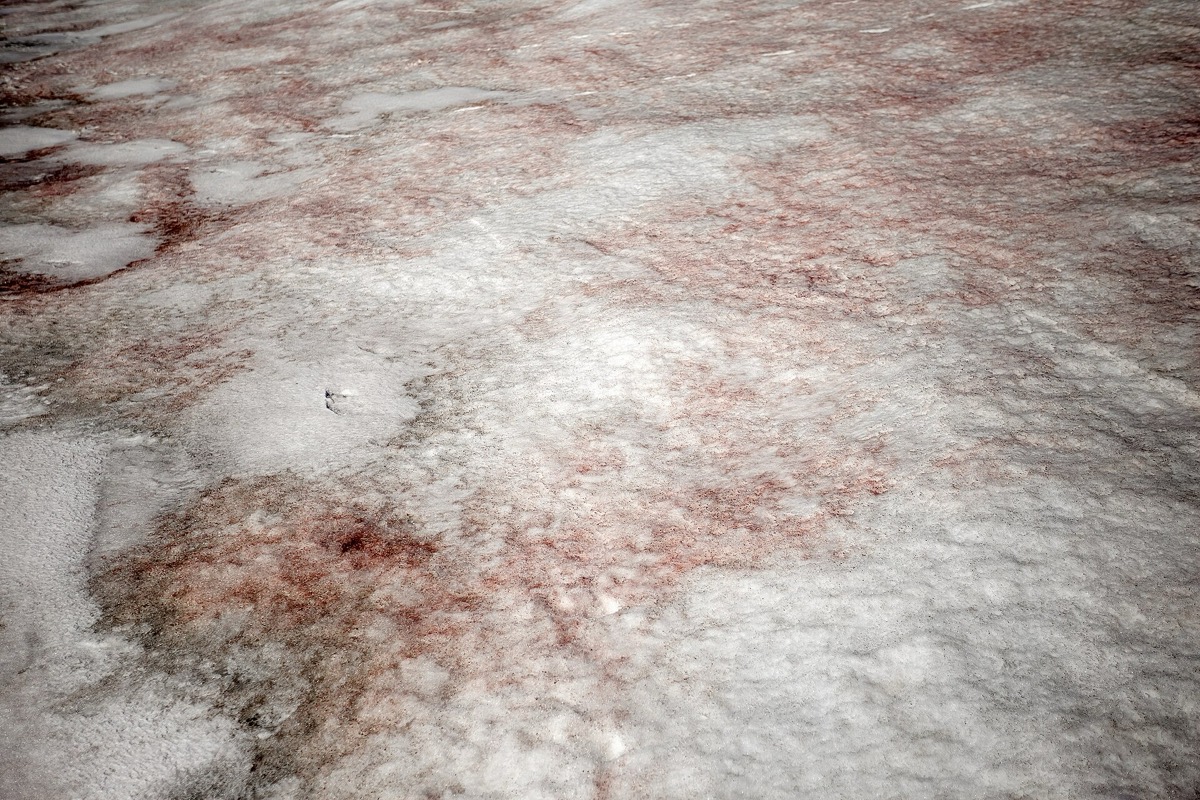
The red patches on snow are not spilled dye but of tiny algae, and the protects them from strong radiation. Except that it also changes the surface. What does that do to the snow around them?
Darkens it. White snow reflects most of the light and stays cold; dark snow absorbs more energy and melts. A study across the Arctic estimated that a red bloom can cut the of snow, its reflectance, by as much as 13 percent over a single melt season. Which makes a loop: the melted area widens, exposing more surface that absorbs.
Red patches on snow look like spilled dye, and they are a bloom of tiny algae living on the surface of the melting snow.
The red pigment protects them from strong radiation, which is especially fierce there because it arrives both from above and reflected off the white surface. The darkening itself is not a purpose but a side effect.
And still it changes the surface. White snow reflects most of the light and stays cold, and dark snow absorbs more energy and melts. A study in the Arctic estimated that a red bloom can cut the reflectance by as much as thirteen percent over a single melt season.
Which means a loop: the melted area widens and exposes more surface that absorbs. Melt models were built around temperature, radiation and dust, so leaving out may understate the rate. The figure is an estimate for the blooms sampled, and the density of the algae, the weather and dust change it from place to place.
wat. Red algae protect themselves from the sun, and at the same time make the snow around them absorb more of it.
wat wat
Models of snow and ice melt may understate the rate if they leave out the effect of living things on the color of the surface.
How do we know?
The researchers sampled red snow at Arctic sites, measured pigments and reflectance, and compared the composition of the algae against the darkness of the snow.
What is still unknown
The 13 percent figure is an estimate for a melt season and for the blooms sampled; the density of the algae, the weather and dust all change the effect from place to place.
Learn something?
Where to next
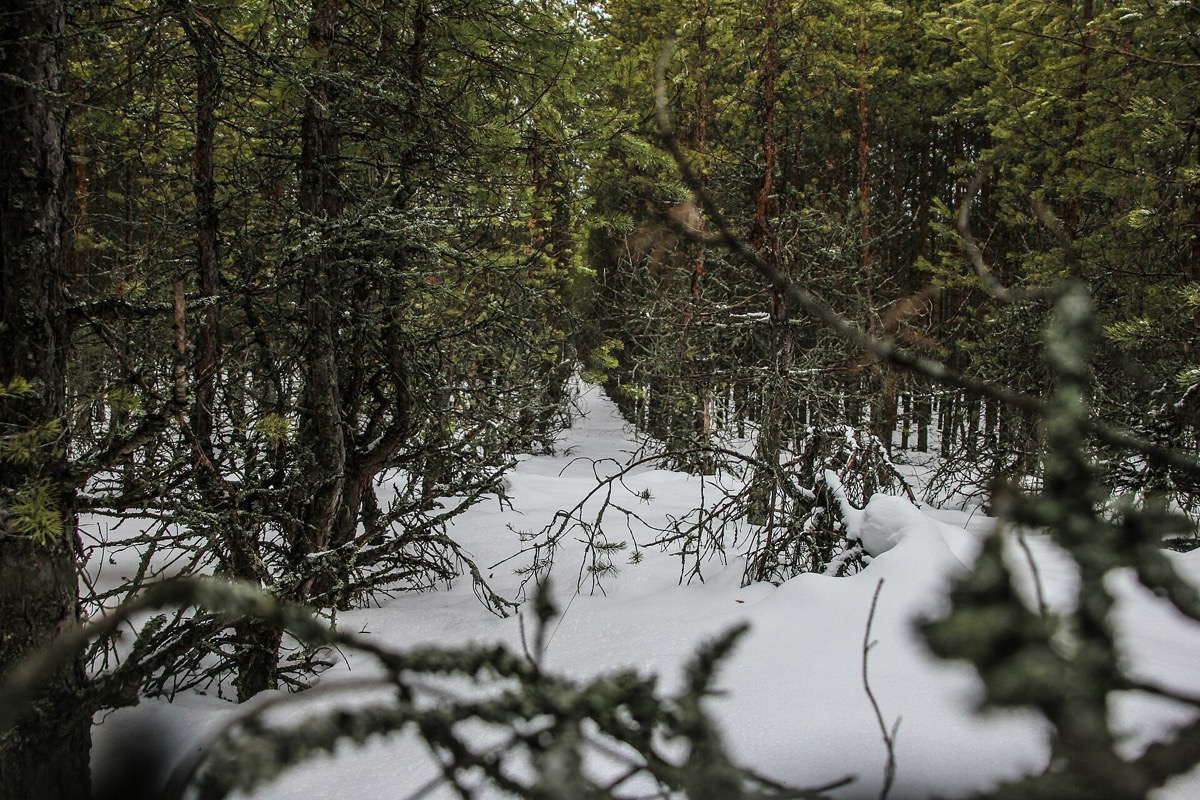 Can planting trees warm a place rather than cool it?albedo