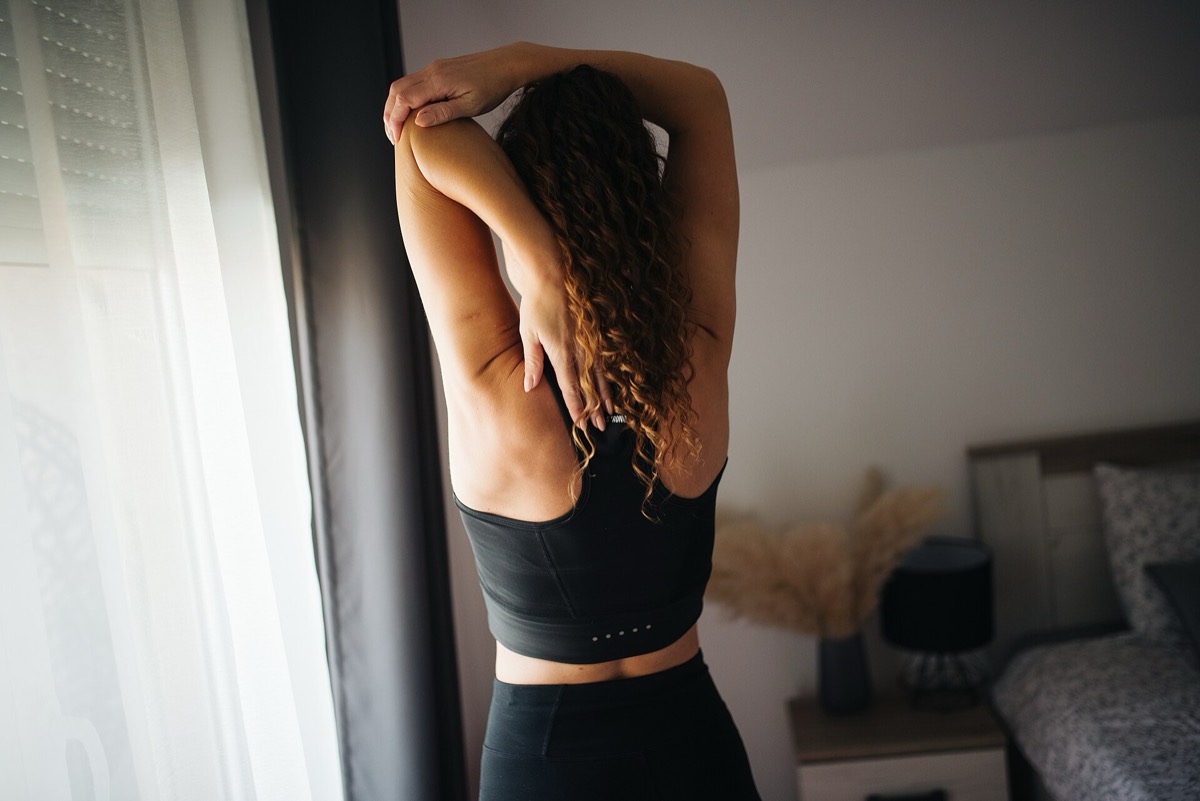
Post-exercise stretching is commonly prescribed for recovering strength and and for reducing muscle soreness the next day. Coaches have taught it for generations. The question the trials can settle is not whether it does something, but whether it beats simply resting.
Not more than rest. From 17,050 records retrieved, eleven randomized controlled trials qualified and ten entered the meta-analysis, covering 229 participants aged 17 to 38 years. Static stretching, passive stretching and were compared against and against alternatives such as low-intensity cycling.
Post-exercise stretching, the cool-down, is commonly prescribed for improving recovery of strength and range of motion and for diminishing after physical exertion. The open question is whether it is better for recovery than other post-exercise options.
The review compares it against both doing nothing and doing something else. Eligible trials had to be supervised and randomized, and had to report short-term recovery within an hour of exercise or delayed recovery at least a day later. The comparison was passive recovery or an alternative such as low-intensity cycling.
The search was wide and the yield small. Trials published in any language or date were eligible, eight databases were searched, and from 17,050 records retrieved only eleven randomized controlled trials entered the qualitative analysis, with ten of them pooled.
Those ten cover 229 participants between 17 and 38 years old, mostly male, across exercise protocols ranging from cycling to strength training. Risk of bias was assessed with Cochrane RoB 2, the meta-analyses used an inverse variance random-effects model, and GRADE was applied to the methodological quality of the studies.
wat. Against sitting still, the cool-down stretch had nothing left to show.
wat wat
A habit that costs ten minutes after every session deserves to be compared against doing nothing at all.
How do we know?
Afonso and colleagues followed PRISMA, registered the protocol in advance, searched eight databases without limits on language or date, assessed bias with Cochrane RoB 2 and graded the evidence with GRADE.
What is still unknown
Ten trials and 229 participants, mostly male, across exercise protocols that varied from cycling to strength training.
Learn something?
Where to next
 Does an ice bath after training actually speed up recovery?recovery
 What changed when basketball players tried to sleep ten hours?recovery
 Does a foam roller really speed up recovery?recovery