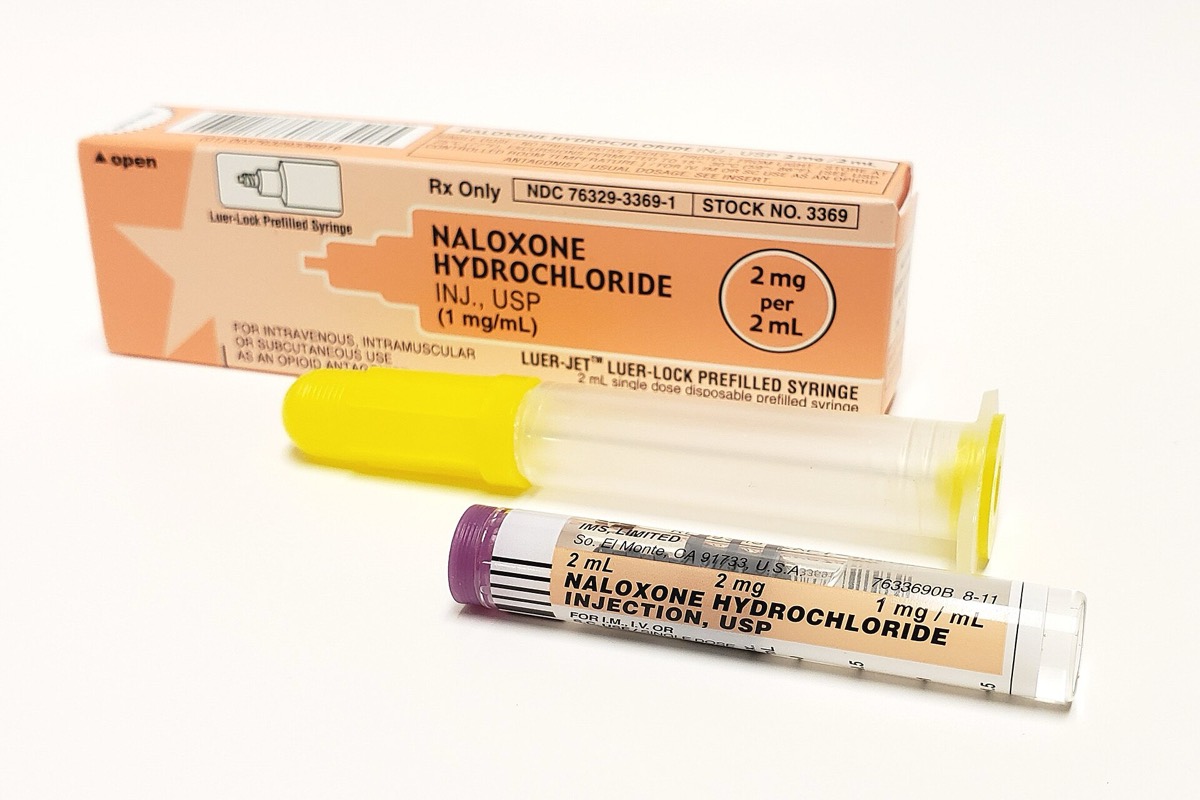
A placebo that reduces pain has to be reducing it through something, and in 1978 the candidate was the body’s own . There is a way to test that: block the opioid receptors and see whether the placebo effect survives. So patients having impacted wisdom teeth removed received or a placebo under randomized, double-blind conditions, and rated their pain. What did the blocker reveal?
Blocking opioid receptors made the pain worse, and only for some people. Patients given naloxone reported significantly more pain than those given placebo. Splitting them by their first drug showed why: naloxone given second raised pain in but added nothing in nonresponders. Nonresponders ended with a mean pain rating identical to responders who had then received naloxone.
A placebo that reduces pain is doing something, and by the late 1970s there was a specific hypothesis about what. Endorphins, the body’s own opioids, had recently been found, which offered a mechanism: belief triggers endogenous opioid release, and the opioids do the analgesia. The hypothesis suggested its own test.
All patients had extraction of impacted mandibular third molars, with diazepam, nitrous oxide and a local block with mepivacaine. Three hours and four hours after surgery, naloxone or a placebo was given under randomized, double-blind conditions, and pain was rated on a .
Patients given naloxone reported significantly greater pain than those given placebo. On its own that is suggestive and not decisive, since naloxone might simply increase pain in everybody. The informative analysis came from splitting patients by what their first drug had done.
Those given placebo first fell into two groups: responders, whose pain was reduced or unchanged, and nonresponders, whose pain increased. Naloxone given as a second drug produced no additional increase in nonresponders, while it did increase pain in responders. Nonresponders finished with a mean pain rating identical to that of responders who had received naloxone second. So the entire pain-enhancing effect of naloxone is accounted for by what it did to placebo responders, which is consistent with endorphin release mediating placebo analgesia. It remains one study, in one kind of pain, with a drug that is not perfectly selective.
wat. An opioid blocker took the relief away from the people the placebo had helped, and left everyone else exactly where they were.
wat wat
The logic is what makes this a classic. The whole of naloxone’s pain-increasing effect was accounted for by its action on placebo responders, which is hard to explain unless the placebo relief was running on endogenous opioids.
How do we know?
Levine, Gordon and Fields gave naloxone or placebo three hours and four hours after removal of impacted mandibular third molars, under randomized double-blind conditions, with pain rated on a visual analogue scale.
What is still unknown
A small 1978 study in one kind of pain, dental postoperative pain, with everyone also having had diazepam, nitrous oxide and a local block. Naloxone is not perfectly selective, so this is consistent with the endorphin hypothesis rather than proof of it.
Learn something?
Where to next
 Does a placebo still work if you are told up front that it is one?placebo
 Does a treatment work better when it has a side effect?placebo
 Why does a chili pepper feel hot when it never warms your mouth?pain