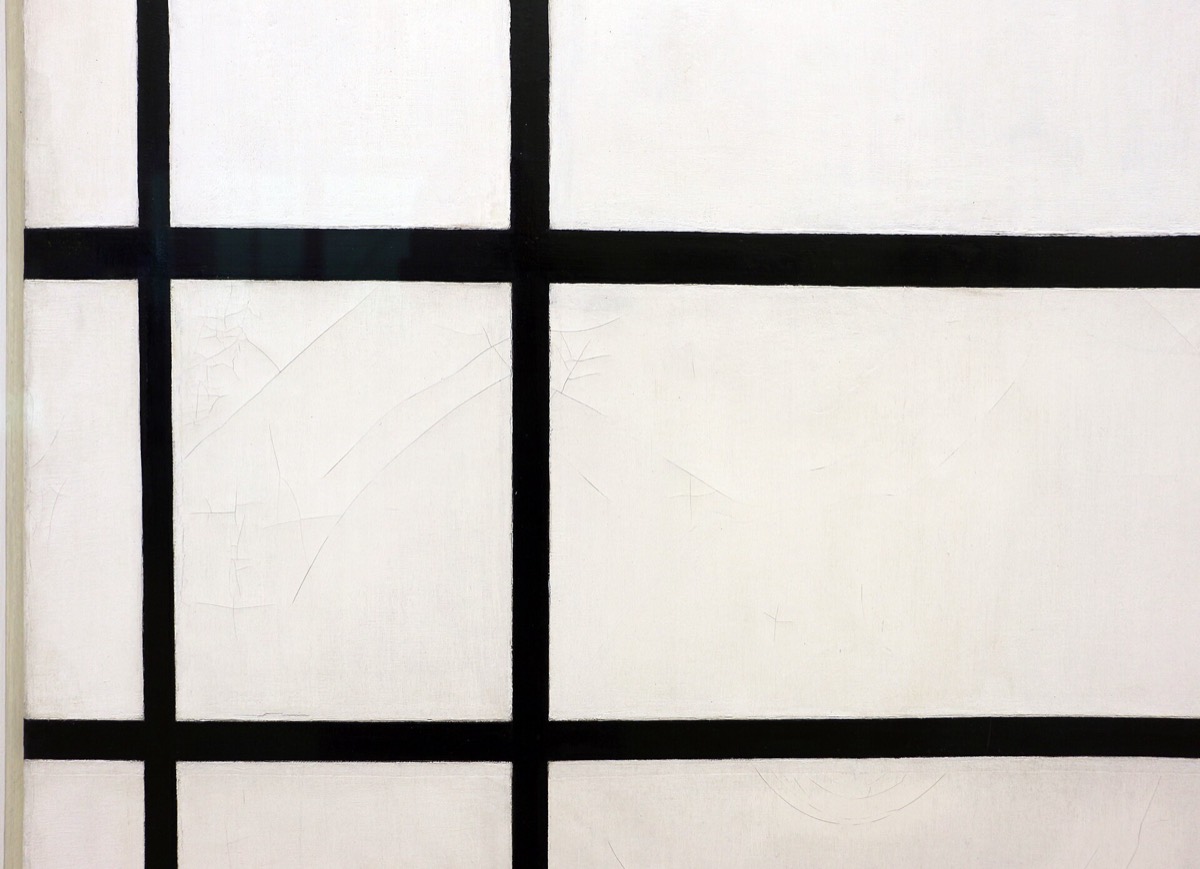
Date the paint, not the canvas. Hendriks and colleagues took two from a painting carrying the date 1866: a canvas fiber and a paint chip under two hundred micrograms. The canvas came back consistent with the nineteenth century. The paint came back post-1950. That mismatch is the forger’s method made visible.
The usual test is weaker than this. Authentication normally establishes a , the earliest possible date, by checking whether any material in the painting was invented later than the claimed date. That gives relative information only, and a careful forger who uses period-appropriate materials can pass it. dating gives an absolute age instead, for the material actually there.
Art forgery is old, and as the art market has grown the detection of it has had to get more sophisticated. The most conclusive criterion in the field is scientific proof of material anachronism: something in the object that did not exist when the object claims to have been made. That is how the terminus post quem works, by comparing materials present against the earliest date each was discovered or produced.
The trouble is that it yields relative age information only, and so it may fail to prove a forgery at all. A forger who restricts himself to materials available in the claimed period leaves nothing anachronistic to find. Radiocarbon dating is attractive precisely because it returns absolute ages, with a definite time frame for the materials used.
Until recently it was also impractical. Early radiocarbon dating required tens of grams of material, which is unthinkable for a painting. Accelerator mass spectrometry, and the further development of gas ion sources, brought the requirement down to microgram amounts of carbon. That opened the possibility of dating individual paint layers rather than the object as a whole.
The case in this paper is an artwork carrying the date of 1866. Two microsamples were taken, a canvas fiber and a paint chip, each under two hundred micrograms, and each delivered a different radiocarbon response. Dating the gave clear evidence of a post-1950 creation on reused canvas, which uncovers the forger’s specific strategy. Two cautions: the technique is invasive, and this is one demonstration case rather than a survey of how reliably it performs.
wat. The canvas was telling the truth and the paint on top of it was lying.
wat wat
It closes the loophole that reused old canvases opened. Any test that examines only the support can be satisfied by buying a genuine period painting and painting over it.
How do we know?
Accelerator mass spectrometry with a gas ion source can date samples of a few micrograms of carbon. That is small enough to date one paint layer, so the canvas and the organic binder in the paint could be dated separately.
What is still unknown
The method is invasive, since it needs physical samples removed from the artwork, and this paper reports one painting. It establishes that the technique works on a complex case rather than measuring how often it succeeds.
Learn something?
Where to next
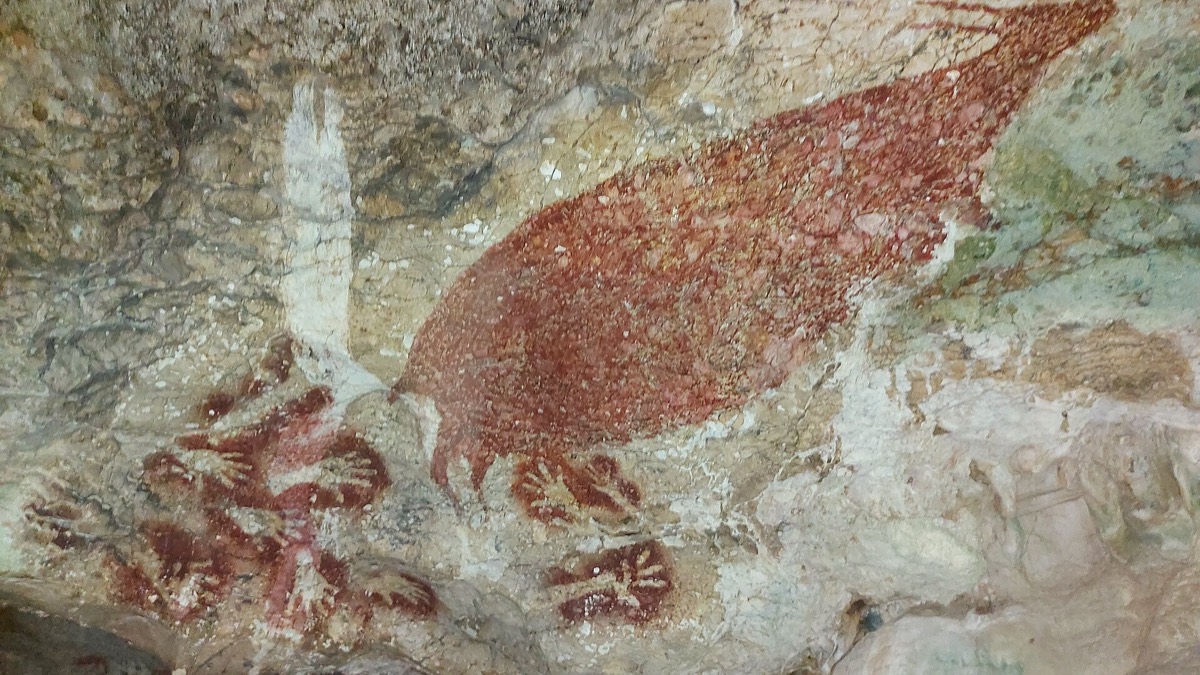 When did people start painting a story rather than a thing?dating
 Can you authenticate a Pollock by measuring its fractals?painting
 Did a giant eruption bring down a kingdom in East Asia?dating