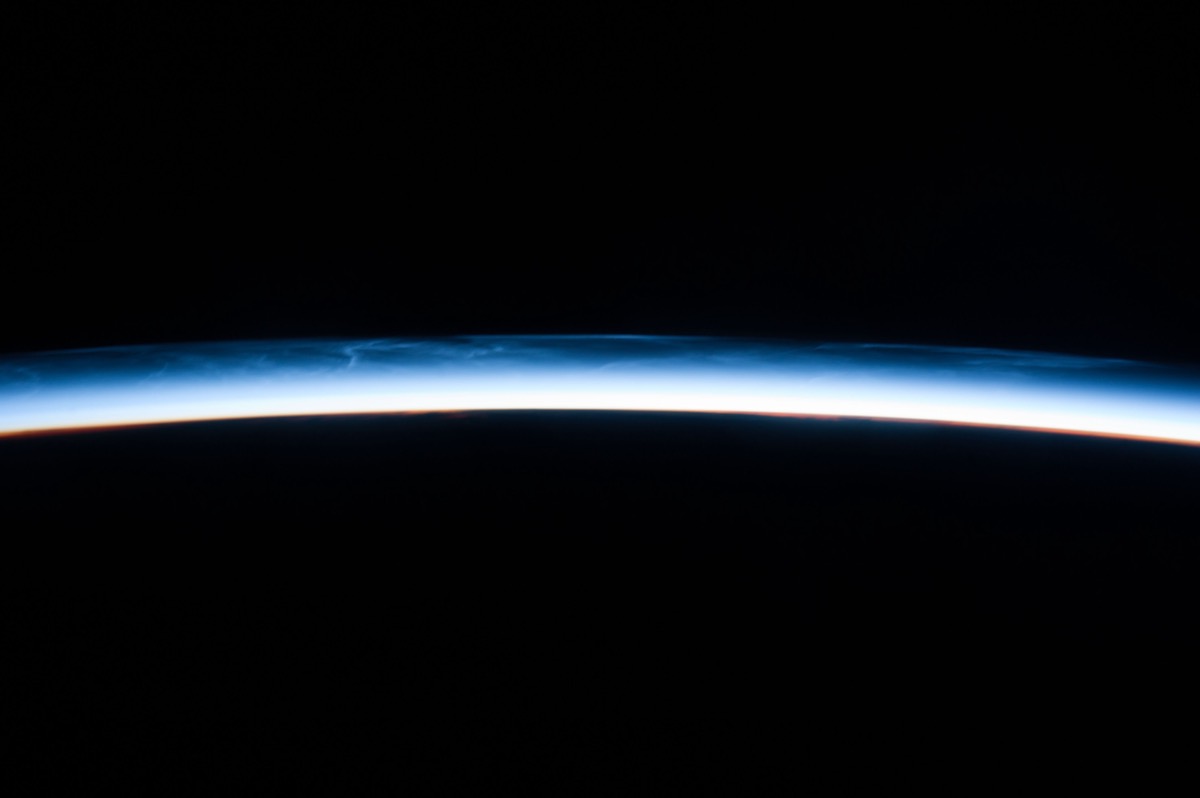
The highest ones. are thin, silvery-blue and cirrus-like, seen in summer twilight at latitudes above fifty degrees in both hemispheres. They occur in the at heights of about eighty-five kilometers, which makes them the highest visible clouds in the atmosphere, and high enough to catch sunlight long after the ground is in shadow.
They are made of ice, but barely. The particles are tiny, with dimensions on the order of tens of nanometers, growing in the extreme cold of the summer polar . The nuclei they condense on are thought to be either smoke and dust of meteoric origin or large hydrated positive ions, which means the clouds may be forming on the remains of burnt-up meteors.
Noctilucent clouds are thin, silvery-blue and cirrus-like, and they are frequently seen during summer twilight at latitudes above fifty degrees in both hemispheres. The timing is the clue to the altitude. They are visible when the sun has set for the observer but not for the cloud, which means they are far higher than ordinary weather.
They are in fact the highest visible clouds in the atmosphere, occurring in the upper mesosphere at heights of about eighty-five kilometers. Satellites see the same phenomenon from above over the summer polar cap, where it is called polar mesospheric cloud. The two terms describe one thing from two vantage points.
What they are made of took a long time to settle, and the glossary is precise about it. Noctilucent clouds are now known to consist of tiny ice particles with dimensions of the order of tens of nanometers, growing in the extreme cold of the summer polar mesopause region. The condensation nuclei are thought to be either smoke and dust particles of meteoric origin or large hydrated positive ions.
The conditions that make them possible are supplied by circulation. Strong upwelling of air from below, associated with a pole-to-pole meridional circulation in the upper mesosphere, is responsible both for the extreme cold and for the upward flux of water vapor. Water-vapor mixing ratios there are very low, less than ten parts per million by volume, but the temperatures are low enough to produce a high degree of at times. One caution: a glossary states the settled account, and the nuclei remain a matter of what is thought.
wat. Clouds made of ice grains a few tens of nanometers wide, catching the sun from fifty miles up.
wat wat
At eighty-five kilometers up, these are clouds in a part of the atmosphere that is almost vacuum. They exist because an unlikely combination of extreme cold and a trickle of water vapor arrive in the same place.
How do we know?
The American Meteorological Society’s Glossary of Meteorology sets out their appearance, latitude, season and altitude. It also gives the size and composition of their particles, their likely condensation nuclei, and the circulation supplying the cold and the water.
What is still unknown
A glossary entry, so it states the established account compactly rather than arguing for it. The identity of the condensation nuclei is given as what is thought rather than what is known.
Learn something?
Where to next
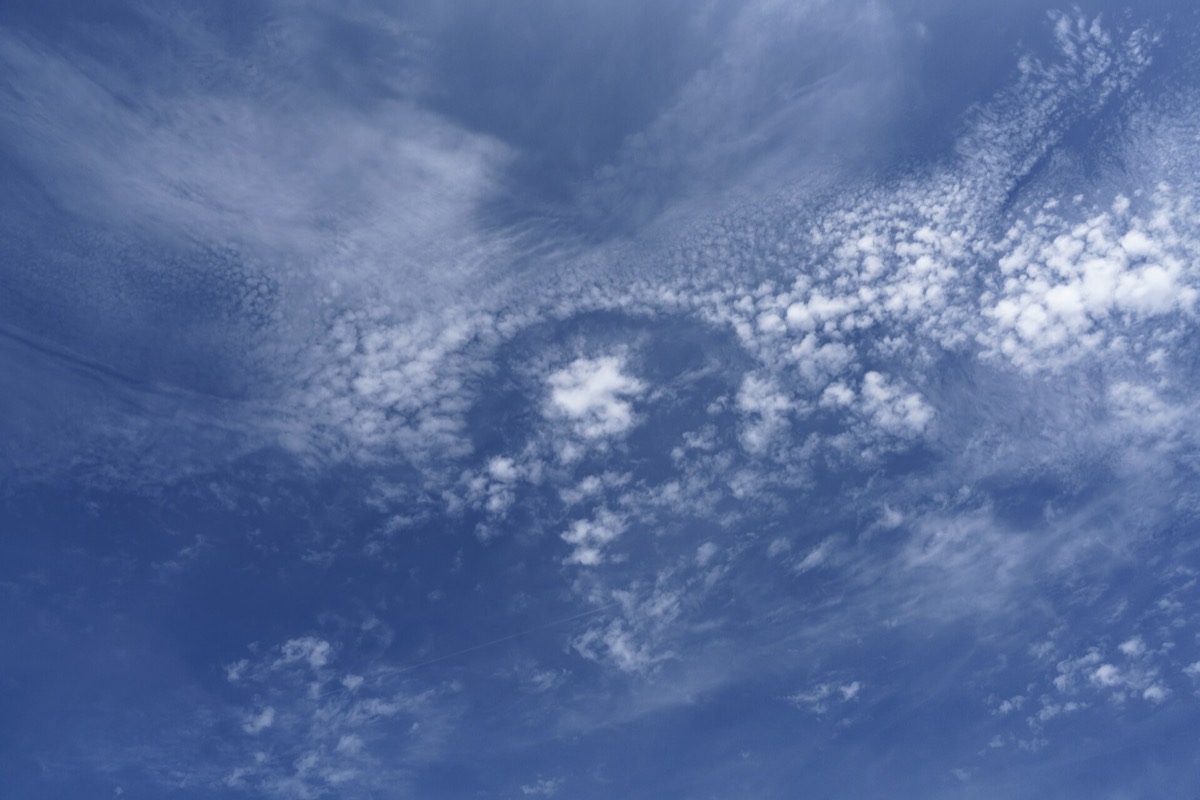 Who punches an almost perfect circle through a layer of cloud?clouds
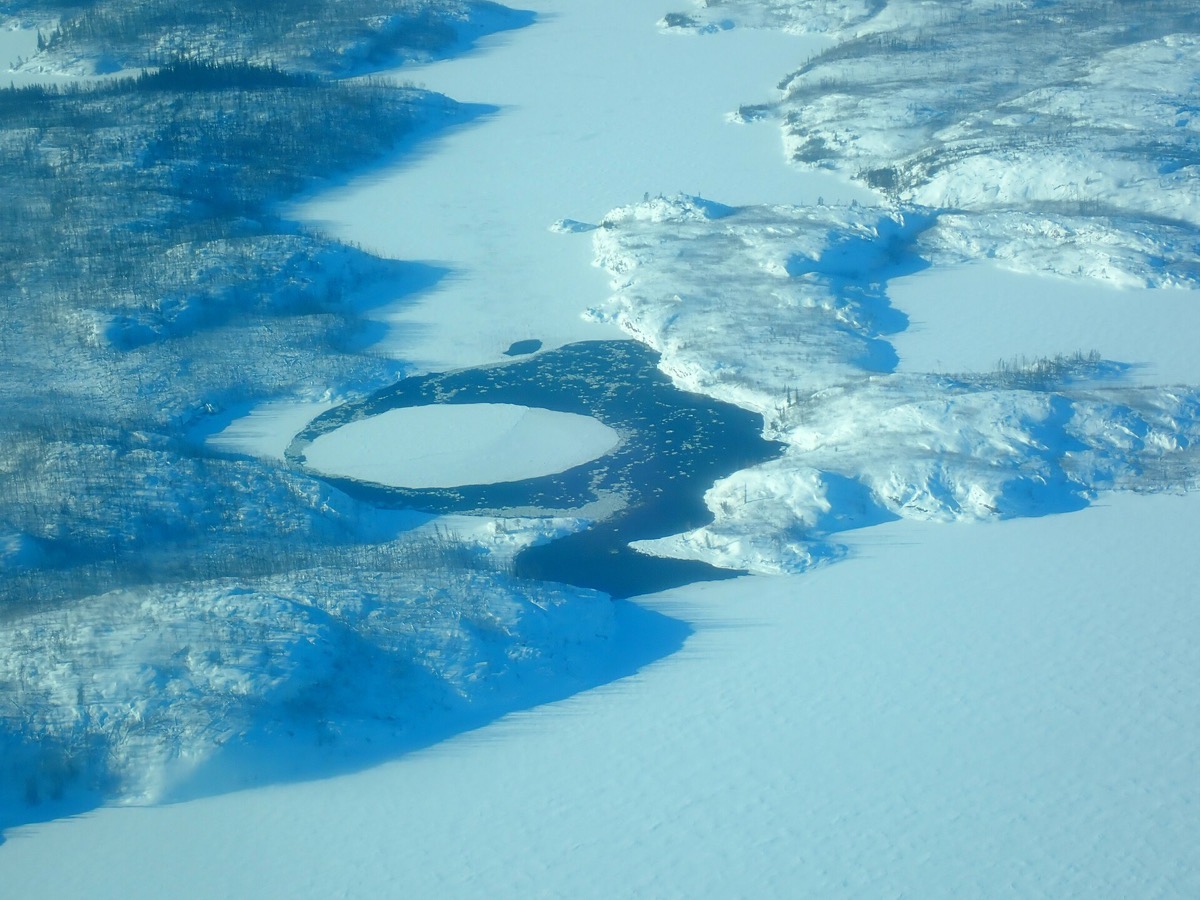 How does a round disk of ice start turning on still water?ice
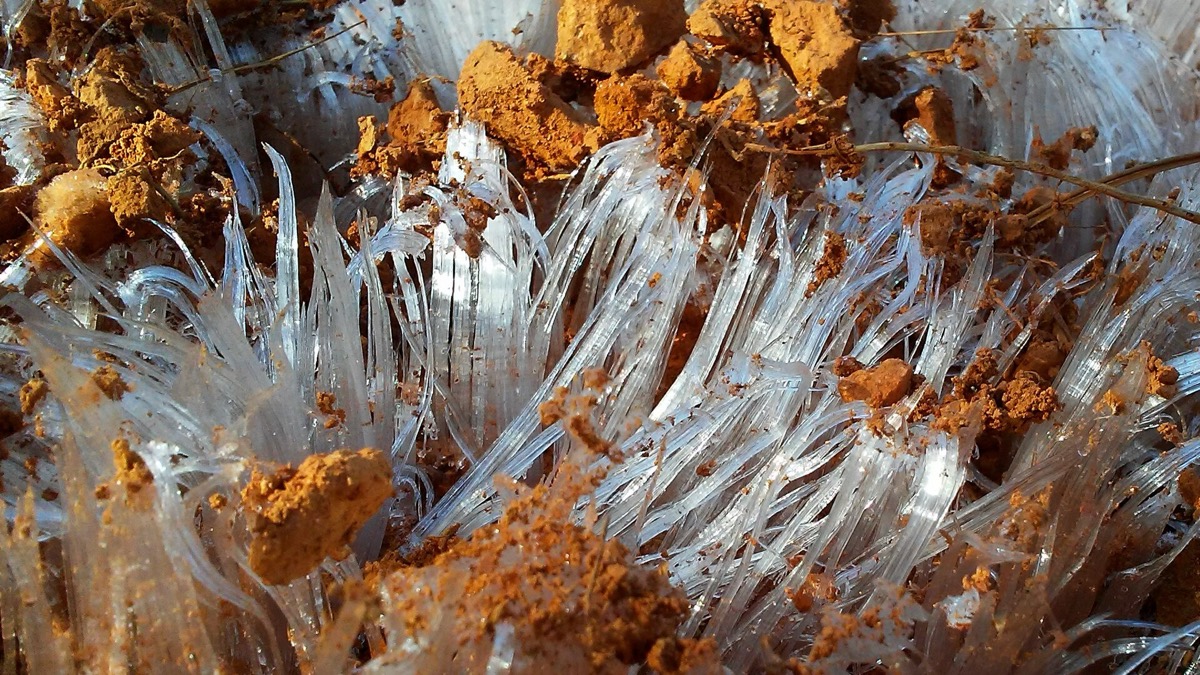 What arranges stones into stripes and circles on cold ground?ice