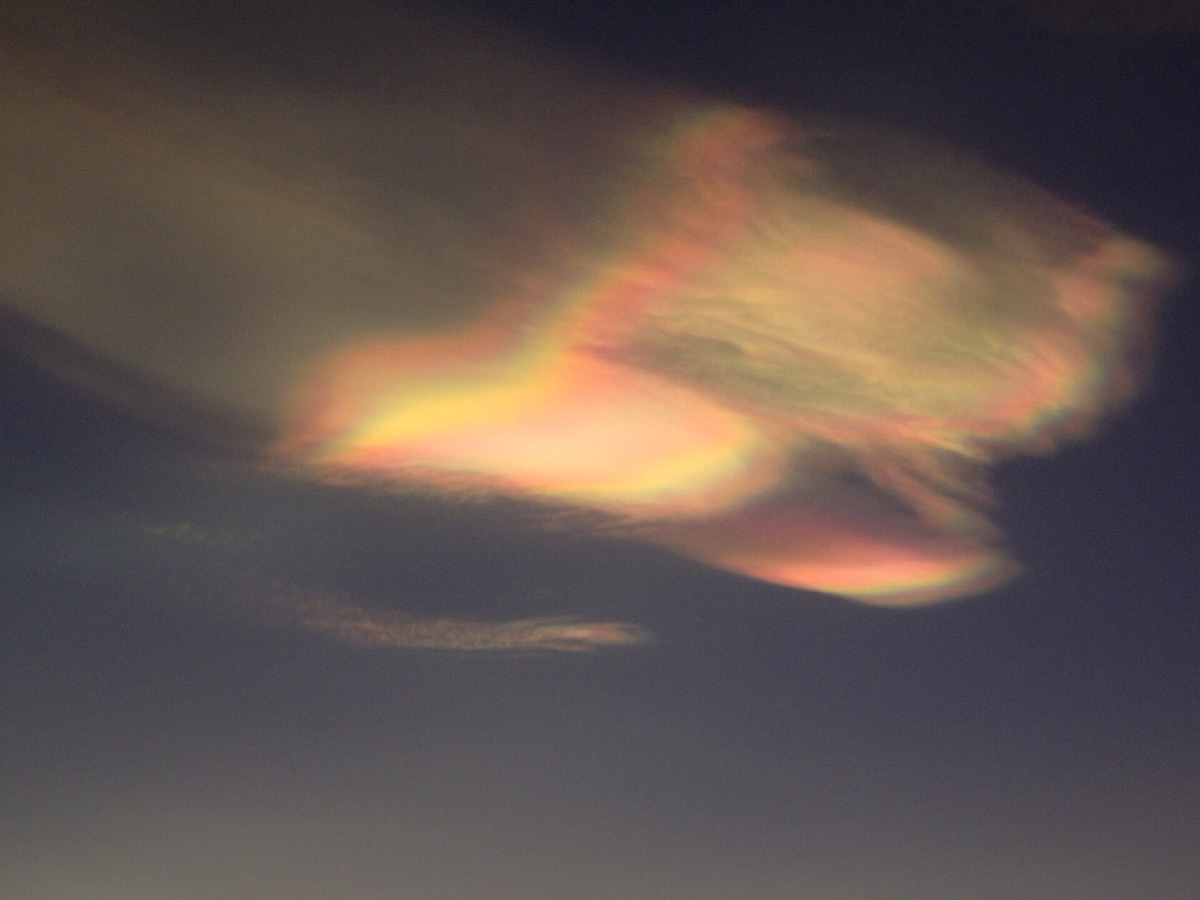
A nacreous cloud glows in intense colors when it is already dark on the ground, and most clouds at that hour are in shadow. So it has to be far higher than they are. What goes on up there?
Chemistry, behind the color. form at about 15 to 25 kilometers, far above most weather clouds. after dark on the ground, and droplets or crystals of acid and ice scatter intense colors. The surfaces of those particles act as and convert stable into forms able to destroy ozone when the spring light returns.
Nacreous clouds form at about fifteen to twenty-five kilometers, far above most weather clouds, and require extreme cold.
Up there the sun still shines after dark on the ground, and the acid and ice crystals are small and uniform, so they scatter the light into intense colors against a dark sky.
The part you cannot see matters more. In a thin gas molecules rarely meet, and on the faces of the particles they stick and react, so the cloud works as a surface for chemical reaction.
There stable chlorine compounds, which come from human-made pollutants, are converted into forms that wait for light and destroy ozone with the polar spring sunrise. That is how the beauty ties to the chemistry of the polar hole. No nacreous cloud causes ozone loss by itself: chlorine, sustained cold and sunlight are needed too.
wat. Nacreous clouds glow high up after sunset, and on their particles chlorine is activated into a form that destroys ozone in spring.
wat wat
A rare cloud ties together an extreme temperature, colorful optics and chemical reactions that alter a global protective layer.
How do we know?
Aircraft, satellites and balloons measured the height of the clouds, the composition of the particles and the change in chlorine compounds and ozone around them.
What is still unknown
No nacreous cloud causes ozone loss by itself; chlorine from polluting compounds, sustained cold and sunlight are all needed as well.
Learn something?
Where to next
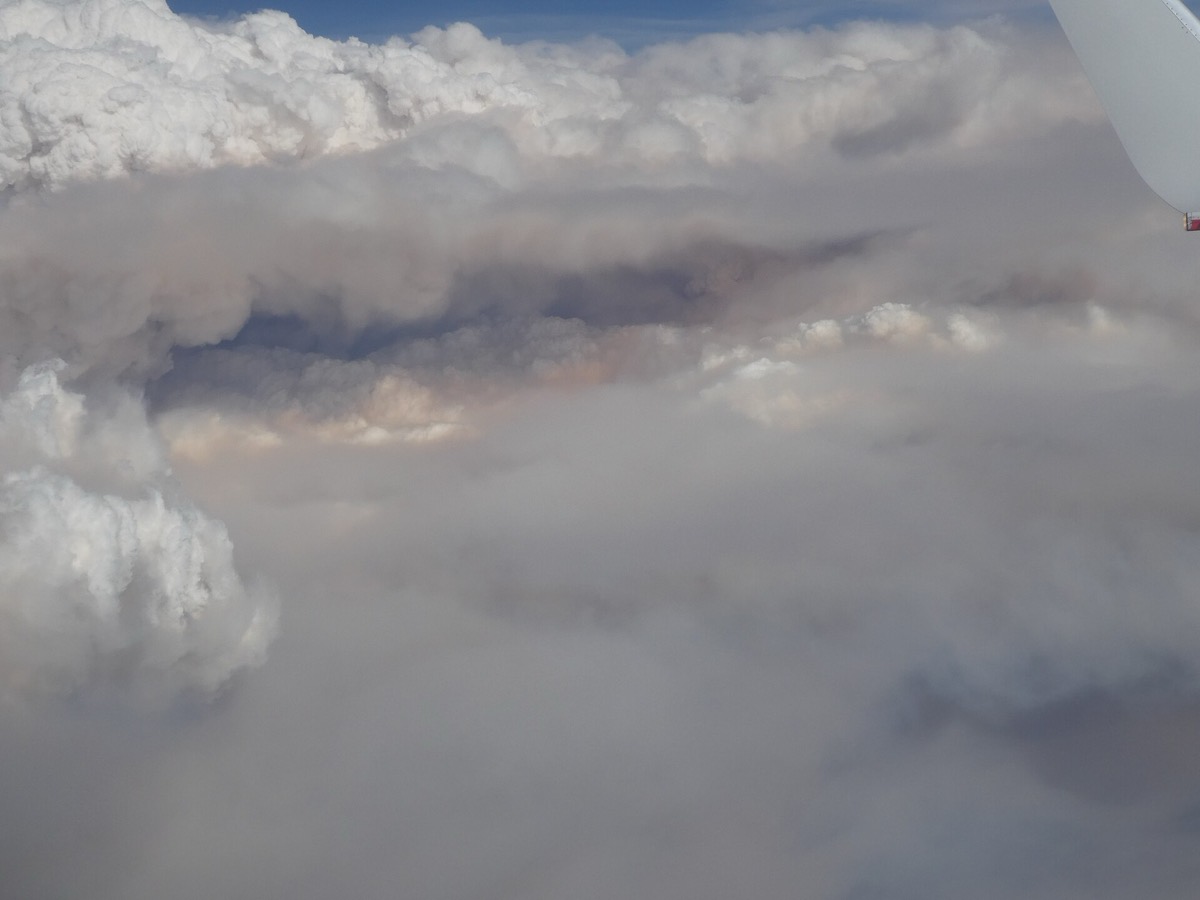 A forest fire grows a storm cloud above the flames. How far up can it reach?clouds
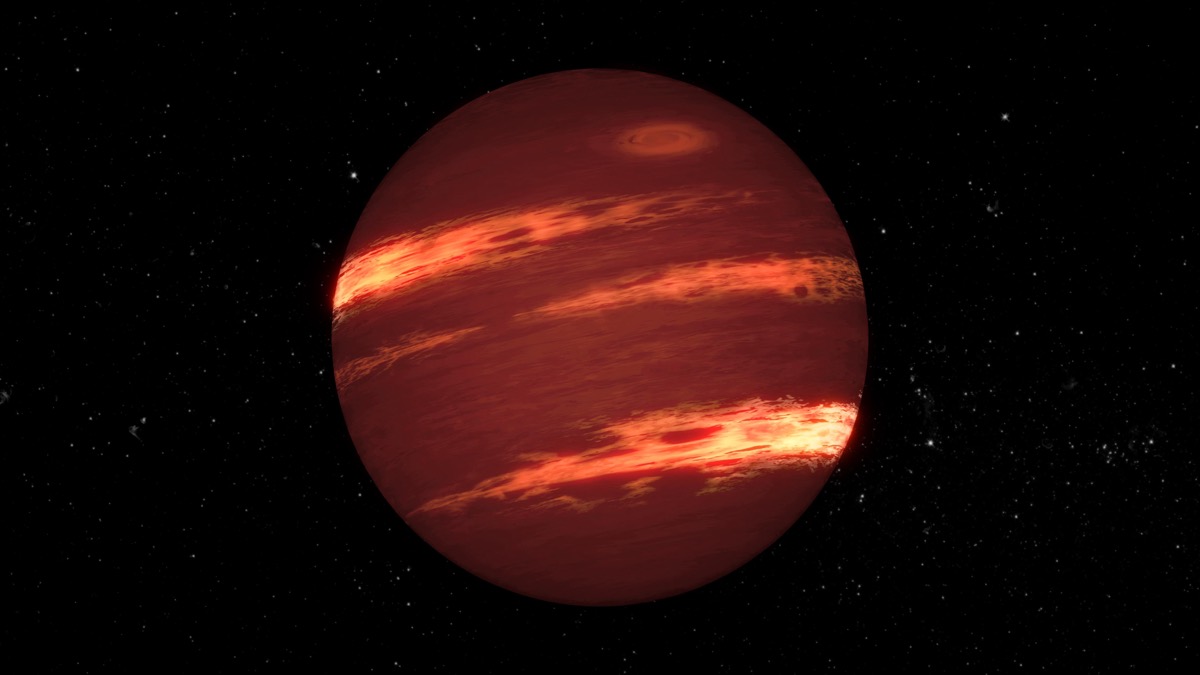 How does a world that wanders alone hold on to clouds?clouds
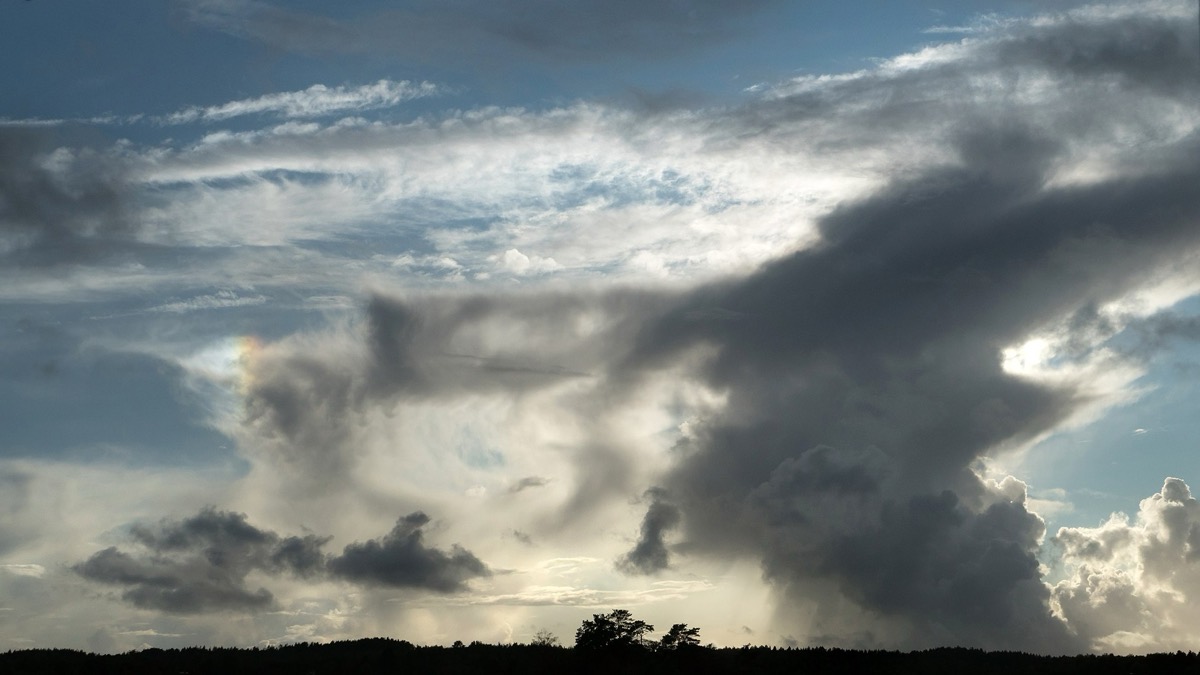 Why does the bright spot beside the sun always sit in the same place?clouds