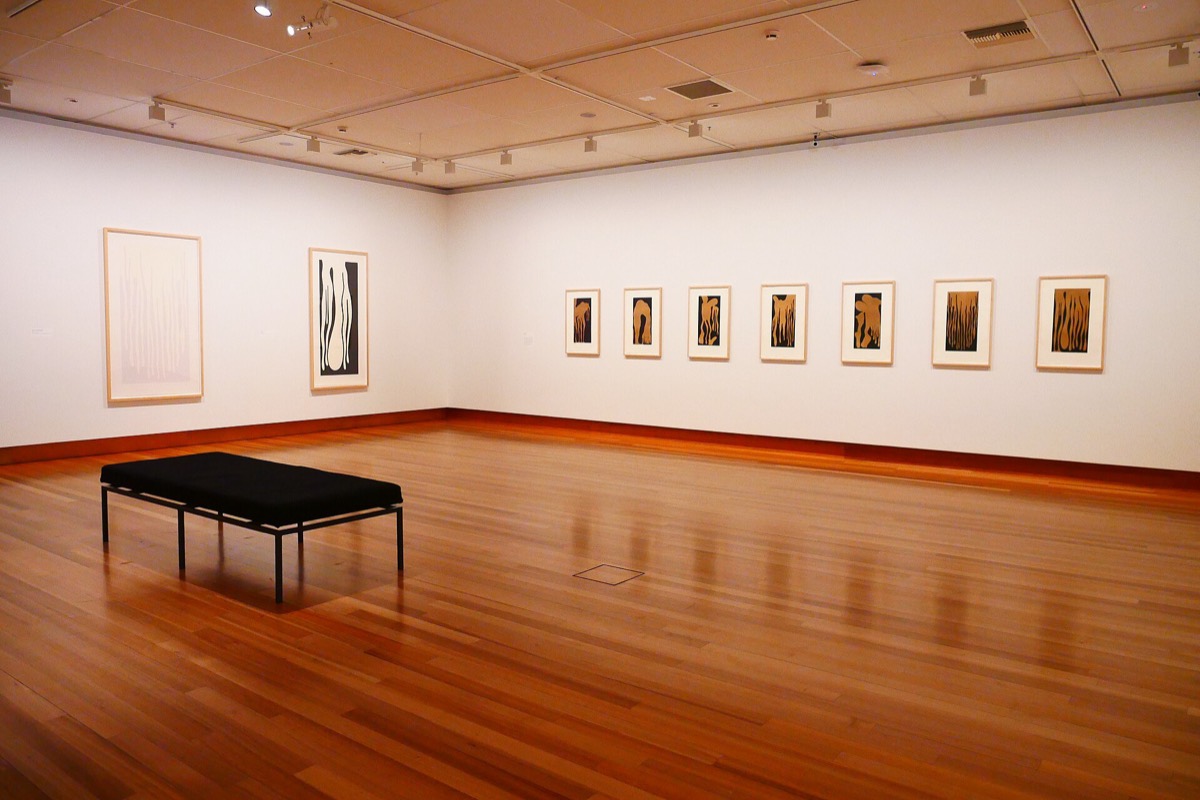
Almost everything known about how people respond to art comes from laboratories, where images can be timed and controlled. Whether those findings describe a gallery visit is assumed rather than tested. So two groups viewed the same art exhibition, one in the museum and one in the laboratory, both wearing mobile eye trackers, and then rated every work on liking, interest, understanding and . Did the setting matter?
The museum group liked the art more and looked longer. Participants in the museum context liked the artworks more, found them more interesting, and viewed them longer than those in the laboratory. showed that , understanding and ambiguity all predicted , for the artworks and for their labels. Context modulated those relationships rather than merely shifting the averages.
The experience of art emerges from the interaction of various cognitive and affective processes, and how those unfold in time, in relation to what a viewer actually does, is still poorly understood. The practical problem is that studying it has mostly meant bringing the art to a laboratory.
This study examined the effect of context on the relation between art experience and viewing time. Two groups of participants viewed the same art exhibition, one group in the museum and one in the laboratory. In both cases viewing time was recorded with a mobile eye tracking system, and after freely viewing the exhibition participants rated each artwork on liking, interest, understanding and ambiguity scales.
The setting changed the experience. Participants in the museum context liked the artworks more, found them more interesting, and viewed them longer than those in the laboratory. That alone complicates the practice of studying aesthetic response indoors on a screen.
The more specific finding is about relationships rather than levels. Mixed effects models revealed that aesthetic appreciation, compounding liking and interest, along with understanding and ambiguity, predicted viewing time for the artworks and for their corresponding labels. Context modulated the effect of appreciation and of ambiguity: appreciation tended to predict viewing time better in the laboratory than in the museum. Note what viewing time is, though. It is the most basic index of viewing behavior, not a measure of what the visitor experienced.
wat. The same exhibition was liked more and looked at longer in the museum than in the laboratory, and the link between liking and looking changed too.
wat wat
It is a warning label for a whole literature. If the setting changes both how much people like art and how the liking relates to how long they look, laboratory findings about aesthetic experience do not transfer unexamined.
How do we know?
Brieber, Nadal, Leder and Rosenberg had two groups freely view the same exhibition, one in a museum and one in a laboratory. Mobile eye tracking recorded viewing time, and ratings covered liking, interest, understanding and ambiguity.
What is still unknown
Two groups viewing one exhibition, with people not randomly sorted into a museum visit in any meaningful sense. Viewing time is the most basic index of viewing behavior and not a measure of what anybody experienced.
Learn something?
Where to next
 Do two minutes in front of art online change how you feel?art
 Can a museum visit improve how you feel, or is it just an outing?museum
 What does an explanation beside a painting do to the way we look?art