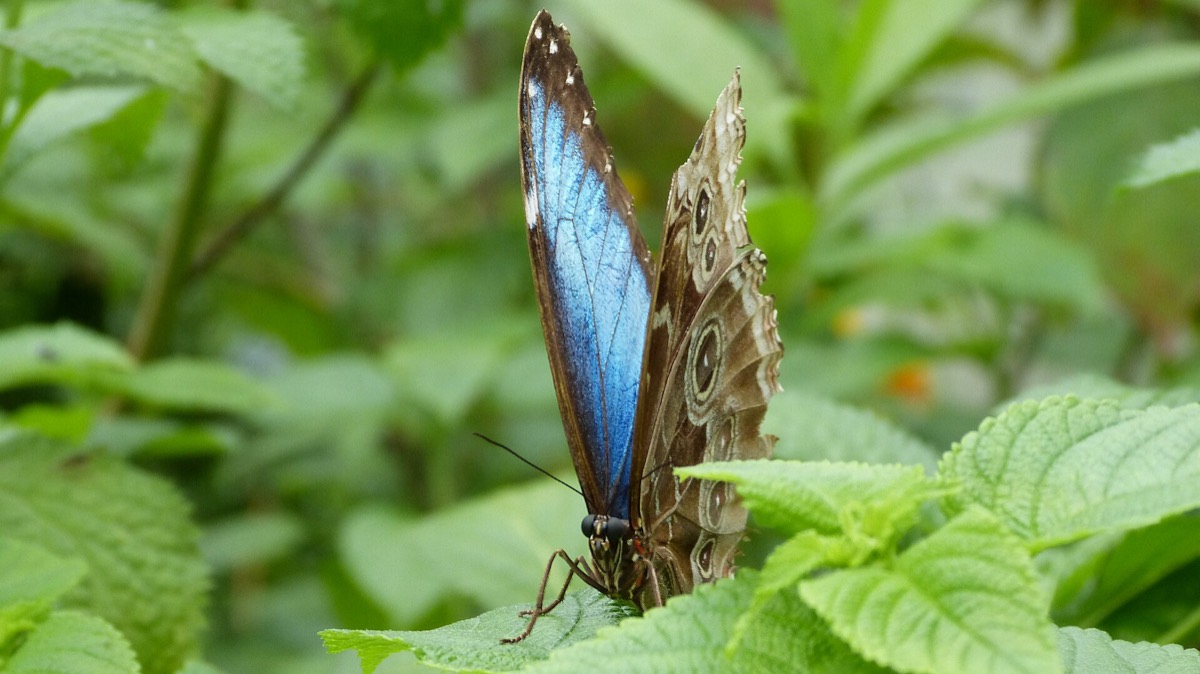
Ordinary color comes from pigment, a substance that swallows some wavelengths and returns the rest. A Morpho wing holds almost no blue pigment and is among the bluest things in nature. Researchers compared the of 16 species under a microscope and a spectrometer. Where does the color come from?
From the shape of the scales, not from a substance. Each wing is tiled with scales built in layers and ridges sized like a wavelength of light, so light reflects from several surfaces at once and the returns reinforce each other at blue. The comparison across species found that the thin lower lamina of the scale acts as an optical and contributes too, which earlier work had credited entirely to the ridges on top.
A Morpho wing is brilliantly blue and contains almost no blue substance. The contradiction dissolves once you separate color that comes from material from color that comes from form.
A pigment works by absorbing. works by interference: each wing is covered in scales built from layers and ridges whose dimensions are close to the wavelength of visible light, so light reflects from several surfaces at once.
Where the spacing matches a wavelength, returns those reflections in phase and reinforces them, while others cancel out. That is why the blue does not fade while the structure survives, and why it changes as the wing tilts.
The comparative study across 16 species is what refined the story. For years the blue was credited to the multilayered ridges on the upper lamina of the cover scales. The measurements show the lower laminae of cover and ground scales acting as thin film reflectors as well. The authors describe the result as a combination of pigmented and unpigmented scales, multilayers and thin films, which also sorts the genus into five groups matching its phylogeny.
wat. The blue of a Morpho is built from light bouncing inside tiny scales, rather than from any blue material.
wat wat
A wing shows how to make an intense color out of geometry alone, which is what sensors, coatings and new materials are trying to copy.
How do we know?
Giraldo and colleagues compared 16 Morpho species, measuring the morphology of the differently organized wing scales together with their spectral and spatial scattering properties.
What is still unknown
The mechanism is not identical across the genus. In several species pigments and the way the scales overlap also shape the final hue, and the authors describe the color as a combination rather than one effect.
Learn something?
Where to next
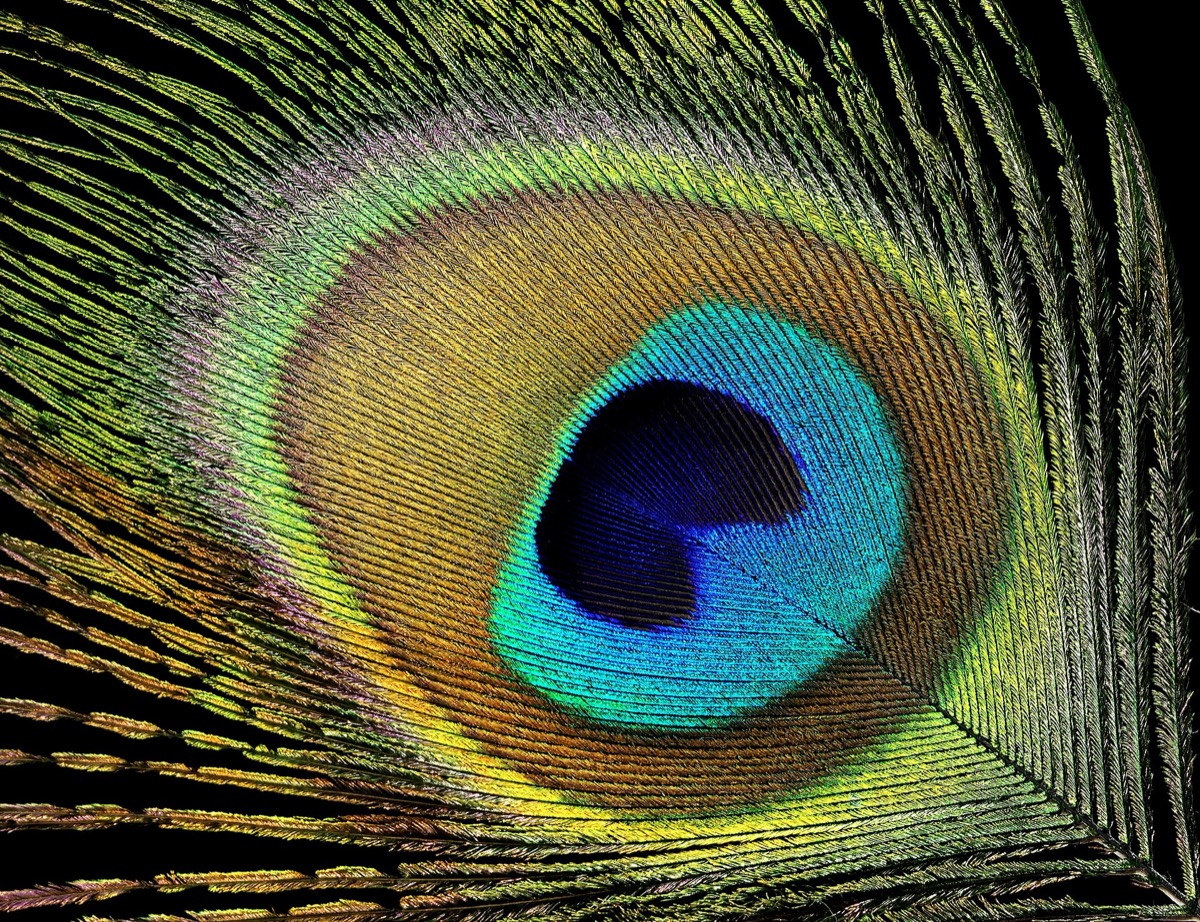 Why does a peacock’s eye change color as you move around it?structural color
 Why is every look at the sky a look into the past?light
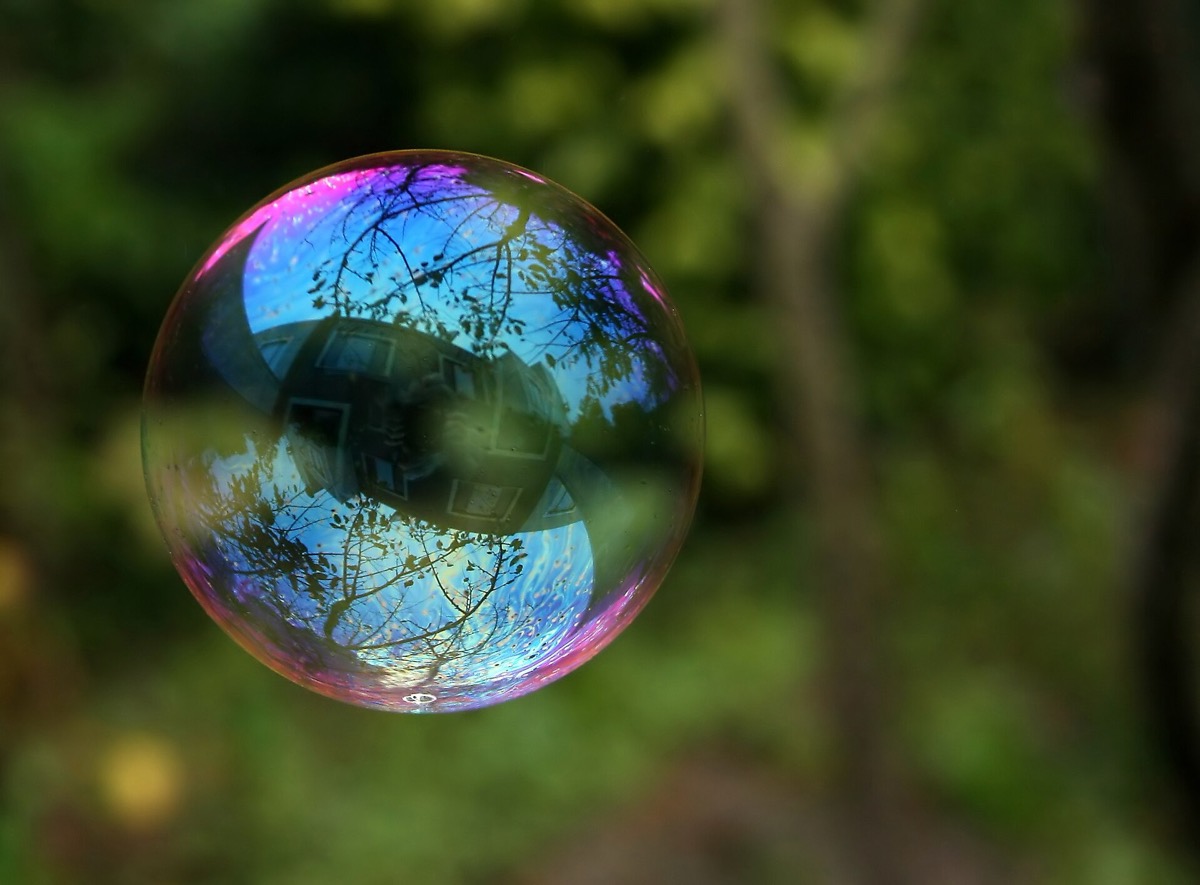 What does the color of a soap bubble know about its own thickness?light