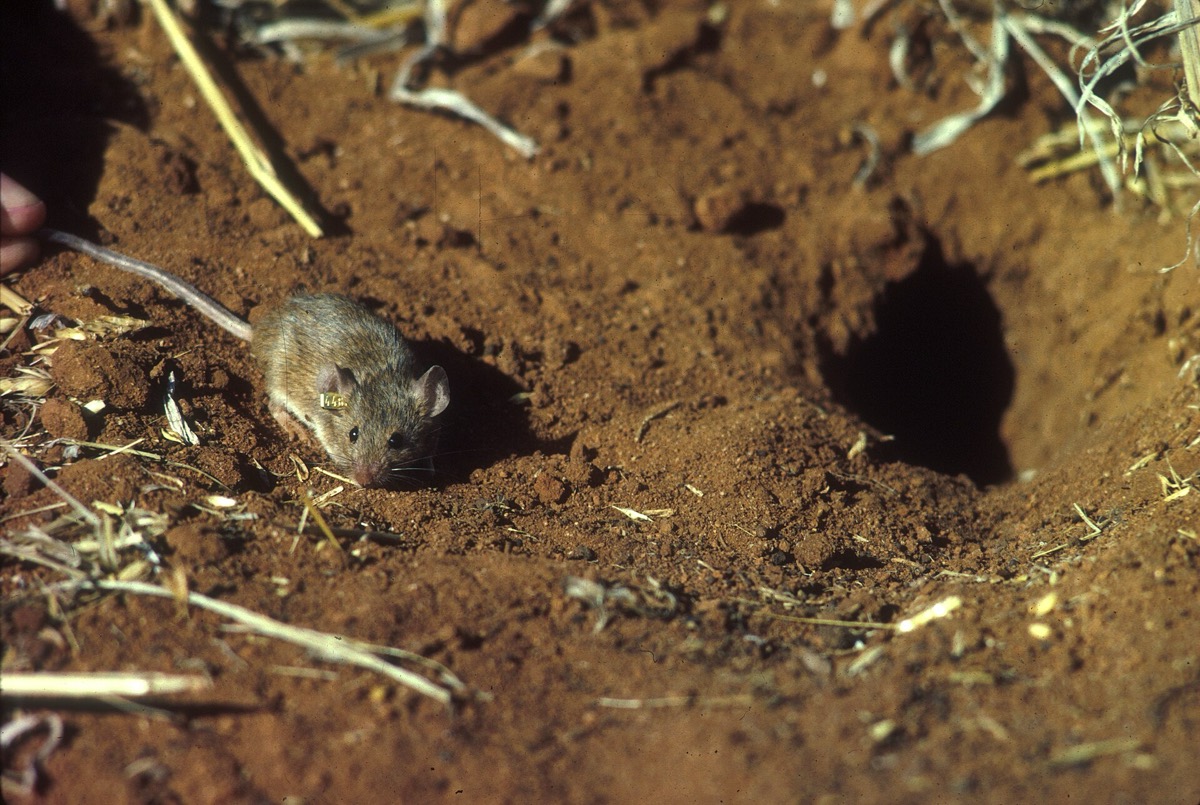
Male mice emit calls from about thirty kilohertz up to a hundred and ten when they meet a female or her , and that had been filed as excited squeaking. Holy and Guo recorded the calls and analyzed the order the sounds arrived in rather than the sounds themselves. Is there a structure in there?
Real structure, at the level of phrasing. The calls break into several distinct , and the order those arrive in includes phrases that repeat, which is the formal definition of song. Individual males have their own characteristic syllables and their own timing, so one mouse can be told from another by its song. None of it reaches human hearing.
A male mouse meeting a female, or merely her scent, produces a stream of calls far above what a person can hear, running from about thirty kilohertz up to a hundred and ten. That much was already known. It had been filed under excitement and left there.
Holy and Guo went at the recordings the way an ornithologist goes at birdsong. They sorted the elements into syllable types, then looked at the order the syllables came in rather than at each one on its own. The sequences contain repeated phrases, and repeated phrases are what earn a vocalization the word song.
The individual differences are what make it useful. Each male has his own characteristic set of syllables and his own temporal structure, so the song carries identity alongside intent. Two males do not deliver the same performance.
What this opened up is less the mouse than the toolkit. Song production and song perception had been studied mainly in birds, where the genetics are hard to get at. The mouse is an established with an enormous amount of genetic work behind it, and it turns out to sing.
wat. Above the ceiling of human hearing, a male mouse is not squeaking but singing, in phrases of his own that identify him.
wat wat
It put vocal song into a species geneticists can manipulate at will, which is why mouse ultrasonic calls became a standard readout in work on how communication develops.
How do we know?
Holy and Guo recorded the ultrasonic calls of male mice presented with females or female pheromones, classified the syllables, and analyzed how those syllables were ordered in time.
What is still unknown
This is a quantitative description of the songs rather than a test of what they accomplish. Whether females respond to the structure, or prefer one male’s version, came later.
Learn something?
Where to next
 Can living beside a sick animal change the way you smell?mice
 How does a new whale song cross an ocean?song
 The bowerbird lays out stones in front of its bower. Why do they get smaller?courtship