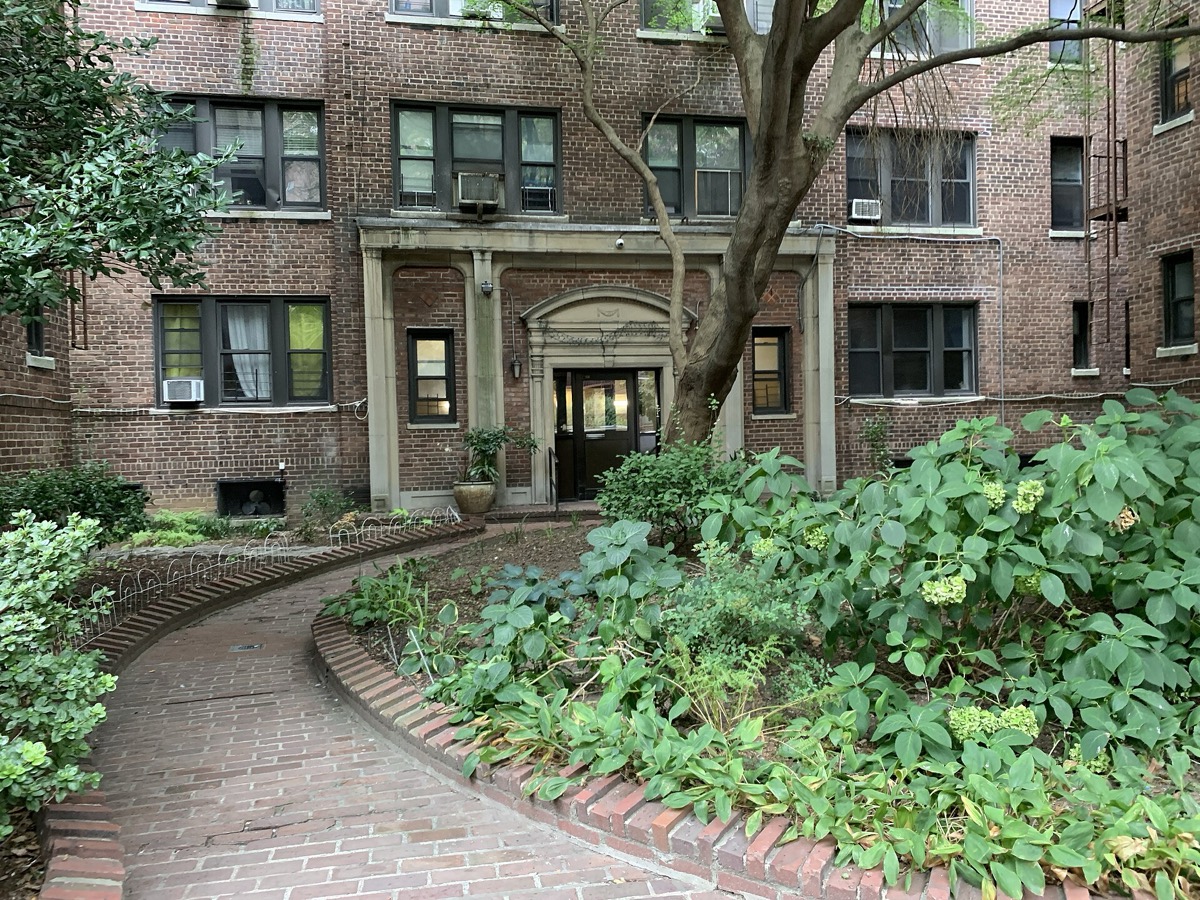
A woman was stabbed outside her building in Queens in nineteen sixty-four. Two weeks later a newspaper headline said thirty-seven people saw it and none called the police, and that sentence became the founding story of an entire psychological phenomenon. The crime itself had made only a brief news item. The coverage is what traveled. Does it hold up?
It does not. Decades of correction have shown only two neighbors behaved the way the article described, and a neighbor shouted at the attacker during the first assault, which drove him off. The victim then crawled out of sight behind the building, where the second attack happened. Another neighbor found her and called for police.
The murder happened around half past two in the morning on the thirteenth of March, nineteen sixty-four, as Genovese came home from work. A man with a knife approached her, she ran for her building’s front door, and he grabbed and stabbed her while she screamed. A neighbor shouted from a window and the attacker fled. She crawled to the rear of the building, out of sight, and about ten minutes later he came back, stabbed her again, raped her and took her money. A neighbor found her, called for police, and she died in the ambulance.
What made the case famous came later. On the twenty-seventh of March the New York Times ran an article headlined with the claim that thirty-seven people saw the murder and did not call the police. It was prompted by a conversation between the paper’s editor and the city’s police commissioner, who made the claim. The following day the paper ran an analysis with experts on why people choose not to get involved, and the editor later turned the material into a book about thirty-eight witnesses.
The phenomenon itself got a name and a body of work. Latane and Darley studied the in controlled experiments and showed that a witness is less likely to help when other witnesses are present, and that the effect grows with their number. The press, meanwhile, used it as a parable about a modern society losing its compassion, cities in particular.
Correction took decades, long after had been quoted into history and left out of it, with shout from a window forgotten in between. A journalist writing in the Times itself in two thousand and four took apart the nineteen sixty-four reporting. An article in American Psychologist deflated it further in two thousand and seven, and the victim’s younger brother made a documentary in two thousand and fifteen. Only two neighbors have been shown to have behaved as the article claimed thirty-eight did. The coverage has been criticized for numerous factual errors and for contriving a social phenomenon for sensationalistic purposes. The case is also credited as one of the factors that pushed the emergency telephone number into place.
wat. A neighbor did yell. Another did call. The number thirty-seven came from a conversation between an editor and a police commissioner.
wat wat
A real effect got its public name from a story that was wrong about the case. The laboratory finding stands on its own experiments, not on that night in Queens.
How do we know?
A History.com account of the case: the sequence of the attack, the investigation, the Times article and the journalistic and academic work that later took it apart.
What is still unknown
An encyclopedia article drawing on books and journalism rather than primary records. It is explicit that competing claims about motive exist, including ones made by the killer himself years later.
Learn something?
Where to next
 You were told you are a visual learner. Should you be taught only in pictures?myths
 Does a crowd really make people less likely to step in?bystander effect
 Are some people really "right-brained" and others "left-brained"?myths