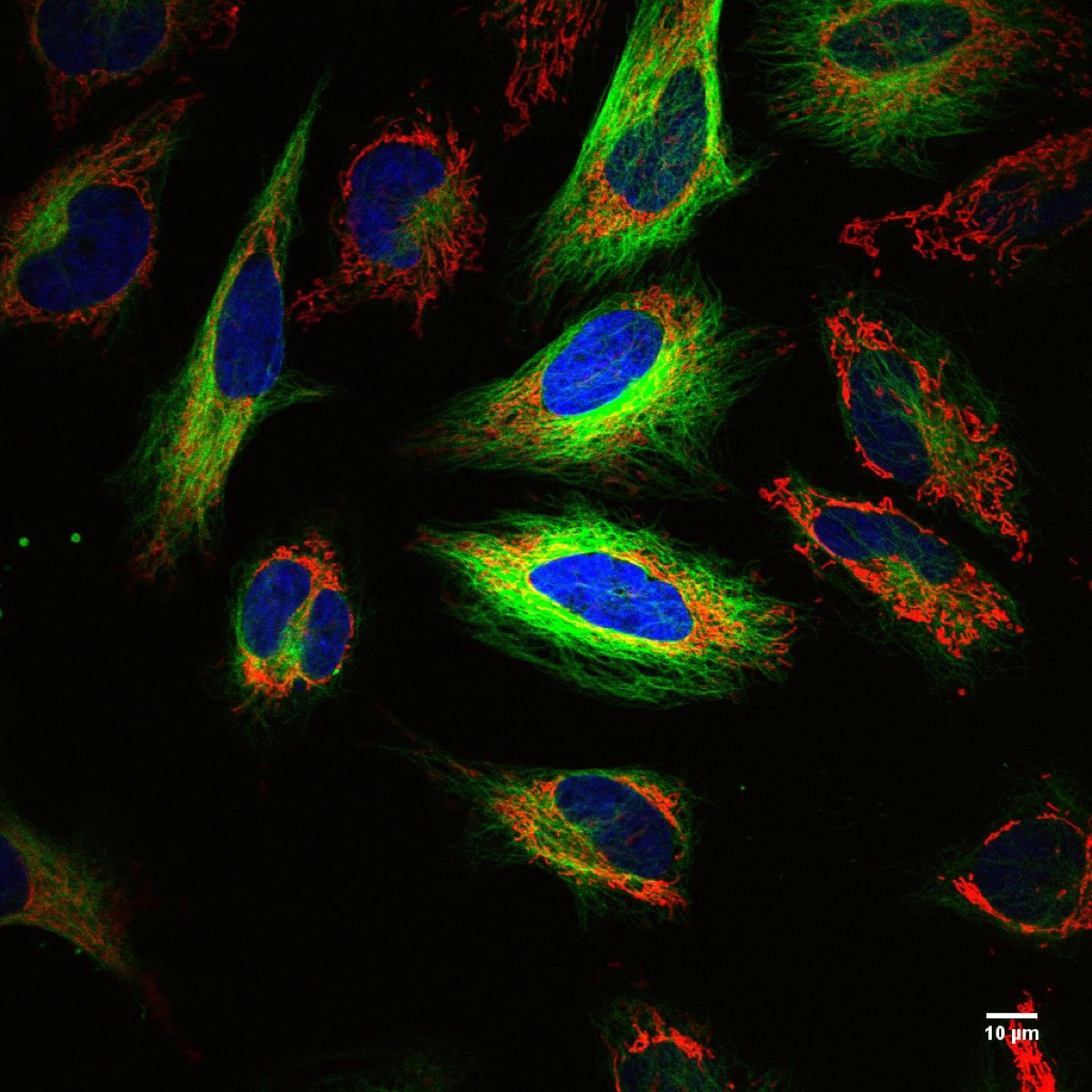
Cancer research in the nineteen fifties needed something nobody had managed to grow: a human cell line that would keep dividing outside the body. Samples came in and died. At Johns Hopkins, the head of research was collecting them from patient after patient. In February nineteen fifty-one a biopsy came in from a woman with cervical cancer, and her sample did something the others had not.
It multiplied, at an extraordinary rate, and it has never stopped. The cells came from Henrietta Lacks, a mother of five from Turner Station, Maryland, and the line built from them took her initials, . Research on it contributed to numerous important scientific advances. She was unaware that any sample had been taken, which at the time was not unusual.
Henrietta Lacks was born in Roanoke, Virginia, in August nineteen twenty, and raised in Clover by her grandfather after her mother died in childbirth and her father divided his ten children among relatives. She married her cousin David, known as Day, in nineteen forty-one. He moved north to work at Bethlehem Steel’s Sparrows Point mill, booming on wartime demand. She and the children followed to Turner Station, a community outside Baltimore where many of the African American steelworkers lived.
Before her fifth pregnancy she had felt a knot inside her. Bleeding and a lump on her cervix months after giving birth finally sent her to a doctor. She was referred to the gynecology department at Johns Hopkins Hospital, where a biopsy in February nineteen fifty-one found a cervical tumor. Doctors had missed it at the birth of her son in September nineteen fifty and at a follow-up six weeks later.
Her treatment was the standard of the day: , in small glass tubes sewn into fabric pouches and fixed to the cervix. While performing the procedure the surgeon extracted two small tissue samples, one from the tumor and one from healthy cervical tissue nearby. They went to George Gey, head of tissue culture research at the hospital, who was looking for an immortal cell line for cancer research and had been taking samples from many patients.
Hers behaved differently. Where previous samples died, the cancerous cells survived and multiplied at an extraordinary rate, and the line took her initials. Henrietta Lacks herself never knew a sample had been taken, which at the time was not uncommon practice. She died in Baltimore in October nineteen fifty-one. The cells led to enormous medical breakthroughs, and the fact that they were taken without her knowledge or led to changes in how patients are treated.
wat. The most useful cells in medicine were taken from a woman who was never told, and who died months later at thirty-one.
wat wat
The cells were a gift nobody asked her for. What followed from the case is a large part of why consent now has to be obtained in writing before tissue is studied.
How do we know?
Britannica’s biography of Henrietta Lacks, covering her illness and treatment at Johns Hopkins, how the samples were taken and by whom, and the consequences of the case for how patients are treated.
What is still unknown
An encyclopedia biography. It establishes that she did not know and that studying tissue without knowledge or consent was then common practice, without resolving the later disputes over who may use the line and on what terms.
Learn something?
Where to next
 Why do Amish teenagers get a few years off from the rules?consent