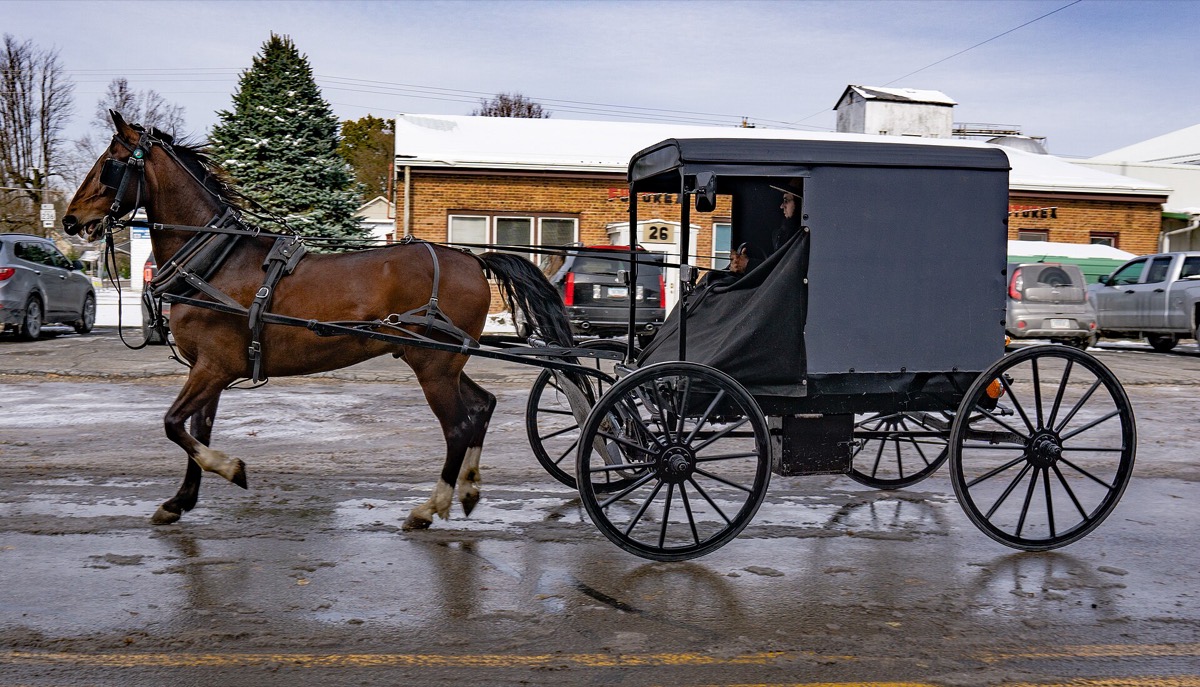
The Amish are the standard example of a community that lives by rules an outsider would call illiberal. And yet they release their teenagers from church rules for a year or more, which is when the popular image of wild years in the city comes from. What is that period for?
A decision that has not been made yet. Church membership among the Amish does not come with birth, and a young person has to choose and the obligations that follow it. The years before that choice exist because the choice is real, and a political theorist used exactly this to test what a from a community would have to mean.
Amish communities are the usual example in debates about minority cultures that do not run on liberal principles. Their schooling, their dress and their church discipline all point the same way, and then points somewhere else.
Church membership there does not arrive with birth. A young person is released from church rules for a year or more, encounters modern life, and then decides whether to be baptized and take on the obligations of membership. Mazie puts this as a paraphrase of Locke: an Amish youth is born a member of no church.
That makes the practice a test case rather than a curiosity. Toleration liberals say such cultures should be accepted as long as members can leave; autonomy liberals say they should be reformed toward individual self-determination. Both sides lean on the exit option.
His conclusion cuts both ways. Toleration liberals underestimate what a meaningful right of exit demands of a person who has spent a childhood inside the community, and autonomy liberals underestimate how much intervention supplying such an exit would take. He ends by arguing that exit is a poor test of in the first place.
wat. Nobody is born into the Amish church; the years before baptism are the room the choice needs.
wat wat
A community can look closed from outside and still rest on consent that each member gives once, which changes what outsiders can fairly demand of it.
How do we know?
Mazie set rumspringa against the argument between toleration liberals and autonomy liberals over whether illiberal minority cultures should be accepted or reformed, and tested each position against what the practice involves.
What is still unknown
This is political theory built on one practice, not a survey of young Amish people, and it cannot say what any individual experiences during those years.
Learn something?
Where to next
 Whose cells are in almost every laboratory in the world?consent