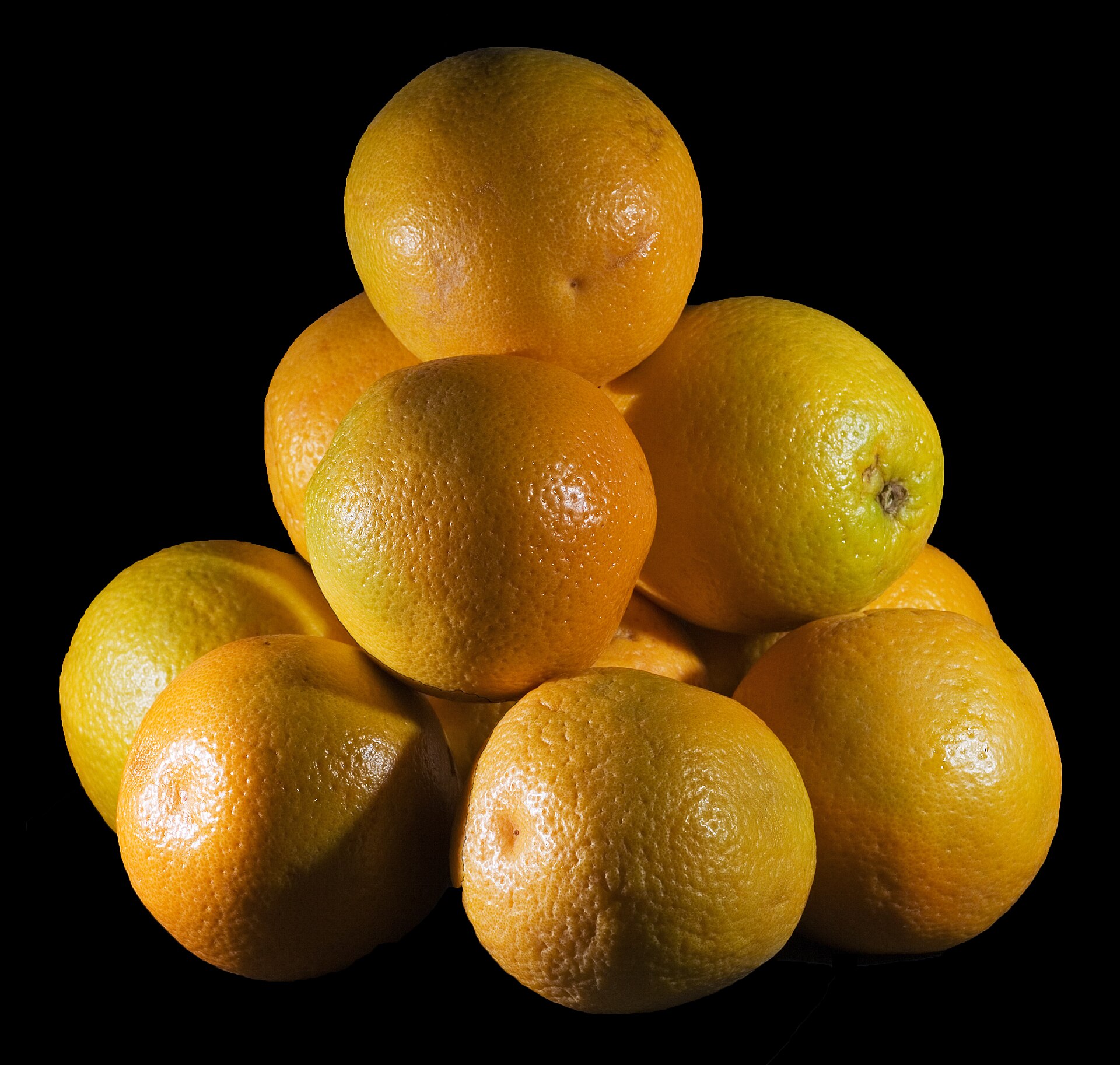
Greengrocers stack oranges in layers where each fruit sits in the hollow between the fruits below it, without thinking about it twice. , from 1611, said no other arrangement of fills more space. How long did proving that take?
Almost four hundred years. The proof arrived only at the end of the twentieth century and combined mathematical argument with of thousands of possible configurations. The maximum is a little over 74 percent, which means a quarter of the volume always stays empty.
The story begins somewhere ordinary. A greengrocer stacks oranges in layers, each fruit sitting in the hollow between the fruits below it. That is not a theoretical decision but the way the pile holds together.
Kepler conjectured in 1611 that no other arrangement of identical spheres could fill a larger share of space. He did not prove it. The difficulty is not showing that this arrangement is good but ruling out infinitely many others, including ones with no order at all.
The proof arrived only at the end of the twentieth century, and it reduced that infinity to a finite number of local configurations and tested each by computer checking. The committee that reviewed it declared itself only ninety-nine percent certain, which is an extraordinary statement, so a full formal verification in software followed.
The number itself teaches something: the maximum packing density is a little over seventy-four percent, which means a quarter of the volume always stays empty. Pouring at random gives about sixty-four. And it is worth knowing the theorem concerns identical spheres in infinite space, and not assorted fruit inside a box with walls.
wat. The stepped pile of oranges fills a little over 74 percent of space, and identical spheres cannot beat it.
wat wat
Sphere packing connects to the structure of crystals, to communications, to coding and to optimization questions in high dimensions.
How do we know?
Thomas Hales broke the problem into many cases, used computation, and later led a formal verification of the proof in theorem-proving software.
What is still unknown
The theorem concerns identical spheres in infinite three-dimensional space, not assorted fruit inside a box with walls.
Learn something?
Where to next
 Can a planet orbit two stars at once?Kepler