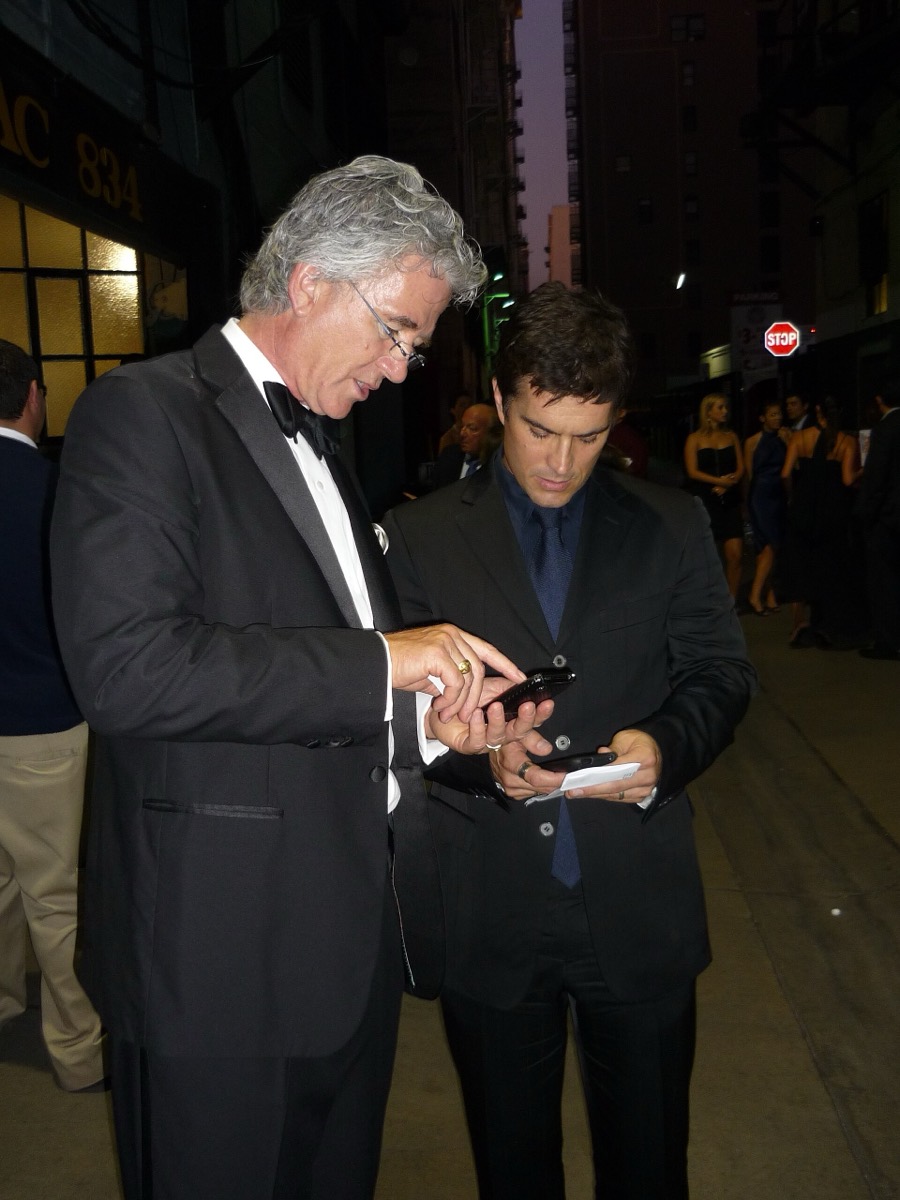
Texting is now one of the commonest ways people interact, especially among the young, and what it does to the social brain is unknown. Talking face to face produces measurable synchrony between two brains. Whether a conversation conducted from separate rooms produces any was untested. So 65 mother-adolescent pairs were recorded with EEG, talking in person and then texting from different rooms.
Texting synchronized them too, just less. Both face-to-face and texting communication elicited significant neural synchrony compared against , which is the first demonstration of brain-to-brain synchrony during texting. Comparing the two directly, eight interbrain links were significantly stronger face to face. The improvement in right-frontal to right-frontal connectivity from texting to live interaction correlated with greater behavioral synchrony.
Texting has become one of the most prevalent ways to interact socially, particularly among young people, and the effects of text messaging on social brain functioning are unknown. That is a large gap given how much of adolescent social life now runs through it.
This preregistered study used hyperscanning EEG, recording two brains at once, to evaluate during face-to-face versus texting interactions. Participants were 65 mother-adolescent dyads, observed first in face-to-face conversation and then texting from different rooms.
Both conditions produced significant neural synchrony compared against surrogate data, which matters because artificially paired recordings show how much matching activity to expect by chance. That makes this the first demonstration of brain-to-brain synchrony during texting, with partners in separate rooms.
Direct comparison showed eight fronto-temporal interbrain links significantly stronger in the face-to-face interaction. The authors read this as partners co-creating a fronto-temporal network of inter-brain connections during live social exchange. The degree of improvement in right-frontal to right-frontal connectivity from texting to live interaction correlated with greater behavioral synchrony, suggesting that well-studied connection may be specific to face-to-face communication. Note the sample: one relationship type, mothers and adolescents, and synchrony as a correlation between signals rather than an observed exchange.
wat. Mothers and teenagers synchronized while texting from separate rooms, and eight frontal links were stronger when they sat together.
wat wat
Both halves are useful. Technology-based communication does let humans synchronize from a distance, and one particular connection, right frontal to right frontal, looks specific to being in the room.
How do we know?
Schwartz and colleagues ran a preregistered hyperscanning EEG study of 65 mother-adolescent dyads, comparing interbrain synchrony during face-to-face conversation against texting from different rooms, with surrogate data as the baseline.
What is still unknown
Sixty-five mother-adolescent dyads, so this is one relationship type and one age pairing. Interbrain synchrony is a correlation between two EEG signals, and reading social meaning into which links differ is interpretation.
Learn something?
Where to next
 Can a colored light on a screen change how much a shock hurts?brain
 Will a rat play hide-and-seek with you for nothing but the game?brain
 What is a brain doing while a story keeps you hanging?brain