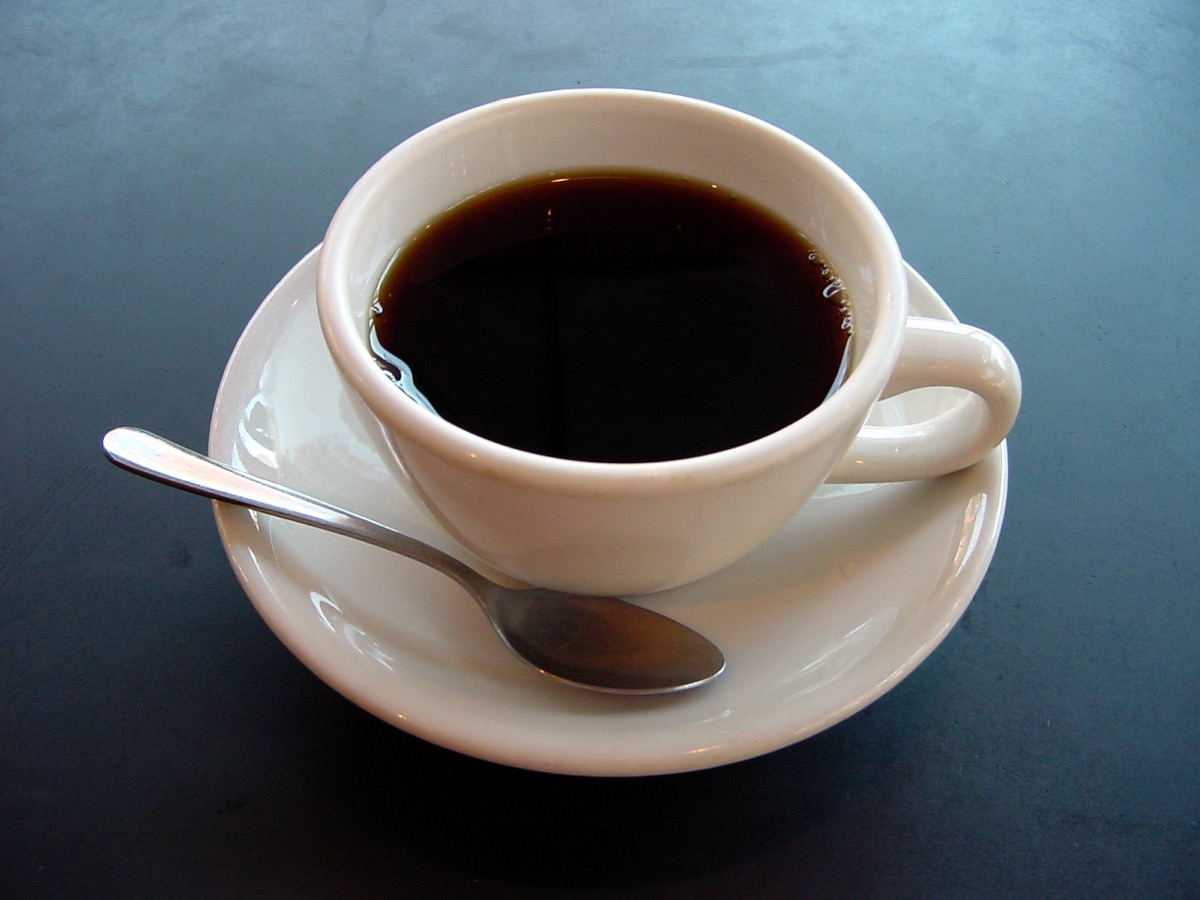
The advice to offset coffee with extra water rests on caffeine being a diuretic, which it is at sufficient dose. Whether that produces actual dehydration in someone who drinks coffee every day is a different question, and it is answerable. So 50 male habitual coffee drinkers completed two three-day trials, one on coffee and one on water, with food, fluid and activity controlled and measured directly.
Nothing moved. Total body water did not change across either trial and did not differ between them, at 51.5 kilograms against 51.4. No differences appeared in any blood marker of hydration, nor in 24-hour urine volume, at 2,409 milliliters against 2,428, nor in urine concentration or . Sodium excretion was higher on coffee. Body mass drifted down slightly in both trials alike.
It is often suggested that coffee causes dehydration and should be limited to maintain fluid balance. The premise is real enough: caffeine is a diuretic at adequate doses. The step from passing more urine to being dehydrated is the one that needs checking, and it needs a measurement of what the body retains rather than what it excretes.
Fifty male coffee drinkers, habitually consuming three to six cups a day, completed two trials of three consecutive days each, in a design. Physical activity, food and fluid intake were controlled. In one trial they drank four servings of 200 milliliters of coffee containing 4 milligrams of caffeine per kilogram of body mass, and in the other, water. Plasma caffeine was analyzed to confirm compliance.
Total body water was calculated before and after each trial using deuterium oxide. There were no significant changes within either trial and no differences between them, at 51.5 kilograms on coffee against 51.4 on water. Urinary and blood hydration markers were recorded daily, along with nude body mass.
None of the blood markers differed between trials, and neither did 24-hour urine volume, at 2,409 milliliters against 2,428, nor urine specific gravity, osmolality or creatinine. Mean urinary sodium excretion was higher on coffee. Body mass fell slightly across both trials equally. The authors conclude that coffee consumed in moderation by males hydrates about as well as water, and those last two qualifiers are the boundary of the claim.
wat. Three days of coffee left these men with exactly as much water in their bodies as three days of water did.
wat wat
It tests the claim people actually act on, which is about hydration status rather than about urine output. Measuring total body water directly is what separates passing more fluid from holding less.
How do we know?
Killer, Blannin and Jeukendrup ran a counterbalanced crossover study in 50 male habitual coffee drinkers, giving four servings of 200 milliliters of coffee at 4 milligrams of caffeine per kilogram, or water. Total body water was tracked by deuterium oxide.
What is still unknown
Fifty men, all habitual drinkers of three to six cups a day, over three days. Habituation blunts the diuretic effect, so this says nothing about someone who rarely drinks coffee, and nothing about women.
Learn something?
Where to next
 Are some people really "right-brained" and others "left-brained"?myths
 You were told cracking your knuckles causes arthritis. What did they find?myths
 Who, if anyone, does vitamin C actually protect from a cold?myths