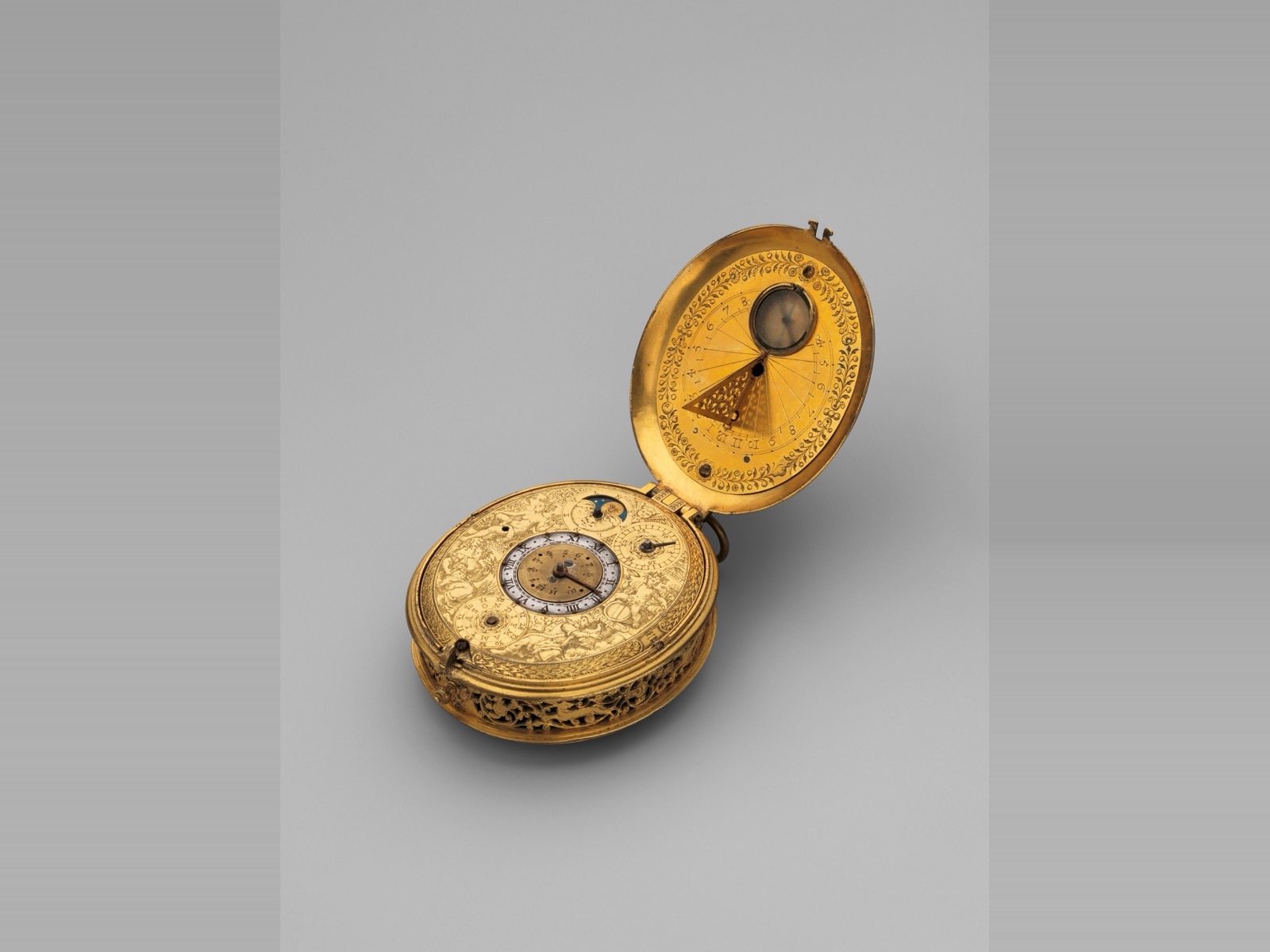
Because the watch could not be trusted. A with a folding compass, usable at forty-two degrees of latitude, is screwed to the inside of the cover of a Dutch made around 1605. The Met’s entry is blunt about why: the sundial would have been useful for setting and correcting the watch.
The problem was not workmanship. In spite of its multiple functions, including striking the hours and an astronomical dial, the watch could not have been a very good timekeeper until the application of the . That component did not exist yet. Sure enough, at some point after 1675, someone thought this watch worth fitting with one.
The clock watch by Jan Janssen Bockelts, made in Haarlem around 1605 to 1610, is one of the earliest known Dutch watches still in existence. Its case is densely engraved, inside and out, with figures, animals and a scene of the sacrifice of Isaac, and the engraver names himself on a scroll held by a winged putto. It is an expensive object made for a wealthy new republic.
Inside the cover is something more practical. A portable horizontal sundial with a folding-style compass, usable at forty-two degrees of latitude, is screwed to the interior. The openwork scrolling on its style repeats the scrolling on the click, on the cock for the balance and on the bridge for the count wheel. That ties the dial to the watch rather than to a later owner.
The museum states the purpose directly. The sundial would have been a useful addition for setting and correcting the watch. In spite of its multiple functions, the watch could not have been a very good timekeeper until the application of the balance spring. The watch struck the hours and carried an astronomical dial and a moon dial, and none of that helped it keep time.
Its later history shows when that changed. Extensive wear on the outside of the case suggests the watch was in use through most of the seventeenth century, and at some point after 1675 it was thought worth adding a balance spring. The original and balance were replaced, and the original hog’s-bristle regulation removed. One caution: this is a catalogue entry on one object, and its conclusions about the maker rest largely on signatures and on two comparable surviving watches.
wat. The watch told you the time; the sundial in its lid told you how wrong it was.
wat wat
It inverts the expected order. The sun was the accurate instrument and the machine was the convenient one, so the expensive object had to carry the cheap reference inside it.
How do we know?
The Metropolitan Museum’s catalogue entry for the clock watch by Jan Janssen Bockelts describes the sundial screwed into the cover, its compass and latitude, the watch’s functions, and the later addition of a balance spring.
What is still unknown
A museum catalogue entry about a single object, and much of what it concludes about the maker rests on signatures and on comparisons with two other surviving watches.
Learn something?
Where to next
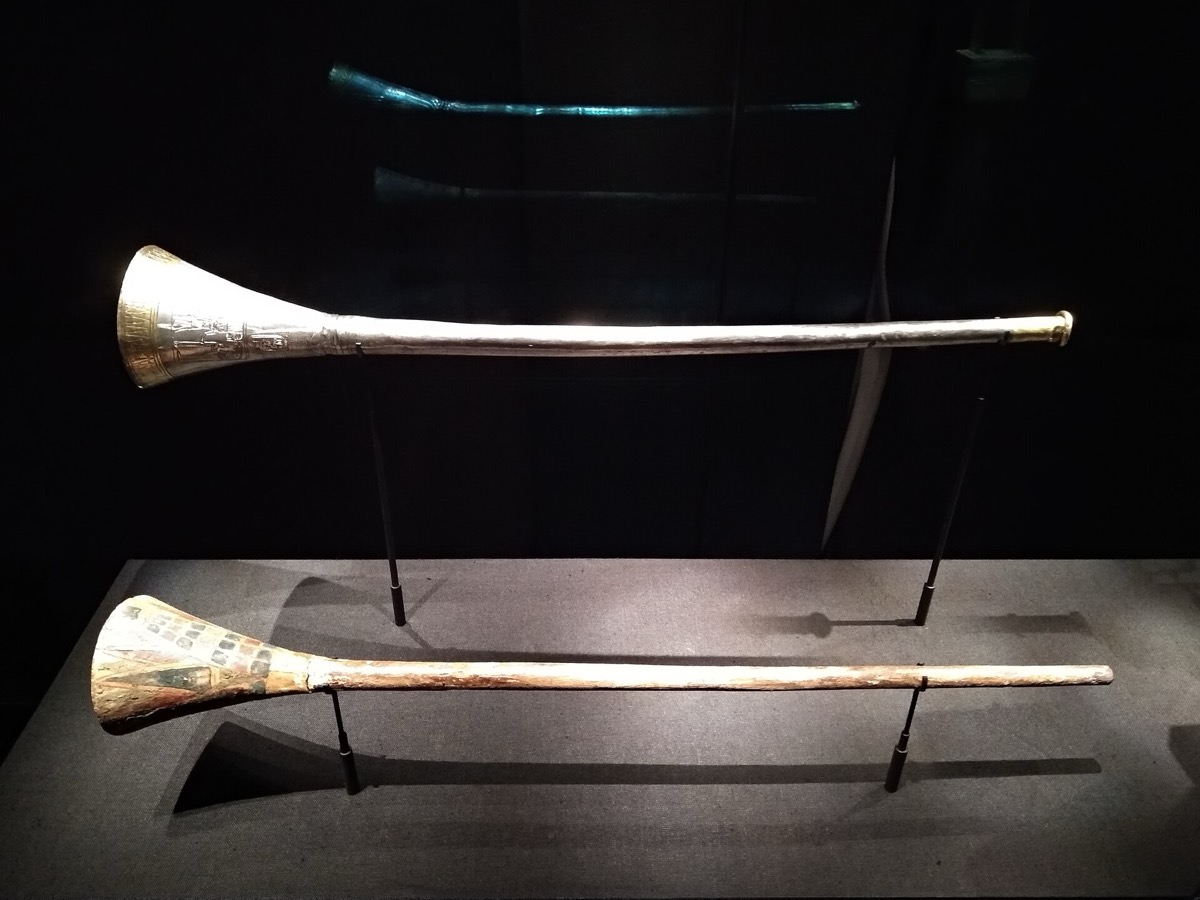 What happened when someone played Tutankhamun’s trumpets?instruments