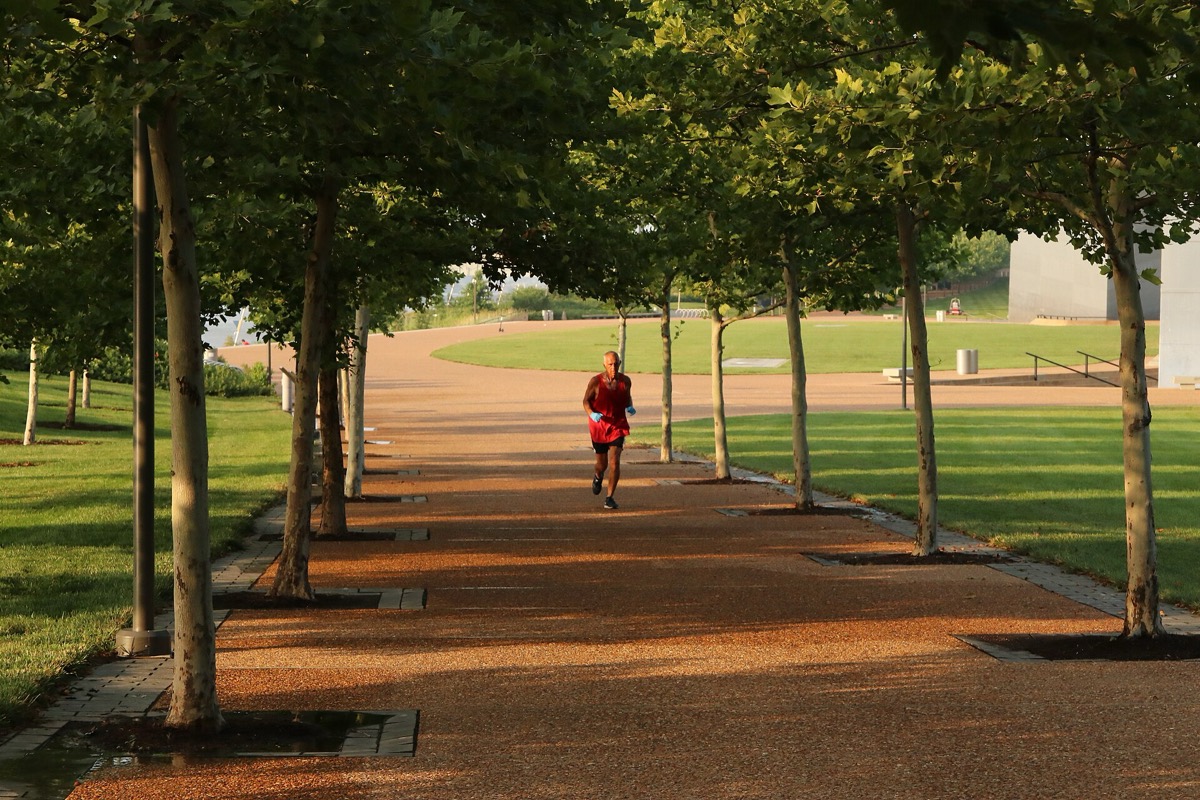
Short bouts of exercise reliably nudge attention and memory, and creativity has gone largely untested. Forty healthy young adults drew either fifteen minutes of aerobic exercise or a control condition. Then came two very different creativity tasks: one asking for many uses of an ordinary object, one asking for the single right insight. Mood ratings followed. Which task budged?
rose, and split in two. After exercise, participants produced more ideas and more kinds of ideas, and their mood afterward had nothing to do with it. The insight problems went the other way. People who felt energetic cracked more of the ones they had failed before, while people who felt flat solved fewer than they had. Same fifteen minutes, opposite outcomes.
Brief exercise helps attention and memory often enough that the finding is no longer news. Creativity sat outside that literature, partly because creativity is at least two abilities and any single test picks one of them.
Forty healthy young adults drew either a fifteen-minute aerobic bout or a control condition. Before and after, each took an , which asks how many different things you could do with an ordinary object. Each also took a set of insight problems, where one correct answer arrives all at once or not at all. Mood ratings followed.
Exercise raised divergent thinking, specifically flexibility and fluency, which are the number of distinct categories of idea and the sheer number of ideas. Mood afterward did not mediate that, so the widening was not simply a side effect of feeling good.
Convergent thinking depended entirely on . Participants reporting high vigor after exercising solved more of the insight problems they had failed before the session. Those reporting low vigor solved fewer. That is a crossover rather than a boost, and it rests on forty people in a single session. Which is why the authors call for more rigorous studies before anybody sells a jog as a route to insight.
wat. Fifteen minutes of aerobic work widened idea generation whatever the mood, while insight tracked vigor and deserted anyone left feeling flat.
wat wat
It splits creativity into two abilities that answer differently. Idea generation came along with the exercise whatever the mood, while the hunt for one right answer rode on how energized the person felt.
How do we know?
Aga and colleagues randomly assigned forty healthy young adults to a fifteen-minute aerobic bout or a control condition, testing an alternate uses task and insight problems before and after.
What is still unknown
Forty young adults in a single session is a small test, and the authors themselves ask for more rigorous replication before anyone treats a jog as a problem-solving tool.
Learn something?
Where to next
 Does living abroad really make a person more creative?creativity
 Does REM sleep solve the problem, or only rearrange it?creativity
 What does the brain do differently when writing a poem and when editing one?creativity