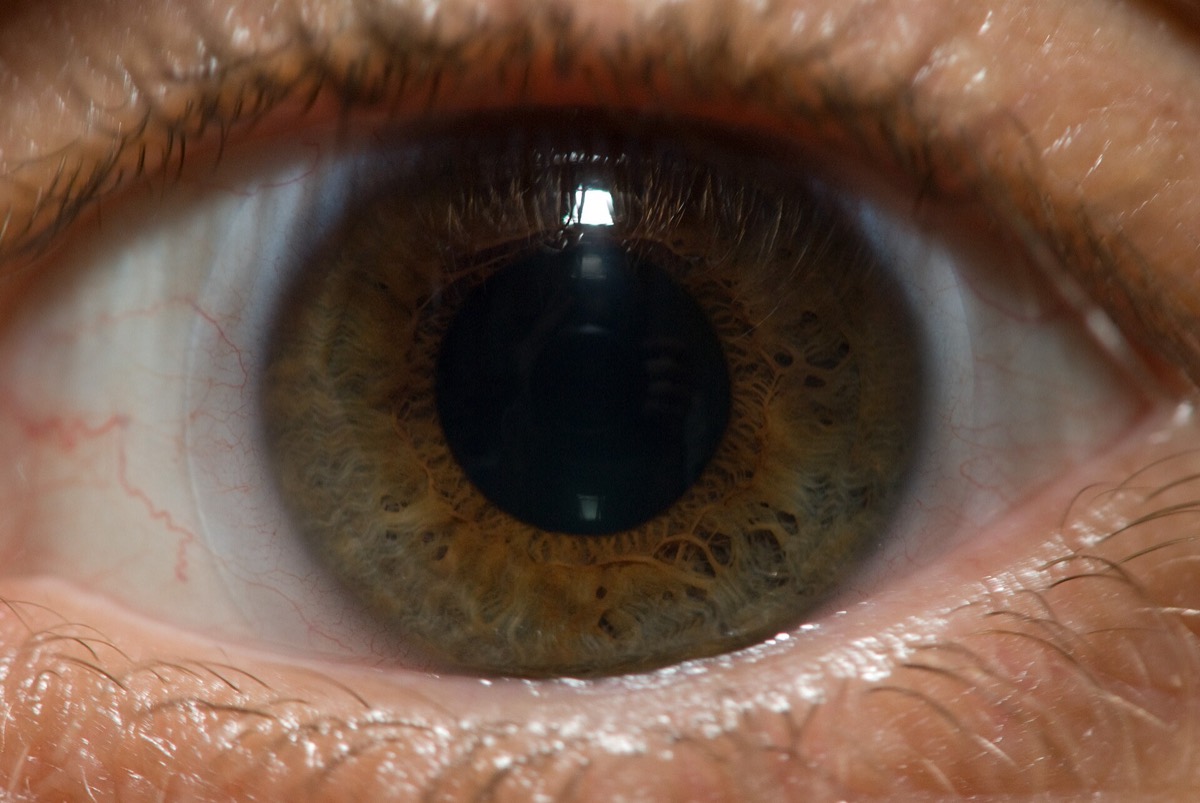
Each eye has a small patch of its visual field where nothing registers at all, to the right of center in the right eye and to the left in the left. It is not damage and it is not rare: everyone has it, it has a known location, and you can draw it on a diagram. What is strange is how hard it is to catch yourself having it.
It is where the optic nerve leaves. The holds no , no rods and no cones, so there is no image detection there. With both eyes open the two visual fields overlap and cover each other’s gap. Even with one eye shut the blind spot can be difficult to detect, because the brain fills in or ignores the missing portion of the image.
The blind spot is a small portion of the visual field of each eye, corresponding to the position of the optic disk within the retina. There are no photoreceptors in the disk, neither rods nor cones, and therefore no image detection in that area. The blind spot of the right eye lies to the right of the center of vision, and the left eye’s to the left.
Two things keep it out of experience. With both eyes open, the blind spots are not perceived because the visual fields of the two eyes overlap, so each covers the other’s gap. Even with one eye closed it can be difficult to detect subjectively, because of the ability of the brain to fill in or ignore the missing portion of the image.
The structure responsible is worth looking at directly. The optic disk can be seen in the back of the eye with an ophthalmoscope. It is oval, roughly one and a half millimeters in diameter, and sits on the nasal side of the macula lutea. It is also the entry point into the eye for the major blood vessels that serve the retina.
It is also a junction rather than a mere hole. The disk represents the beginning of the optic nerve, the second cranial nerve, and the point where axons from over one million coalesce. Because the nerve is visible there, clinical evaluation of the optic nerve head is critical in the diagnosis and monitoring of and other optic neuropathies that may lead to vision loss.
wat. Every eye has a blank patch where its own cable leaves. You never see it because the other eye, and then your brain, cover for it.
wat wat
The hole is a consequence of the wiring: a million axons have to leave the eye somewhere, and where they leave there is no room for light detection.
How do we know?
Britannica’s anatomy entry on the blind spot, written and reviewed by ophthalmologists, which gives the structure responsible, its size and position, and why the gap is not perceived.
What is still unknown
A short anatomy entry. It states that the brain fills in or ignores the gap without describing how, which is a live research question rather than a settled one.
Learn something?
Where to next
 What is your eye waiting for while it adjusts to a dark room?vision
 A jumping spider sleeps and its legs curl. Is it dreaming?vision
 Can someone blind from birth learn to aim their eyes after sight is restored?vision