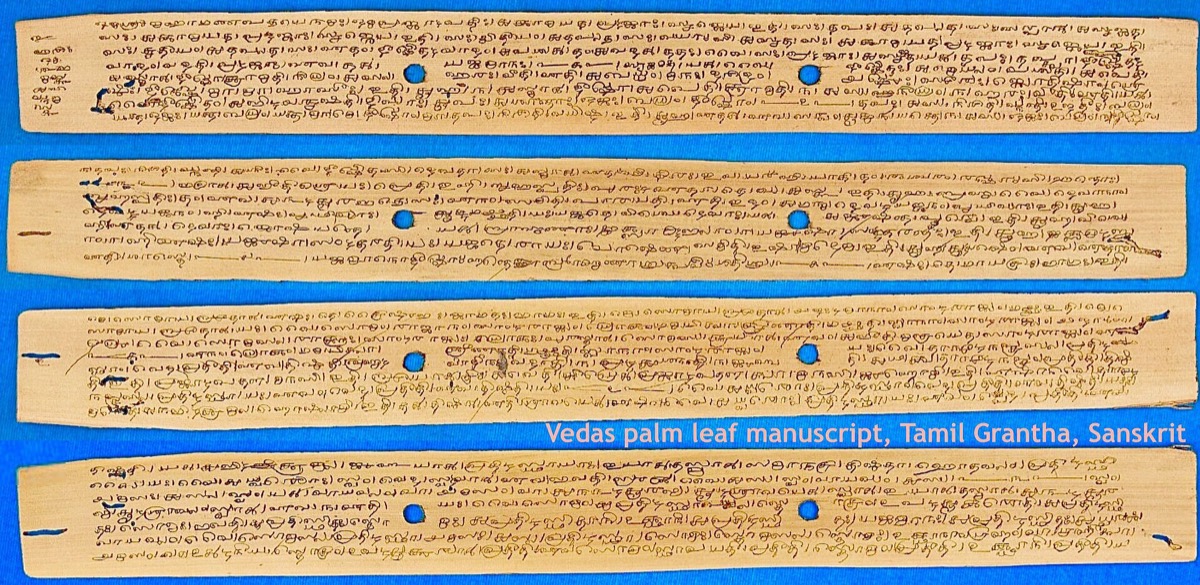
A yoga class is mostly postures, and the text everybody names as the source is the of Patanjali, from somewhere around 350 to 450 CE. The Sutras are a philosophical synthesis of earlier traditions, and the postural emphasis sits elsewhere in the history. So where does it sit?
In the hatha texts, roughly a thousand years later. Those works, from about 1100 to 1700 CE, are the ones centered on , while took shape in the late nineteenth century and drew its theoretical principles from the Sutras. It borrows from and hatha traditions too, and keeps developing new forms.
The history starts long before the text people name. White traces yoga from its Vedic and Upanishadic roots, through the Bhagavad Gita, to the Yoga Sutras of Patanjali, which he places at roughly 350 to 450 CE.
The Sutras earn their status as the most important philosophical synthesis of the traditions that came before, and as the core of yoga philosophy. What they are not is a manual of postures, which is what a visitor to a class would expect from the founding document.
The postures come from the hatha yoga texts, written somewhere between about 1100 and 1700 CE and centered on asanas. Alongside them run the tantric traditions and the Yogavasistha, and the practice we have assembled itself from all of these.
Modern yoga took shape in the late nineteenth century. It draws heavily on the Sutras for its theoretical principles, borrows from the tantric and hatha traditions, and has developed into new and constantly changing forms. That describes something alive rather than something copied.
wat. The philosophy comes mostly from the Sutras and the postures mostly from the hatha texts, about a thousand years apart.
wat wat
A practice with a long history is not the same as a practice with one source, and knowing which part came from where changes what counts as authentic.
How do we know?
White traces the line from Vedic and Upanishadic roots through the Bhagavad Gita and the Yoga Sutras to the tantric, hatha and Yogavasistha traditions, and on to the forms of the late nineteenth century.
What is still unknown
This is a bibliographic survey of the scholarship rather than a study of any single text, and the dates for the early works are approximate.
Learn something?