separates polymers by pushing them through a confined space, where transport rate depends on size. Living things are also long and flexible, and they wriggle. Whether that activity could serve as the sorting property, the way size does, was the open question.
It can. Thin living Tubifex worms pushed by a flow through a channel packed with a hexagonal moved through at rates that depended strongly on how active they were. The authors attribute it to the different set of shapes an active worm passes through compared with a sluggish one.
The convective transport rate of polymers through confined geometries depends on their size, which is the basis of chromatography. The question here is whether mixtures of can be separated the same way, on their activity instead.
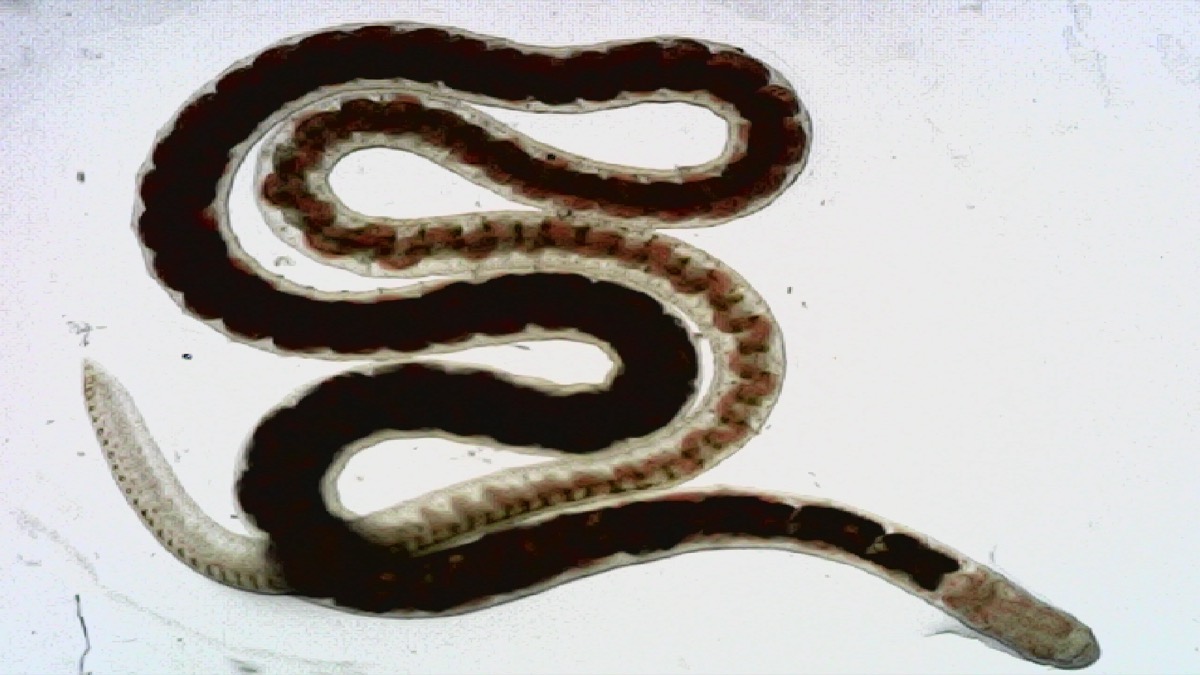
The model system is alive. Thin worms stand in for active polymers, pushed by an imposed flow through a channel filled with a hexagonal pillar array.
Transport rate through the channel depends strongly on the degree of activity. The authors assign the effect to the different distribution of conformations the worms sample depending on how active they are. An active worm spends its time in a different set of shapes.
What makes it more than a curiosity is the generality of the mechanism. Nothing about it is specific to worms, so the same reasoning should apply to other active, polymer-like objects, and the limits here are one species in one geometry.
wat. Activity sorted the worms the way size sorts a polymer, and for the same mechanical reason.
wat wat
It turns a physical property nobody can measure directly, how active a living thing is, into a position in a channel.
How do we know?
Heeremans and colleagues used Tubifex tubifex worms as a model system for active polymers and measured their transport through a pillar-filled channel under an imposed flow, against the degree of activity.
What is still unknown
One species in one channel geometry, treated as a model for active polymers rather than as an application.
Learn something?