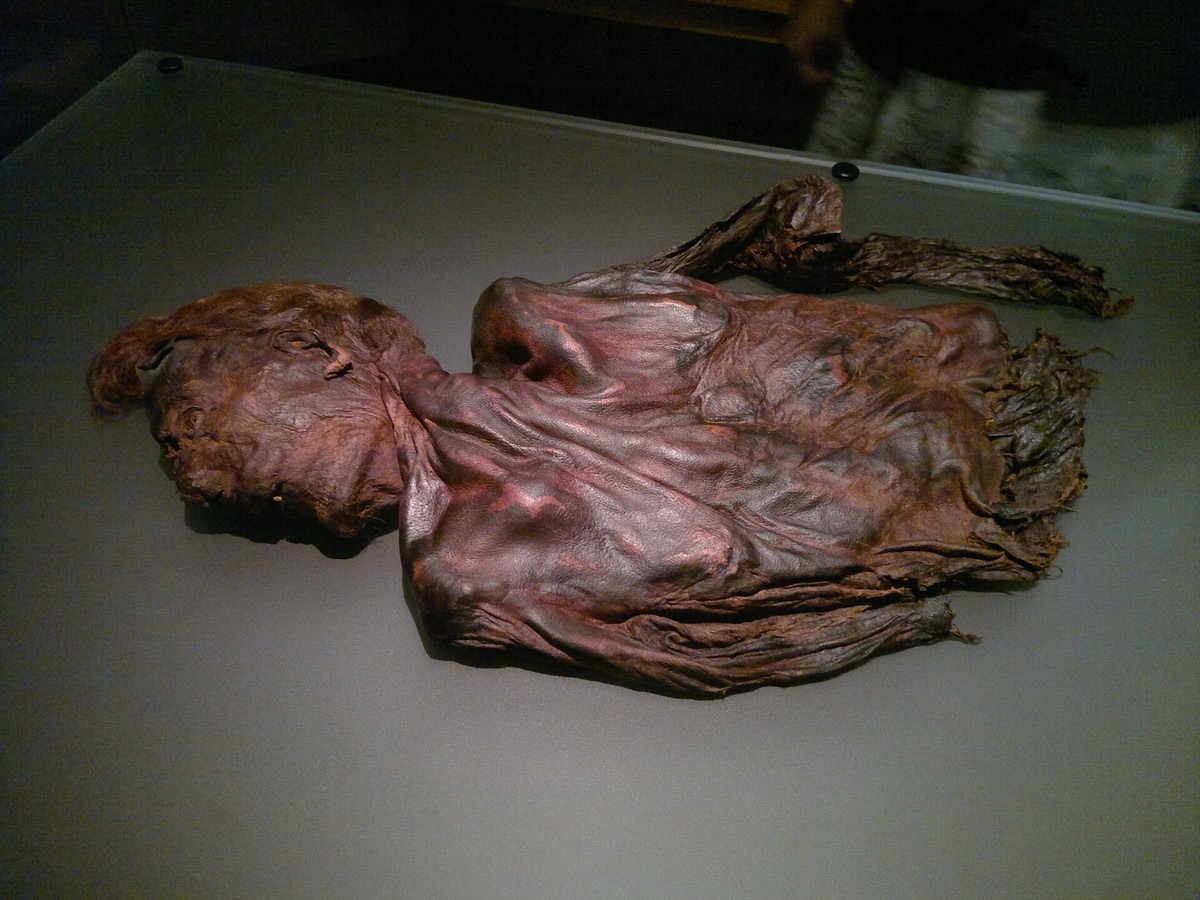
A family cutting peat for fuel in a Danish bog in nineteen fifty unearthed a body so well preserved they assumed it was a local murderer’s recent victim. put his death between four hundred and five and three hundred and eighty BC. He lay in a sleeping position with a rope around his neck, and an autopsy found he had died of hanging. Why is he still there at all?
The bog did it, chemically. Acidity in the peat preserved his bones and many soft tissues, including an intact though shrunken brain and intestines complete with their contents. His skin and nails cured and blackened over thousands of years in an oxygen-free environment, and full decomposition was blocked by the chemicals produced as , the main component of peat, degrades.
The body came out of the Bjaeldskovdal bog in Jutland in nineteen fifty, so well preserved that the family cutting peat assumed they had found a murder victim. His stubbled, slightly smiling face has made him the most famous in Europe. Wisdom teeth put him at over twenty, and researchers think between thirty and forty. He stood about five foot three, lay in a sleeping position with a rope around his neck, and had died by hanging.
What survived is remarkable. The peat’s acidity preserved bones and many soft tissues, including an intact but shrunken brain and the intestines with their contents still in place. His skin and nails cured and blackened in an oxygen-free environment, with decomposition blocked by chemicals from degrading sphagnum moss. He was buried naked but for a cap and belt, had worn shoes part of the year and gone barefoot much of it, and had shaved, since stubble remained.
In twenty twenty-one researchers read his last meal: porridge of barley, various wild seeds, flax and fish. The same analysis found no edible or medicinal plants, which are the signs typically taken to indicate a sacrifice. The wide variety of seeds and weeds does resemble what has been found in other bog bodies thought to have been sacrificed.
The case for sacrifice rests on the burial rather than the chemistry. Jutland farmers of the period left offerings of food, weapons and sometimes human bodies in local bogs, which researchers suspect were seen as supernatural sites. He was clearly killed on purpose, and was also carefully buried, with his mouth and eyes closed, at a time when cremation and grave burial were commoner than depositing a body in a bog. He could equally have been a criminal, a suicide, or the victim of a vengeance killing.
wat. The acid that dissolves bone elsewhere is the acid that kept his face, down to the stubble he had not shaved.
wat wat
Preservation this good turns a body into a document. His gut contents, his stubble, his bare feet and his careful burial are all evidence, and they do not all point the same way.
How do we know?
Erin Blakemore’s article for National Geographic gathers the autopsy findings, the radiocarbon dating, the twenty twenty-one analysis of his last meal and the competing readings of why he died.
What is still unknown
Why he was killed remains open. The people who did it left no writing, so sacrifice, punishment and vengeance killing all remain possible readings of the same hanged, carefully buried man.
Learn something?