Long-lived animals share an awkward set of traits: slow growth, , low fecundity, slow recovery from any loss. That makes them easy to overfish and hard to study, because nobody lives long enough to watch one age. One vertebrate has recently taken the record, and the method that proved it is unusual. Which animal, and how would you even check?
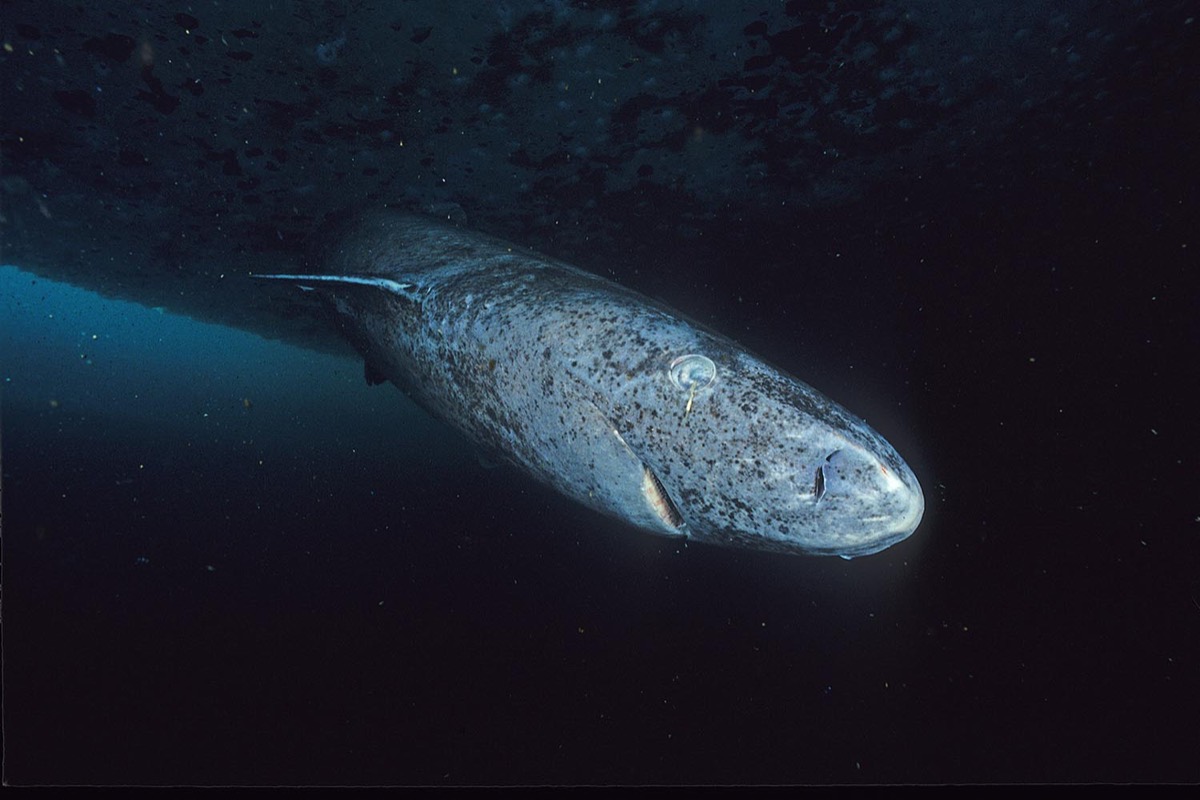
The , with an estimated lifespan of at least two hundred and seventy-two years. The age estimate comes from radiocarbon dating of the , whose core forms before birth and is never replaced, so it holds the chemical signature of the year the animal was born. Edwards and colleagues review that result and what the species still hides.
Extreme longevity travels with a particular life history: slow growth, late maturity, low fecundity. Populations built that way recover slowly and tolerate little added mortality, and among the pattern sharpens with depth. Deep-water species therefore grow more slowly in numbers and suffer more from exploitation than their shallow-water relatives.
The Greenland shark is the newest example, and the extreme one. Radiocarbon dating of eye lenses put its estimated lifespan at a minimum of two hundred and seventy-two years, confirming a long-standing suspicion and making it the longest-lived vertebrate known. The same work produced the first age-at-length data anyone has had for the species.
Edwards and colleagues treat that as a starting point rather than an answer. The eye lens figures still want independent validation, and the shark offers no fin spines or calcified vertebrae with growth bands to check them against. Amino acid racemization, which has worked on several whales, has failed here. The review calls for new aging methods outright.
The rest of the agenda is as open. Population genetics and genomics may show what underlies the longevity, the range and the vulnerability to a warming Arctic. Tagging, accelerometers and acoustic hydrophones combined with stable isotope analysis can reveal feeding strategy and trophic role. And the management case rests on all of it, since a species nobody can age is a species nobody can manage.
wat. A shark hauled up from Arctic water this year may have been a juvenile when Napoleon was alive.
wat wat
An animal that takes a century to mature cannot absorb being caught as bycatch, and until recently nobody managing those fisheries knew that was what they were handling.
How do we know?
A review in Frontiers in Marine Science, led by Jena Edwards with a large group of Greenland shark researchers, draws together the aging work, the tagging and genetics, and the management questions the longevity raises.
What is still unknown
The review is explicit that the eye lens estimates still need independent validation. The species has no hard tissue with growth bands to check against, and amino acid racemization has not worked on it.
Learn something?
Where to next
 Where do the oldest people in the world live? Where there are no birth certificateslongevity