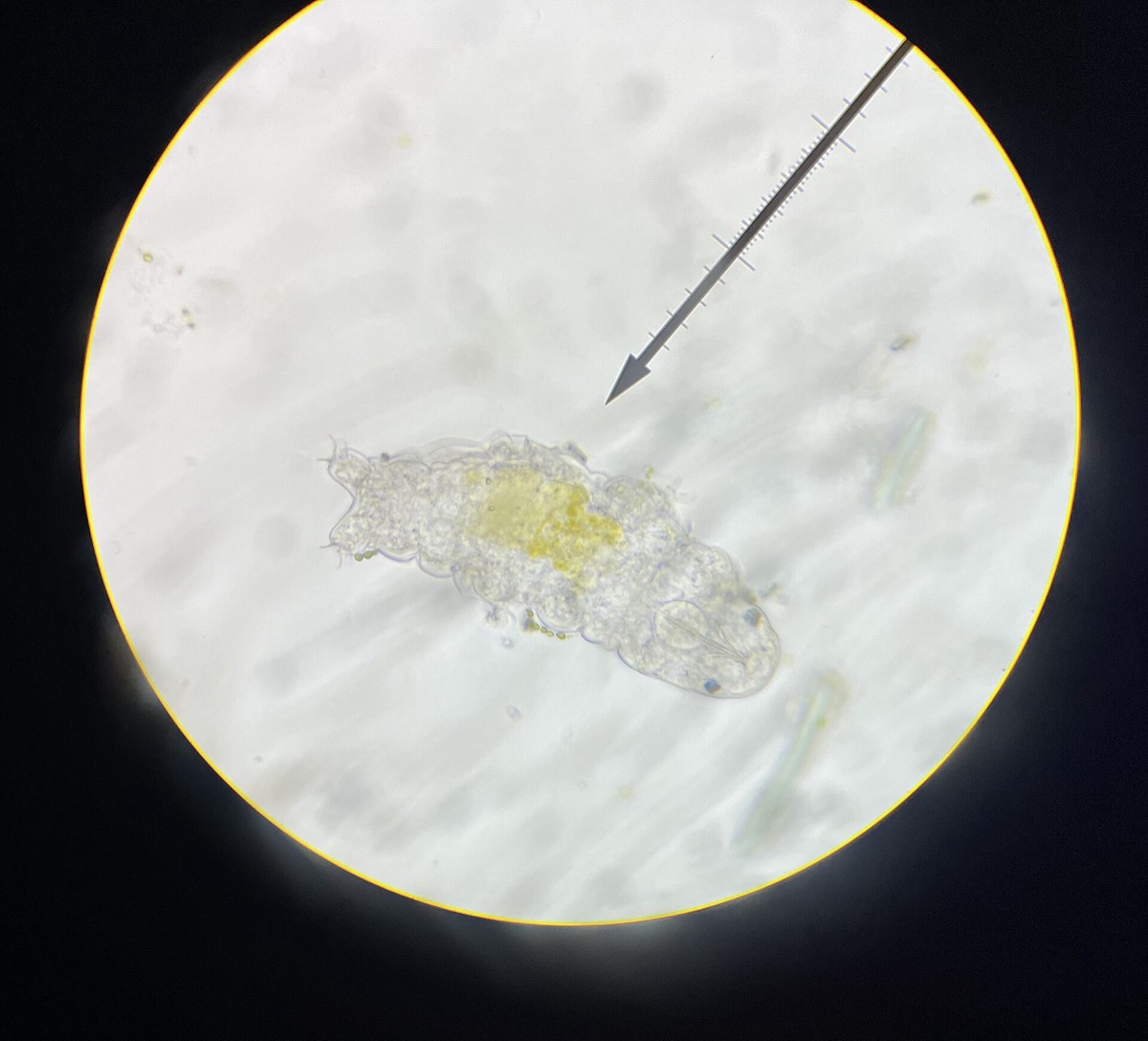
When its surroundings dry out, a does not die. It shrinks, pushes almost all the water out of itself, and enters a state where its metabolism nearly stops. In that state it withstands extreme cold, drought, pressure and radiation. So they flew one to orbit and opened the hatch.
Some of them came back. Dried water bears were exposed to , and part of the group to direct solar ultraviolet as well; rehydrated on the ground, some recovered and went on to reproduce. The vacuum did little harm. The ultraviolet did a great deal.
The familiar headline says a water bear survives anything, and it misleads on one important point. It is not tough while it is active: a wet, active water bear is a fairly delicate creature and easy to kill. The toughness shows up in one state only.
That state is called . As the surroundings dry out it pushes nearly all the water out of itself, shrinks to a tiny barrel, and its metabolism comes almost to a halt. Since hardly any process is running, there is hardly anything to damage.
The orbital experiment tested the limit. Dried water bears were mounted on an experiment circling the Earth and exposed to vacuum, some of them to direct ultraviolet from the Sun as well. After the return they were rehydrated, and some recovered and reproduced.
Separating the two factors is the interesting result. The vacuum did almost no harm, because the drying had already happened voluntarily. The ultraviolet, by contrast, cut survival sharply, because it attacks DNA directly rather than a process. And what came out of it goes beyond curiosity: those , which hold structures together without water, are studied as a way to store drugs and tissue with no cold chain.
wat. A water bear pushes nearly all the water out of itself, and in that state even a vacuum does not kill it.
wat wat
Their defenses, and in particular proteins that hold structures inside a cell together without water, are studied as a route to storing drugs and tissue without refrigeration.
How do we know?
Dried water bears were mounted on an experiment in low Earth orbit and exposed to vacuum, some of them also to ultraviolet. After the return they were rehydrated and counted for recovery and reproduction.
What is still unknown
Not all of them survived, and the rate fell sharply with full ultraviolet exposure. This is toughness in the dried state only, never in the active one.
Learn something?