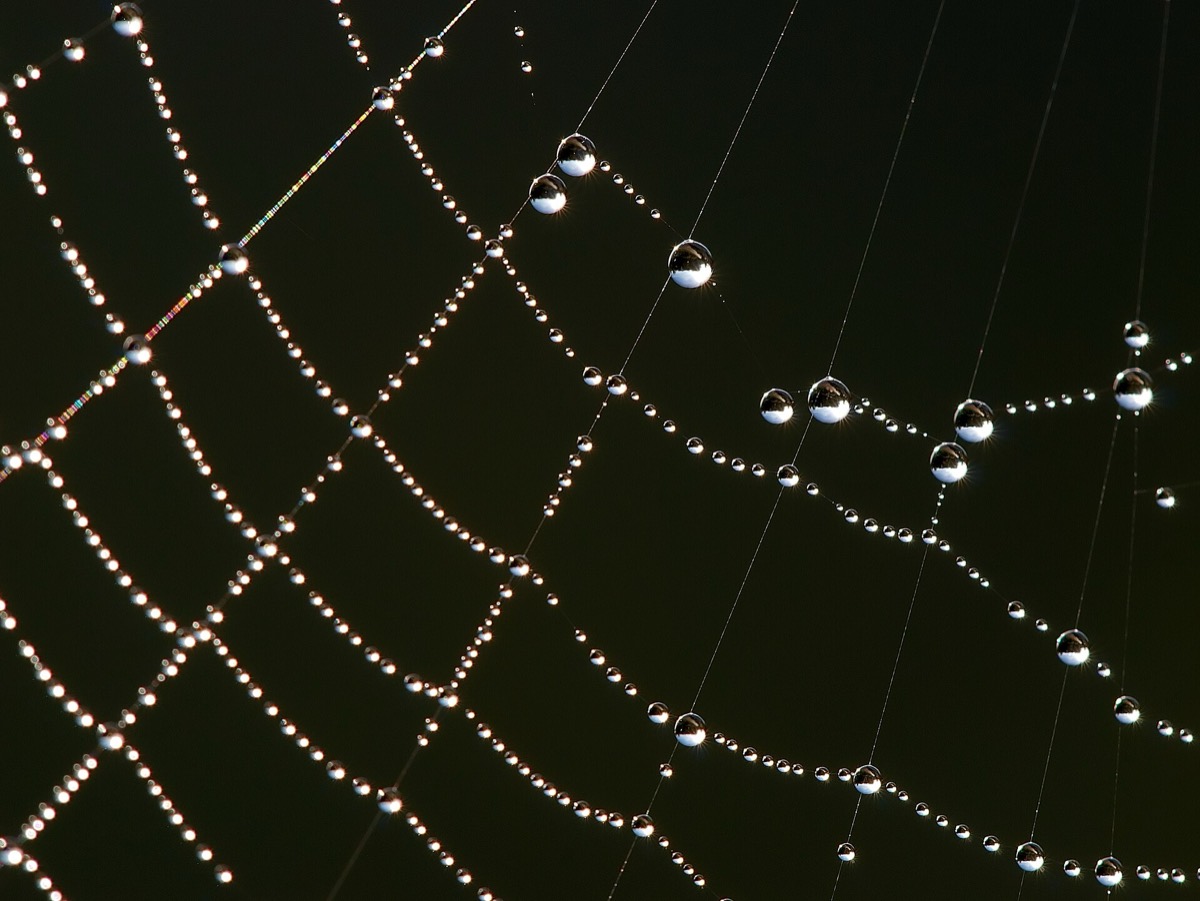
Hearing in every animal known rests on an auditory organ built out of cells, and the size of that organ is limited by the size of the body around it. A spider is small and has no such organ. It does have a web, which is a large, taut structure of its own manufacture hanging in the air. Zhou and colleagues asked whether airborne sound reaches the spider through it. Is the web doing the listening?
The web is the ear. Hearing in the turns out to be functionally outsourced to its , the proteinaceous web it builds for itself, rather than housed in any organ. Because the animal builds and repairs that structure, the sensor is under behavioral control in a way a body part is not. The arrangement sidesteps the usual limit that body size places on an auditory organ.
Every animal known to hear does it with an auditory organ made of cellular tissue, and that organ is constrained by the size of the animal carrying it. For a small body the physics is unkind: little surface, little sensitivity.
A spider is small and has no hearing organ in the usual sense. What it has is a web, a large proteinaceous structure it manufactures itself, stretched taut in open air and already used to read vibration from prey.
Zhou and colleagues show that hearing in the orb-weaving spider is functionally outsourced to that web, its extended phenotype. The sensing happens in the silk, and the animal reads the result, which means the sense organ is outside the body entirely.
Two consequences follow. The first is behavioral controllability: a spider can build, enlarge, retension or repair the thing it hears with, which no animal can do with an ear. The second is supersizing, escaping the limit body size places on . The authors frame it as a model for extended and regenerative sensing, and as a set of design features for building novel .
wat. Not an ear inside the animal but a sheet of silk outside it, built to the size the job needs.
wat wat
An animal that can build, resize and repair its own sense organ breaks the assumption that sensitivity is bounded by anatomy, which is a genuinely different design.
How do we know?
Zhou and colleagues examined how airborne sound moves the web of an orb-weaving spider and how the spider responds to it, treating the web as the sensing surface rather than the body.
What is still unknown
Showing that the web functions as an auditory sensor is not the same as mapping what the spider does with the information, and the work covers orb-weavers rather than spiders generally.
Learn something?
Where to next
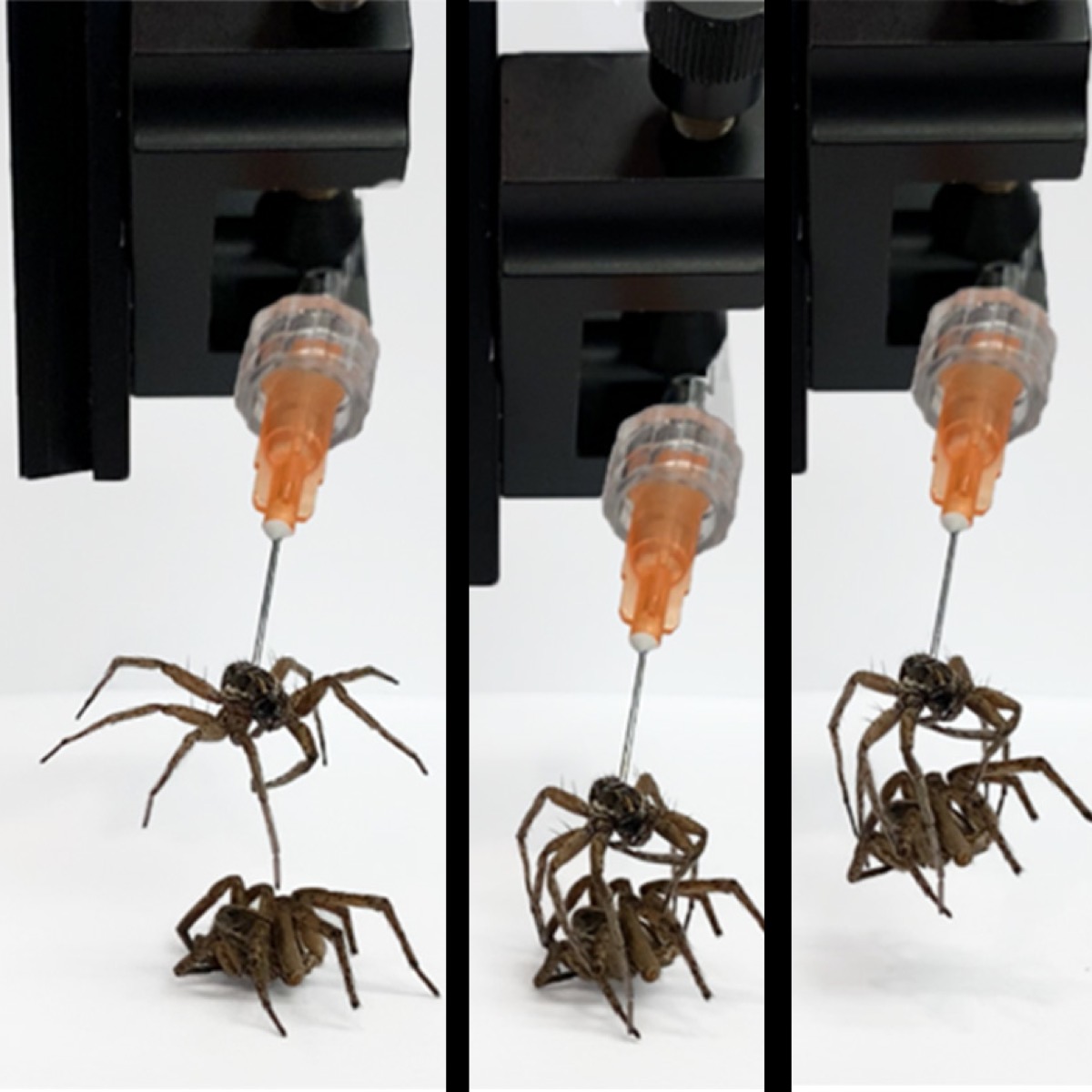 How did a dead spider become a ready-made robotic arm?spiders
 The cat does not come when called. Does it at least know its name?hearing
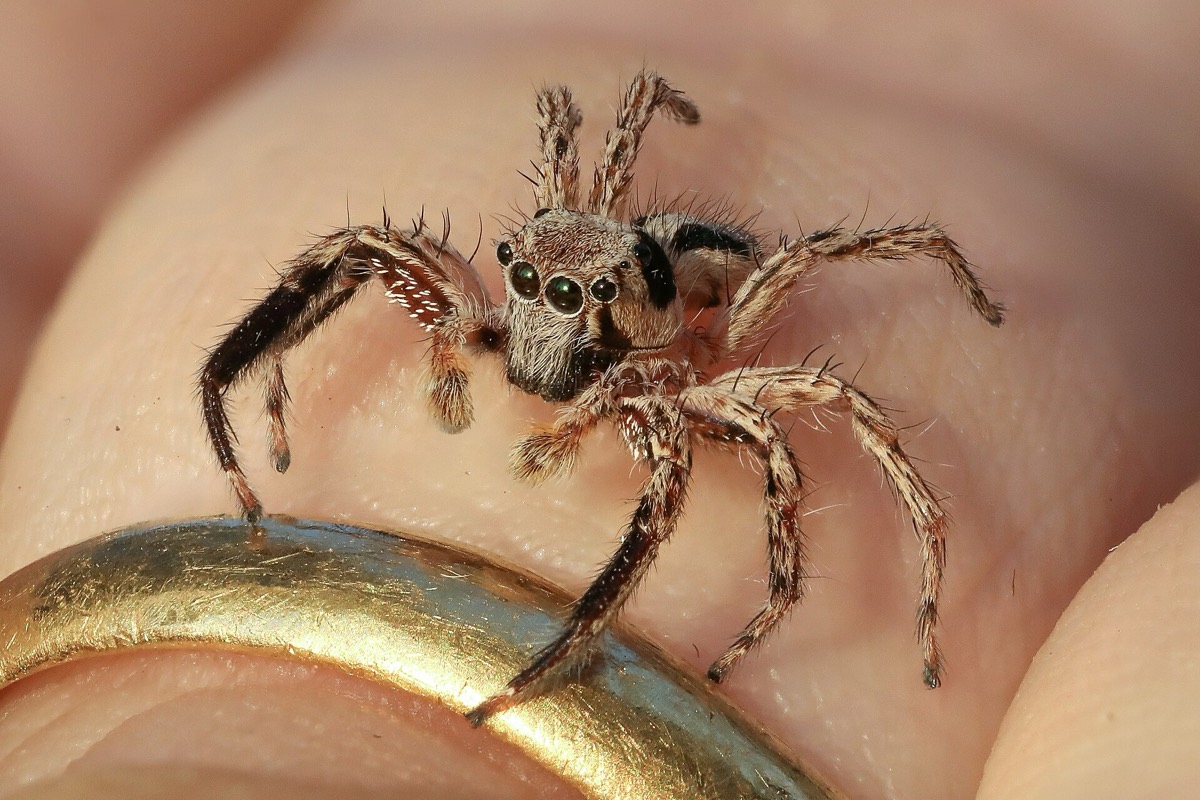 A jumping spider sleeps and its legs curl. Is it dreaming?spiders