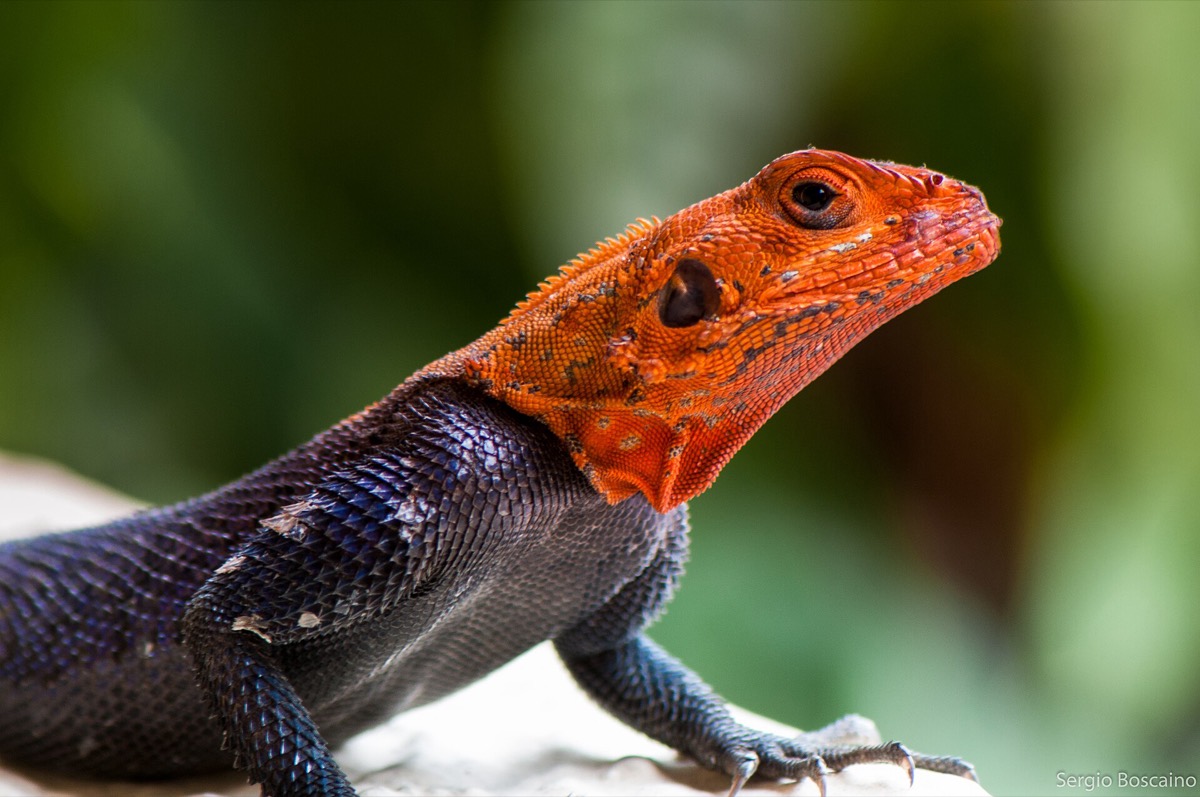
are everywhere in suburban Africa, living off and taking whatever else turns up, which is the textbook strategy. A seaside resort in southern Togo put a different kind of food within reach. Dendi and colleagues watched a population there feeding regularly on pizza, and offered them more than one variety. Do they take whatever is going?
They picked a favorite. The lizards fed regularly on human-made food, and when several types were offered they showed a clear preference for one of them, four cheeses. Every monitored individual went for the same variety, which is what lifts the observation above merely amusing. The authors suggest some in that pizza is doing the attracting.
Rainbow lizards are common in suburban areas across Africa and forage opportunistically, with arthropods as the main prey. That combination, a familiar animal with a flexible diet, makes them a good subject for watching what happens when an entirely new food appears.
At a coastal resort in southern Togo, the researchers watched several individuals in a population feeding regularly on non-natural human-made food. The food was pizza, which is not a thing any lizard has adapted to, and the feeding was routine rather than a one-off.
When different types were offered, the lizards showed a clear preference. Four cheeses was the one they went for, consistently, over the alternatives available.
The detail the authors fasten on is the agreement. All the monitored individuals fed on the same type, which is unlikely if each animal were simply taking what it happened to find. That consistency suggests some chemical cue in that particular variety is attracting them, which turns a comic observation into a small question about how an opportunist actually chooses.
wat. Offered several kinds, every lizard in the group went for the same one, which is not what opportunistic is supposed to look like.
wat wat
Opportunistic is usually taken to mean indiscriminate. A population converging on one variety suggests the choosing is doing real work, even when the food is something no lizard evolved alongside.
How do we know?
Dendi, Segniagbeto, Meek and Luiselli observed a rainbow lizard population at a coastal resort in southern Togo, recording individuals feeding on human-made food and which type they chose when offered alternatives.
What is still unknown
An observational report on one small population at one resort, with no controlled trials and no chemical analysis. The cue behind the preference is proposed rather than identified.
Learn something?