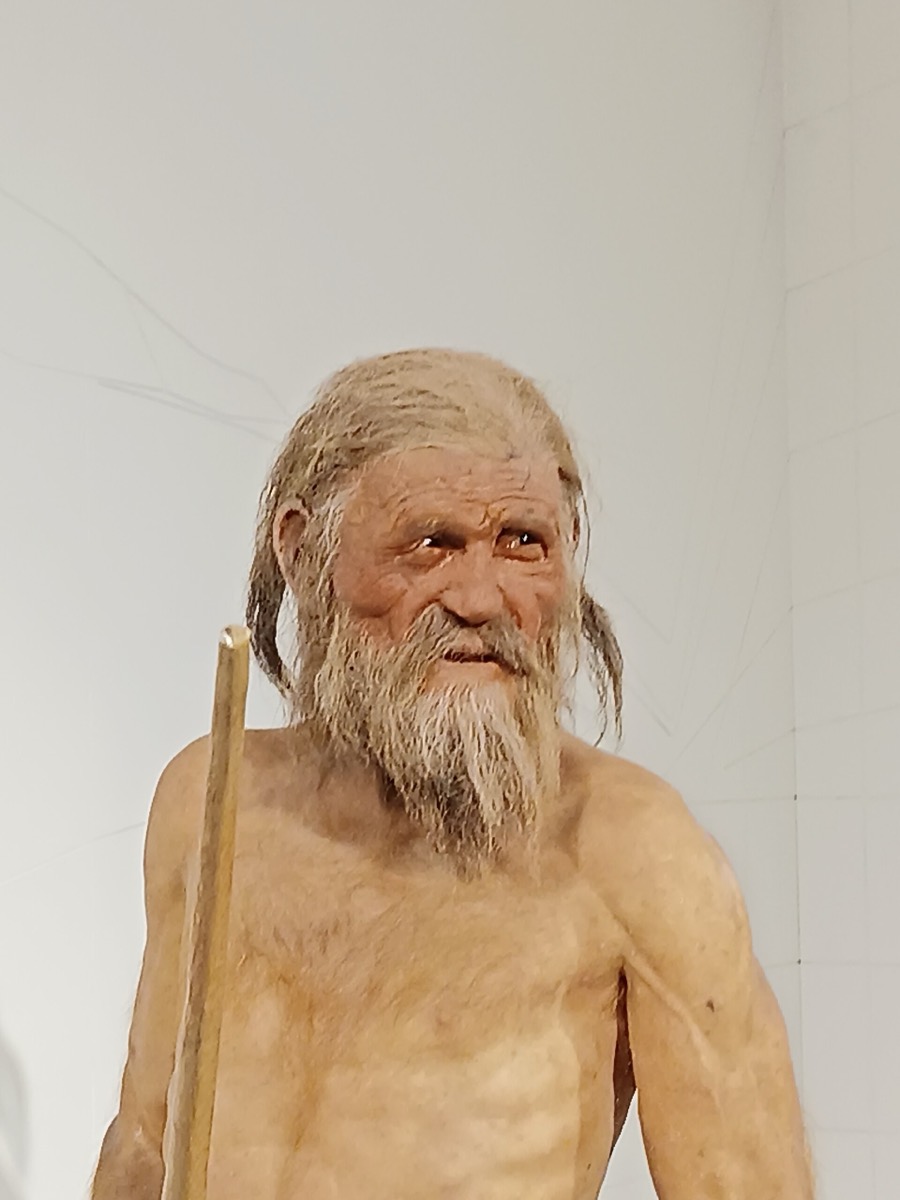
On 19 September 1991 two German hikers found a human corpse at 3,210 meters near , in the Schnalstal valley, with only the upper body protruding from the ice. The obvious reading was a mountaineering accident. Everything that followed over the next days was run on that assumption.
Five days, and the first guess came from a mountaineer. Reinhold Messner, shown a sketch of the axe found with the body, was the first to suspect the corpse was very old. A forensic scientist oversaw the recovery on 23 September, and the archaeologist Konrad Spindler was called in only on 24 September, estimating at least 4,000 years.
On 19 September 1991 the German holidaymakers Erika and Helmut Simon found a human corpse during a hike at 3,210 meters near Tisenjoch in the Schnalstal valley. Only the upper body protruded from the ice. The Simons reported the find to the landlord of the Similaun refuge, who called both the Austrian police and the Italian carabinieri.
The first days went badly. Rescuers tried to free the body on 20 September and gave up in bad weather, taking only the axe down to the valley. A second attempt on 21 September failed because no helicopter was available.
Recognition arrived from an unexpected direction. The refuge landlord Markus Pirpamer covered the body with a plastic sheet, and the mountaineers Reinhold Messner and Hans Kammerlander arrived the same day. Shown a sketch of the , Messner was the first to suspect the corpse was very old.
The recovery itself was a forensic operation. A camera team filmed the being freed with ice picks five days after the find, with no archaeologist present and a forensic scientist from Innsbruck overseeing transport in a . Konrad Spindler arrived a day later still, and estimated an age of at least 4,000 years.
wat. A forensic team, a body bag and a hearse, for a man who died over 5,300 years ago.
wat wat
The most intact prehistoric human ever found was handled for days as a police matter, with the evidence treated accordingly.
How do we know?
The South Tyrol Museum of Archaeology sets out the sequence day by day, from the Simons’ find through the failed recovery attempts to the moment the mummy reached Innsbruck.
What is still unknown
An account assembled afterwards from participants, about days when nobody knew what they were documenting.
Learn something?