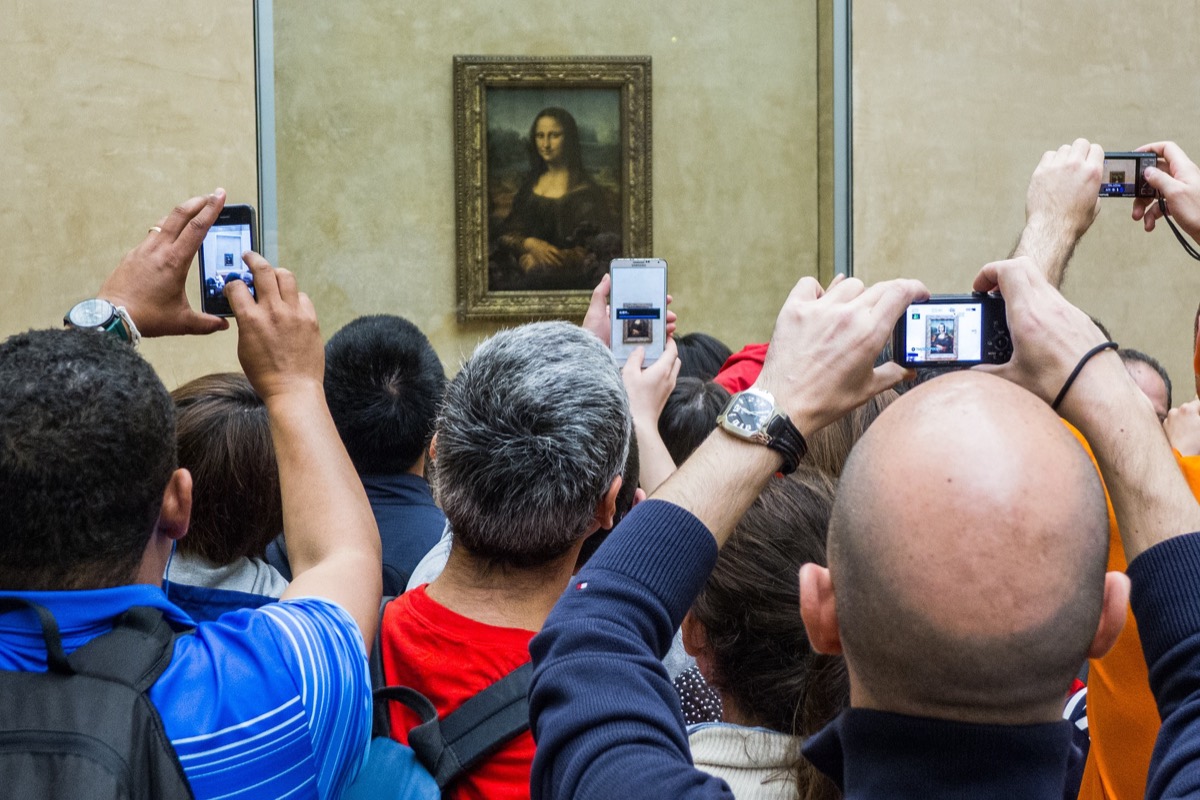
The fascination with the painting has always been credited to the emotional ambiguity of her face. Ambiguity is a claim about viewers, which makes it testable. So the was manipulated into a range of happier and sadder variants, and people were asked what they saw.
Less ambiguous than its reputation. The probability of answering happy to the original was close to 100 percent. What is relative is the reading of the variants: perceived happiness followed functions of mouth curvature, and those functions shifted significantly depending on which range of faces people were shown.
The worldwide fascination with the Mona Lisa has been credited to the emotional ambiguity of her expression. This study takes one potential source of that ambiguity, the curvature of the mouth, and manipulates it into a range of happier and sadder variants.
Two experimental conditions presented different with different step sizes along the happy-sad axis. Stimuli came in random order, and participants reported the perceived expression and then rated their confidence in that response.
The original turns out not to be a hard case. The probability of responding happy to it was close to 100 percent, and participants responded faster to happy faces than to sad ones throughout.
The interesting result is about relativity. Perceived happiness described sigmoidal functions of mouth curvature, confidence was weakest around the , and the functions, confidence values and reaction times all differed significantly between the two conditions. Perception of emotional content depends strongly on the stimulus range used.
wat. Nearly everyone calls the original happy; the variants shift with the company they are shown in.
wat wat
What a face seems to express depends on the other faces you have just seen, which is a fact about perception rather than about painting.
How do we know?
Liaci and colleagues presented the variants in random order under two conditions with different stimulus ranges and step sizes, and recorded the perceived expression, the confidence in each response and the reaction times.
What is still unknown
This measures how people read manipulated versions of one image, which is a question about perception rather than about what Leonardo intended.
Learn something?
Where to next
 Why does almost every language name red before it names blue?perception
 How many different feelings can music raise without saying a word?perception
 Why do so few scales get used out of all the possible ones?perception