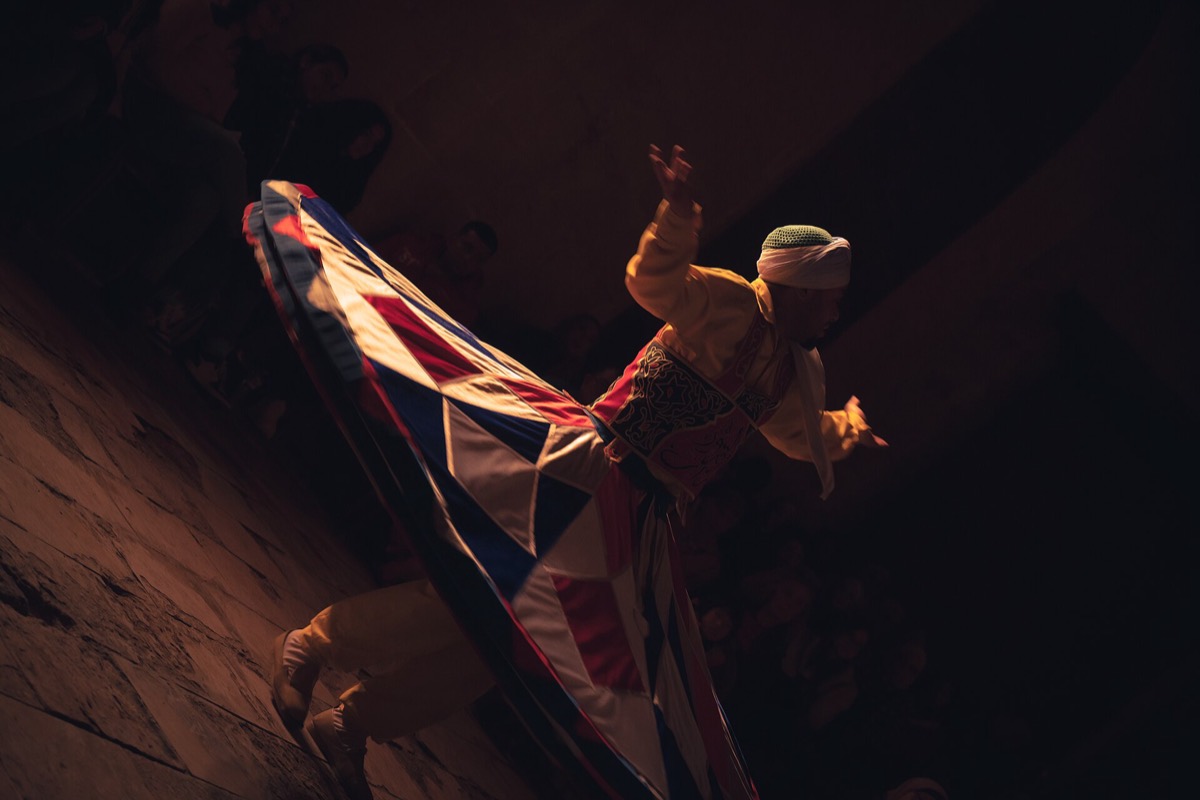
The are an ascetic Sufi order founded in Konya in 1273, known worldwide for a turning dance. Tourists meet it as a performance of about an hour. What a visitor sees and what the ceremony is are not the same thing, and a secular century sits between them.
Most of the religion, and most of the training. All were closed in 1925 under , and through thirty years of clandestine practice transmission focused on music and songs rather than spiritual and religious traditions. Many ceremonies are now shortened and simplified for tourist audiences rather than performed in their traditional context.
The Mevleviye is an ascetic Sufi order founded in 1273 in Konya, from where it gradually spread throughout the Ottoman Empire. Today it is found in many Turkish communities around the world, with the most active centers in Konya and Istanbul.
The dance is specific rather than freeform. After a recommended fast of several hours, the whirlers rotate on their left feet in short twists, driving the body around with the right foot. The body is meant to be supple, the eyes open but unfocused, so that images blur and flow.
The training behind it was the larger commitment. Dancers used to spend 1,001 days in reclusive training within the mevlevi-houses, learning ethics, codes of behavior and beliefs through prayer, religious music, poetry and dance. Afterwards they stayed members of the order but returned to work and family.
Then the institution was dismantled. All mevlevihane were closed in 1925, and performances were allowed again only in public from the 1950s. Across thirty years of clandestine practice, transmission focused on music and songs rather than spiritual tradition, which is why many ceremonies today are shortened and simplified to meet commercial requirements.
wat. The turning survived the ban; the thousand days of training did not.
wat wat
A tradition can survive in public while losing the part that made it a practice rather than a show.
How do we know?
UNESCO inscribed the ceremony on its Representative List in 2008, and the nomination file sets out the order, the musical repertoire, the training and what the twentieth century did to all three.
What is still unknown
A heritage listing describes a tradition and its threats; it does not measure how much meaning any performance retains.
Learn something?
Where to next
 Can an audience in a hall really hear a Stradivarius?music
 Does a Mozart sonata really reduce epileptic seizures?music
 Why is a wholly predictable song boring, and a wholly surprising one exhausting?music