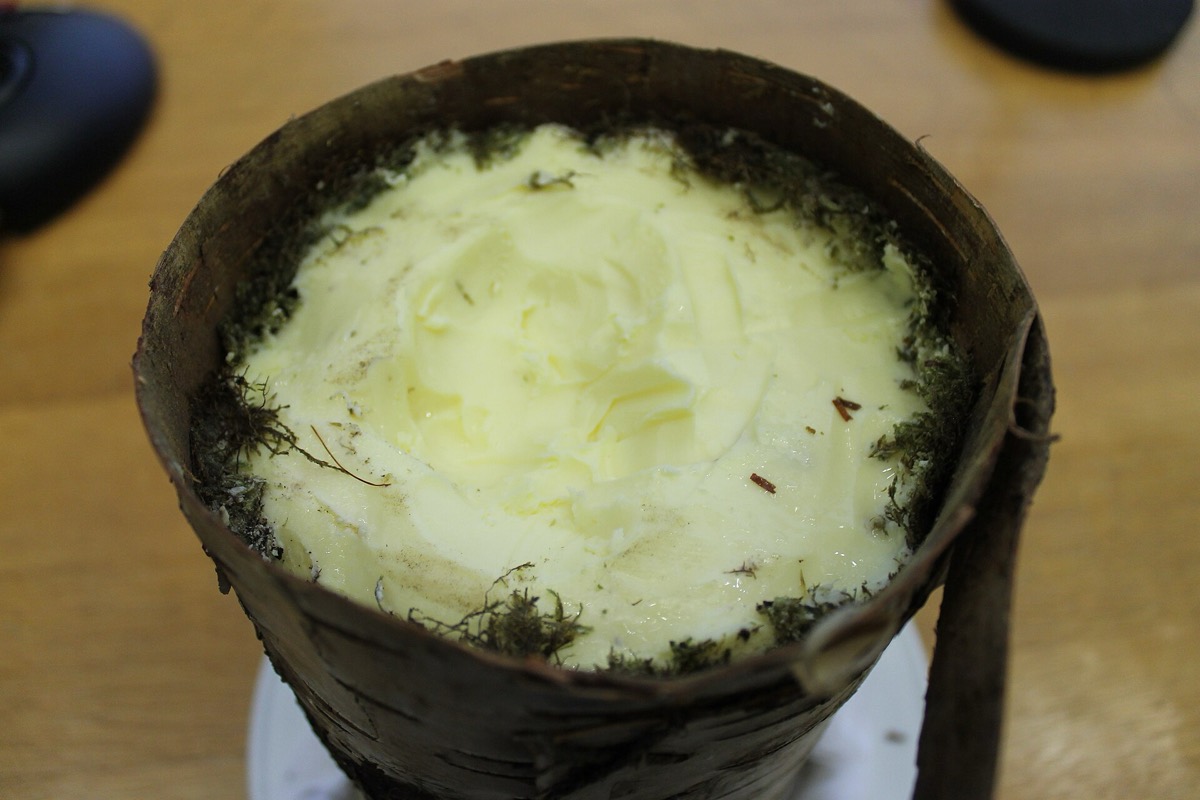
In the of Ireland people keep turning up white or yellow waxy lumps, sometimes inside a wooden vessel, sometimes wrapped in an animal bladder. The fat has altered chemically over the centuries, so the eye cannot say what it once was. Chemists went at it with isotopes and carbon dating. What turned up?
Dairy fat, buried across four millennia. The ratio of carbon isotopes, the heavier and lighter versions of one element, carries a milk signature that outlasts the decay, and it sets this tradition apart from the meat-fat deposits found elsewhere. Dating spread the lumps from the Early Bronze Age, around 1700 BC, to the seventeenth century AD. These are the largest deposits of fat found anywhere in nature.
A lump of gives nothing away by sight. The material has been reworked over centuries in the ground, which is why earlier analysis could say only that it came from an animal, and could not get closer than that.
The answer came out of the chemistry. of carbon sit in different ratios in milk fat than in meat fat, because the two are built by different metabolic routes, and the ratio survives the decay. Measured acid by acid rather than in bulk, the Irish lumps read as dairy.
added the second dimension, and it is the more startling one. The deposits run from the Early Bronze Age, about 1700 BC, to the seventeenth century AD, which is at least 3,500 years of people doing the same odd thing.
Why they did it stays open. A bog is cold, acidic and airless, so it keeps fat the way a cellar would, and it is easy to relocate. Storage, preservation, flavor, an offering, or several of these in turn all fit the evidence equally well, and over that many centuries the reason itself may have changed.
wat. Irish bog butter is dairy fat, put into the ground on purpose, in a tradition that ran for at least 3,500 years.
wat wat
The lumps are direct evidence of surplus milk and of one farming habit that held in Ireland for longer than most countries have existed.
How do we know?
Smyth and colleagues combined radiocarbon dating with compound-specific isotope analysis of the individual fatty acids, which keep their chemical skeleton even after the lump itself has changed.
What is still unknown
The work pinned down the source of the fat and the span of years. It does not settle whether the burying was for keeping, for storage, for flavor, for ritual, or for some mixture of all four.
Learn something?