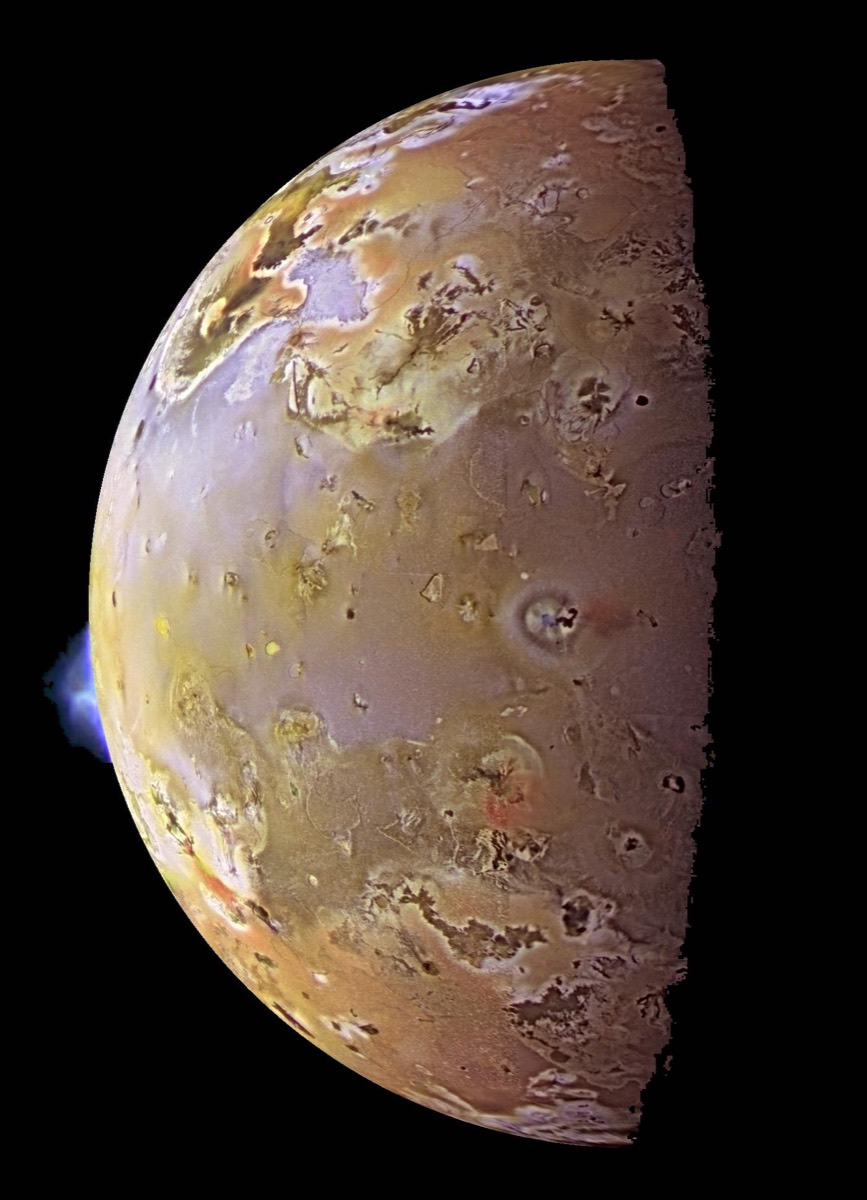
Io is stretched and squeezed over and over by the gravity of Jupiter and by its , and without pause. The result is the most volcanic moon in the solar system. How powerful does that get?
About a kilometer per second. A review of observations from spacecraft, ground telescopes and ALMA described reaching that speed, which carries them hundreds of kilometers high. The volcanic material also feeds , part of which nearly collapses when Io enters Jupiter’s shadow and the gas settles as frost.
Io is the most volcanically active body in the solar system, and the source of its heat is not the sun.
Jupiter’s gravity stretches and releases it over and over, and the resonance with Europa and Ganymede keeps its orbit from rounding out. Internal friction turns that kneading into heat and feeds ceaseless volcanic activity.
A review of observations from spacecraft, from ground telescopes and from radio described gas plumes reaching about a kilometer per second. With no dense atmosphere to slow it, the gas expands freely and reaches hundreds of kilometers in height.
The volcanic material also feeds a thin atmosphere, part of which nearly collapses when Io enters Jupiter’s shadow and the gas settles as frost. Gravity alone keeps a small world hot and active far from the sun this way. The plumes vary greatly between volcanoes and between observations, and the internal structure is still not fully known.
wat. The gas plumes of Io reach about a kilometer per second, thanks to heating that comes from the pull of the moons and Jupiter.
wat wat
Io shows that gravity alone can keep a small world active and hot far away from the sun.
How do we know?
A review combined decades of imaging and of ultraviolet, infrared and radio measurements since the Galileo mission.
What is still unknown
The plumes vary greatly between volcanoes and between observations, and the internal structure of Io is still not fully known.
Learn something?