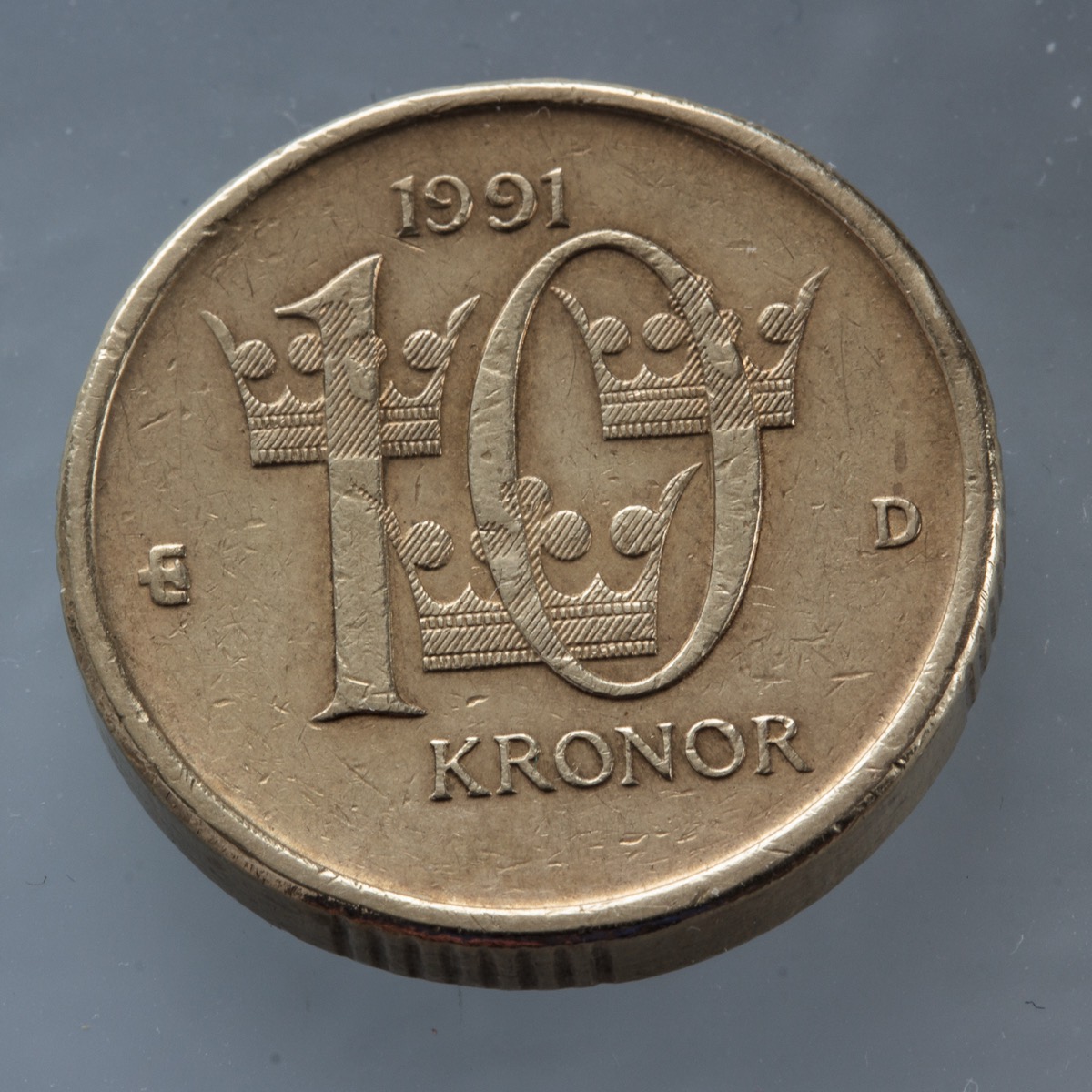
A coin toss counts as the definition of randomness, which is why it settles arguments. A physical model predicted a : the hand adds a minute tendency, depending on which face started upward. Forty-eight people threw a coin hundreds of thousands of times. What came out?
A fair coin and an unfair throw. Across more than 350 thousand tosses, in a that fixed the analysis in advance, the average was 50.8 percent for the starting side. That is . This is no preference for heads or tails: when the starting face was set at random, each came up in exactly half the tosses. The strength of the bias also varied between throwers, and it weakened with practice.
A physical model predicted that a hand does not spin a coin about a perfect axis, so the coin spends slightly more time with its starting face upward.
That prediction was made before the measurement, which is what makes the test meaningful. Forty-eight people tossed coins across more than three hundred and fifty thousand trials, for an effect this size.
The average came out eight tenths of a percent above half, in favor of the starting side. This is no preference for heads or tails: when the starting face was set at random, each appeared in exactly half the tosses.
Which is to say the coin is fair and the throw is not. In a draw that matters, even a bias this small can be removed by hiding the face of the coin before the call. The effect is very small, varied between throwers and weakened with practice, and it does not allow anyone to predict a single toss.
wat. Fair coins came back to the starting side in 50.8 percent of 350,757 tosses, with no overall edge for heads or tails.
wat wat
In a draw that matters, even a bias this small can be removed by hiding which face is up before the call.
How do we know?
This is an enormous sample for a minute effect: a pre-registered study gathered 350,757 tosses from 48 people and examined the starting face separately from the heads-or-tails outcome.
What is still unknown
The effect is very small, varied between throwers and weakened with practice. It does not let anyone predict a single toss.
Learn something?
Where to next
 Why did the people who paid full price show up to more plays?bias
 What happened when the Dunning-Kruger effect was run on random data?bias
 Do investors who look more often make the classic mistake less?bias