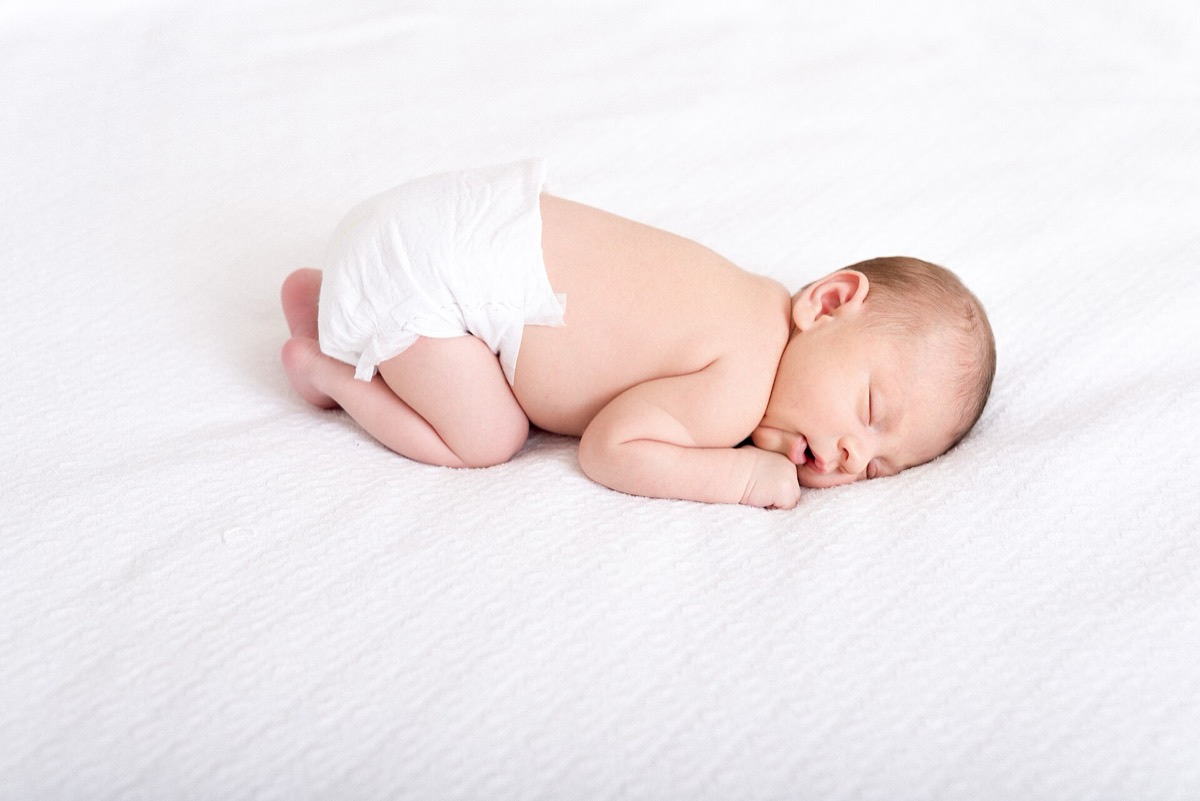
The fight over infant sleep training is mostly a fight about harm rather than about sleep. Both sides accept that the methods work, and the question is what they cost. So a trial randomized 43 infants aged six to sixteen months to , to , or to a sleep education control. It sampled their cortisol, and brought the mothers and children back a year later. What did the follow-up find?
Both methods improved sleep and neither left a trace. Graduated extinction and bedtime fading each beat the control on sleep, and the infants showed no adverse stress response in their salivary cortisol. Twelve months on, the children showed no difference in emotional or behavioral problems, and the found no difference in parent-child attachment. The harm the debate rests on did not appear.
Almost nobody disputes that behavioral sleep methods get infants to sleep. The dispute is about the price: whether a baby left to settle alone pays in stress now, or in the security of the attachment later. Settling that needs a follow-up, and follow-ups are rare.
Forty-three infants aged six to sixteen months drew graduated extinction, bedtime fading, or a sleep education control. Sleep came from parent diaries and from , a wrist-worn movement monitor. Infant stress came from salivary cortisol sampled morning and afternoon, with the mothers also rating their own mood and stress.
Both active methods produced significant sleep benefits over the control, which is the uncontroversial half. The cortisol sampling turned up no adverse stress response in either group, which is the half the debate turns on. That is a direct measure, rather than an inference from how much a baby cried.
Twelve months later the mothers and children came back. Assessments of the children’s emotional and behavioral problems showed no difference between groups, and the strange situation procedure, the standard laboratory test of attachment security, showed none either. Hold the sample size next to that conclusion, though. Forty-three infants split three ways is about fourteen per arm, and a trial that small can miss a real but modest harm. Read it as reassurance rather than as proof.
wat. A year on, cortisol, behavior and the attachment test all looked alike across the three groups, in a trial of only forty-three babies.
wat wat
Parents are told that sleep training damages the bond. This is one of the few trials that went back a year later and actually measured the bond.
How do we know?
Gradisar and colleagues randomized 43 infants across three conditions, tracked sleep by diary and actigraphy, sampled morning and afternoon salivary cortisol, and reassessed attachment twelve months later.
What is still unknown
Forty-three infants across three groups leaves roughly fourteen per arm, small enough that a modest harm could hide inside it. An absence of evidence at this size is not strong evidence of absence.
Learn something?
Where to next
 Does the way you praise a toddler matter five years later?parenting
 Can six weeks of training change how a parent handles a child’s feelings?parenting
 What happens when you meet a holiday destination’s products at home?attachment