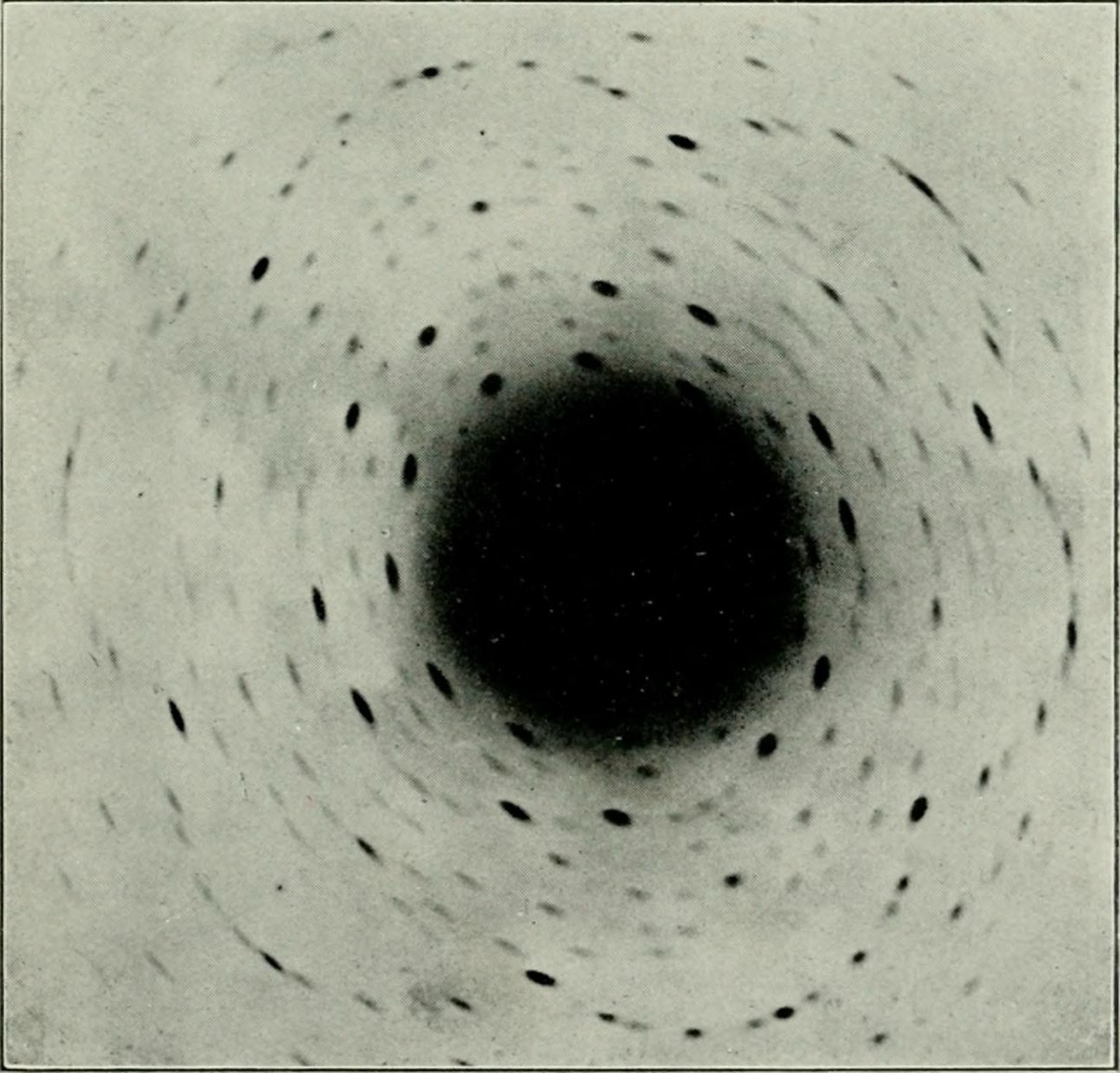
The familiar story says the double helix came from , an X-ray image of DNA shown to Watson without Rosalind Franklin’s knowledge, which she had supposedly failed to understand. Two biographers went through her archive at Churchill College with an overlooked letter and an unpublished 1953 news article in hand. What they found rearranges who knew what.
No, and the story diminishes her. Franklin was an equal contributor rather than a victim who missed her own result. She separated the of DNA, measured the enormous and determined its . She also grasped independently that the order of bases does not change the structure, which is how DNA can specify proteins.
Watson and Crick are widely believed to have reached the double helix only after stealing data from Franklin, a physical chemist at King’s College London. In that telling she is brilliant but unable to decipher what her own data were saying, sitting on Photograph 51 for months until Watson understood it at a glance.
The archival record does not support it. Watson was jolted by the photograph because of when he saw it, days after the Cambridge group received a manuscript in which Linus Pauling claimed to have solved the structure. The eureka scene was a literary device in his 1968 bestseller.
What mattered came through ordinary channels. An informal report of the King’s unit, handed to Watson and Crick by Max Perutz, carried Franklin’s confirmation of the 34 angstrom repeat, the size of the unit cell and the C2 symmetry. Crick’s own later lecture notes treat that report, rather than the photograph, as the significant document.
Franklin’s own contributions stand on their own. She differentiated the A and B forms, measured the unit cell and determined its symmetry. By late February 1953 she had accepted that the A form was probably helical with two strands. She had also seen that base order does not affect the structure, the insight that lets DNA specify proteins.
wat. She did not miss the answer; she was working on a harder half of it.
wat wat
Franklin has become a role model for women entering science, and a story in which she could not read her own data is a strange way to honor her.
How do we know?
Cobb and Comfort reconstructed the development of her ideas from her notes. They also found a letter from her colleague Pauline Cowan to Crick, and a draft news article written in consultation with Franklin for Time magazine.
What is still unknown
An argument from archives and recollections, where motives are read rather than measured.
Learn something?