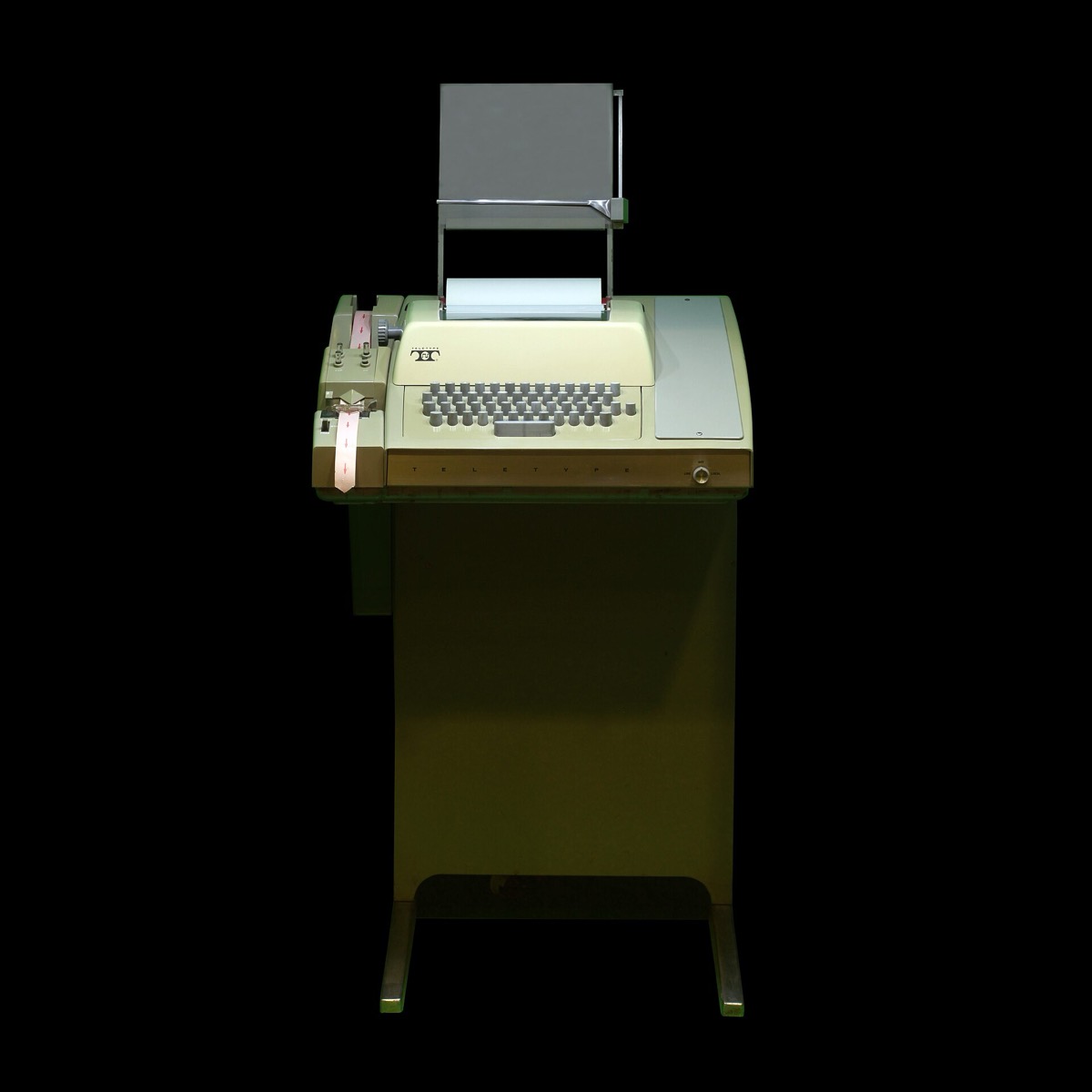
Ray Tomlinson sent it at BBN in late 1971, between two computers standing side by side in Cambridge, Massachusetts. He had joined two existing TENEX programs, and READMAIL, to a transfer capability so a message could cross the network instead of staying put. Nobody recorded the contents. The most common guess is , the top row of the keyboard.
Tomlinson is better remembered for a smaller decision: he picked the @ sign to separate a user from their host, and it stuck. He was also careful about credit. Systems for sending messages between users of the same computer already existed before his work, and what he added was the hop between machines. A soon pushed the traffic up sharply.
The first email did not go far. Ray Tomlinson was working at BBN in Cambridge, Massachusetts, in late 1971, and the two computers involved stood next to each other in the same room. The message left one machine, went out onto the network, and came back to the other. The distance was trivial. The hop was the point.
What he actually built was a join. TENEX already had SNDMSG, for leaving a message in another user’s mailbox on the same computer, and READMAIL for reading it. Tomlinson connected that to a file transfer capability, so a message could be delivered to a mailbox on a different machine. Sending mail between users was not new. Sending it between computers was.
Then came the . If mail could travel, a name was no longer enough, because the system needed to know which host held the mailbox. Tomlinson chose the @ sign to sit between the two, on the reasonable grounds that it did not turn up in people’s names. That character is now on every address in the world.
The contents are lost. Accounts often speculate that the first message read QWERTYUIOP, the top row of the keyboard. Tomlinson himself was modest about the whole thing, pointing out that interuser e-mail systems existed before his innovations. And a DARPA mandate that agency business run over electronic mail did more than anything else to turn the capability into traffic.
wat. The first email probably said QWERTYUIOP, and it crossed a gap of about two feet.
wat wat
The invention was not the message, it was the address. Separating a person from a machine with one character is what let mail leave the computer it was written on.
How do we know?
The EBSCO Research Starters entry on Tomlinson sending the first e-mail gives the setting at BBN, the TENEX programs involved and the two side-by-side machines. It also carries the speculation about the contents and Tomlinson’s own note about earlier systems.
What is still unknown
A reference encyclopedia entry rather than a contemporary record. The date is given only as November or December 1971, and the content of the message is openly described as speculation rather than documented fact.
Learn something?
Where to next
 What was the first webcam pointed at?internet
 What did the first computer virus actually do?arpanet
 Do undersea cables really carry almost all the world’s data?internet